---
title: "AI Shopping Agents & Shoppable Commerce: Are You Visible in AI?"
description: Ten questions to test whether AI shopping agents can find, evaluate, and recommend your furniture brand. Maps five AI evaluation criteria to specific product data infrastructure gaps and what closing them looks like.
image: https://blog.cylindo.com/hubfs/ai%20recommend.png
---
[  Cylindo Logo](https://www.cylindo.com/)
- Platform
Overview
- [How it works](https://www.cylindo.com/how-it-works/)
Core Platform
- [Asset Hosting A visual source of truth for every product.](https://www.cylindo.com/platform/core/#asset-hosting)
- [Content Creation Produce channel-ready content at catalog scale.](https://www.cylindo.com/platform/core/#content-creation)
- [Commerce Tools Turn product pages into digital showrooms.](https://www.cylindo.com/platform/core/#commerce-tools)
- [Distribution Compose, push, and measure across channels.](https://www.cylindo.com/platform/core/#distribution)
Bundles
- [Lifestyle Add-on 3D and AI lifestyle imagery tools - (Best for visuals at scale)](https://www.cylindo.com/platform/lifestyle/)
- [3D Design Customize multi-component or multi-product bundles in real time. - (Best for e-commerce)](https://www.cylindo.com/platform/3d-design/)
- [Compare bundles Check which bundle fit your needs](https://www.cylindo.com/platform/compare-bundles/)
[](https://cta-service-cms2.hubspot.com/web-interactives/public/v1/track/click?encryptedPayload=AVxigLI6OOO%2FX2J5LDxKXkS4hv6vtKaU6HSjeVDZjXWZcmceLj8daUydus447qAu%2BlJ559eJAETFdNThy3brmpc78RjSqK91TBGV3DRXWAT9CYaUwQTfpUcS4gyKy0BGxMrUXfiXXfPcuqDC4YFL2Q4t8zSqa5LBCOoe2%2B239nHYL4sjznAmPVn12nKAd0a4eGw%3D&portalId=4585441)
- Use cases
By outcome
- [Convert more shoppers](https://www.cylindo.com/use-cases/outcome/#convert-more)
- [Scale content creation](https://www.cylindo.com/use-cases/outcome/#scale-content)
- [Win across every channel](https://www.cylindo.com/use-cases/outcome/#win-across-every-channel)
By vertical
- [Furniture & home furnishings](https://www.cylindo.com/use-cases/verticals/#home-furniture)
- [Kitchen & bath](https://www.cylindo.com/use-cases/verticals/#kitchen-bath)
- [Lighting](https://www.cylindo.com/use-cases/verticals/#lighting)
- [Cabinetry](https://www.cylindo.com/use-cases/verticals/#cabinetry)
- [Outdoor living](https://www.cylindo.com/use-cases/verticals/#outdoor-living)
- [Contract & commercial](https://www.cylindo.com/use-cases/verticals/#contract-commercial)
By team
- [Creative](https://www.cylindo.com/use-cases/team/#creative)
- [Marketing](https://www.cylindo.com/use-cases/team/#marketing)
- [Digital & E-commerce](https://www.cylindo.com/use-cases/team/#digital-e-commerce)
###### [ Boosts online revenue +75% and AOV +44% with Cylindo Read more \>](https://cta-service-cms2.hubspot.com/web-interactives/public/v1/track/click?encryptedPayload=AVxigLKugaXLIJ%2FBi8rQ6ZH3KScymjpgFZMcslnX61buCaP7eztqyM%2FImxHLX0dtAnupUJVVBxkGawM3jYjCADACR7YiwNpGfaglek7MHXGRWftKwG7GteizyxZu8v4WpsEWrFZus%2Fqgv%2Fptk4DWBS%2FxWd2Sz72hNE9rvQIpn%2FyvuOFQoOyDEsBtEbUQ7wUe8xfZasMvt6gQZf%2FMx0eDGfZRZoo6%2BBs%3D&portalId=4585441)
- Customers
Customers
- [Customer Stories](https://www.cylindo.com/customer-case-studies/)
- [Customer Showcase](https://www.cylindo.com/customers/customer-showcase/)
Who we serve
- [B2B](https://www.cylindo.com/customers/who-we-serve/#b2b)
- [B2C](https://www.cylindo.com/customers/who-we-serve/#b2c)
###### [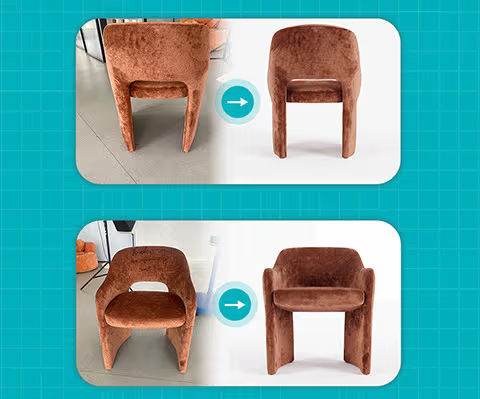 Introducing AI Master Assets Send four product photos and Cylindo produces four studio-quality silo shots in your chosen material, anchored to a 3D asset, with no content creation fee. Read more \>](https://cta-service-cms2.hubspot.com/web-interactives/public/v1/track/click?encryptedPayload=AVxigLKSbU1o5Ysj%2BcPHemzhD%2BQkYuIdvXHUOoj2SSm65frD8BvU5oP5VLFHOkvUADHGADgl04yRtO%2F3Jqiaet2IuCz1XbqguPoyO3c92XWtIN8Q898MYXZrbe2u9R7UN8Ce1CUFr5%2BOkaGZ22CGY8pDTNfyy3htJSI3nfzs96PEjUL2WpHb6vVuwzjqYeFJvRYAJpVWvH4l8jP9&portalId=4585441)
- Resources
Learn
- [Blog](https://blog.cylindo.com)
- [Cylindo library](https://www.cylindo.com/cylindo-content-library/)
Evaluate
- [ROI calculator](https://www.cylindo.com/roi-calculator/)
- [AI Master Assets test](https://www.cylindo.com/ai-master-assets-test/)
- [Business Impact](https://www.cylindo.com/business-impact/)
- [Free custom 3D and AI report](https://www.cylindo.com/custom-report/)
Support
- [Help center](https://learn.cylindo.com/help)
- [Ask support](https://learn.cylindo.com)
- [Change log](https://learn.cylindo.com/changelog)
###### [ Modern Search Discoverability Guide Learn how Google's 2026 AI search updates affect furniture discovery—and what to do to keep your products visible in AI-powered search. Download \>](https://cta-service-cms2.hubspot.com/web-interactives/public/v1/track/click?encryptedPayload=AVxigLJEl7T5dyLLkk%2FWEwwy6TlSBb9kSsYlkDUJ6tN9HhhUvn2hsLUaVYADFKjCAZUMYOr%2BPNOJgpkY2PJicVb3%2FGWl538Jmd3qJuCz8hf19svC47f2bjpQkoTlSgztHrzKcSDNaxvFrc0rZaFt1%2F75i9%2FVuns6K6Hkjfj7dt3UXOSlN1T4Ca%2Bt77aBq2Sgij0EtMCEjYZ%2Bc6O4olPgSsi2vkIcBzleG5bv9eDOO4D%2B%2BwNV2TMwtKv4x3g%3D&portalId=4585441)
- [Book demo](https://www.cylindo.com/book-meeting/)
- [Receive pricing](https://www.cylindo.com/receive-pricing/)
- [Login](https://app.cylindo.com/login)
- Platform
- [How it works](https://www.cylindo.com/how-it-works/)
- [Asset Hosting A visual source of truth for every product.](https://www.cylindo.com/platform/core/#asset-hosting)
- [Content Creation Produce channel-ready content at catalog scale.](https://www.cylindo.com/platform/core/#content-creation)
- [Commerce Tools Turn product pages into digital showrooms.](https://www.cylindo.com/platform/core/#commerce-tools)
- [Distribution Compose, push, and measure across channels.](https://www.cylindo.com/platform/core/#distribution)
- [Lifestyle Add-on 3D and AI lifestyle imagery tools - (Best for visuals at scale)](https://www.cylindo.com/platform/lifestyle/)
- [3D Design Customize multi-component or multi-product bundles in real time. - (Best for e-commerce)](https://www.cylindo.com/platform/3d-design/)
- [Compare bundles Check which bundle fit your needs](https://www.cylindo.com/platform/compare-bundles/)
- Use cases
- [Convert more shoppers](https://www.cylindo.com/use-cases/outcome/#convert-more)
- [Scale content creation](https://www.cylindo.com/use-cases/outcome/#scale-content)
- [Win across every channel](https://www.cylindo.com/use-cases/outcome/#win-across-every-channel)
- [Furniture & home furnishings](https://www.cylindo.com/use-cases/verticals/#home-furniture)
- [Kitchen & bath](https://www.cylindo.com/use-cases/verticals/#kitchen-bath)
- [Lighting](https://www.cylindo.com/use-cases/verticals/#lighting)
- [Cabinetry](https://www.cylindo.com/use-cases/verticals/#cabinetry)
- [Outdoor living](https://www.cylindo.com/use-cases/verticals/#outdoor-living)
- [Contract & commercial](https://www.cylindo.com/use-cases/verticals/#contract-commercial)
- [Creative](https://www.cylindo.com/use-cases/team/#creative)
- [Marketing](https://www.cylindo.com/use-cases/team/#marketing)
- [Digital & E-commerce](https://www.cylindo.com/use-cases/team/#digital-e-commerce)
- Customers
- [Customer Stories](https://www.cylindo.com/customer-case-studies/)
- [Customer Showcase](https://www.cylindo.com/customers/customer-showcase/)
- [B2B](https://www.cylindo.com/customers/who-we-serve/#b2b)
- [B2C](https://www.cylindo.com/customers/who-we-serve/#b2c)
- Resources
- [Blog](https://blog.cylindo.com)
- [Cylindo library](https://www.cylindo.com/cylindo-content-library/)
- [ROI calculator](https://www.cylindo.com/roi-calculator/)
- [AI Master Assets test](https://www.cylindo.com/ai-master-assets-test/)
- [Business Impact](https://www.cylindo.com/business-impact/)
- [Free custom 3D and AI report](https://www.cylindo.com/custom-report/)
- [Help center](https://learn.cylindo.com/help)
- [Ask support](https://learn.cylindo.com)
- [Change log](https://learn.cylindo.com/changelog)
- [Book demo](https://www.cylindo.com/book-meeting/)
- [Receive pricing](https://www.cylindo.com/receive-pricing/)
- [Login](https://app.cylindo.com/login)
[Back to Blog](https://blog.cylindo.com/all)
# AI Shopping Agents & Shoppable Commerce: Are You Visible in AI?

[Jen Rasmussen](https://blog.cylindo.com/author/jen-rasmussen) Published: September 22, 2026

> TL;DR: AI shopping agents rely on five critical areas of furniture product data: accurate dimensions, machine-readable material metadata, structured configuration options, consistent pricing across channels, and current availability data. This checklist maps those criteria to ten questions that can help identify gaps in your product data infrastructure and AI agent visibility.
Furniture ecommerce has traditionally been optimized for shoppers and search engines. AI shopping agents introduce another audience: automated systems that need to find, retrieve, and interpret structured product data.
A product page can look complete to a shopper while leaving important information difficult for automated systems to interpret. Dimensions may live inside a PDF. Material information may exist only in marketing copy. Configuration options may be visible inside a configurator but not represented as structured relationships.
Furniture AI commerce readiness starts with closing the gap between what a shopper can see and what an automated system can reliably access and interpret.
## The five-prompt AI shopping agent evaluation framework
1\. Can an AI agent read your dimensions?
Dimensions should be available as structured, machine-readable product attributes rather than only in images, copy, or specification sheets.
2\. Can an AI agent read your material metadata?
Fiber content, care codes, finishes, surface properties, and relevant PBR material specifications should be associated with the appropriate products and variants as structured data.
3\. Can an AI agent read your configuration options?
Relationships between modules, materials, finishes, orientations, and valid combinations should be encoded as relational data rather than accessible only through a visual configurator.
4\. Is your pricing consistent?
Pricing should remain synchronized across your website, marketplaces, syndicated feeds, and other commerce channels.
5\. Is your availability current?
Inventory and availability information should be current and accessible so automated systems can understand what can actually be purchased.
### Further reading:
- [Google Just Changed eCommerce. Are Home Furnishings and other eCommerce Brands Ready?](https://blog.cylindo.com/google-just-changed-ecommere)
- [AI Shopping Agents Are Intercepting Your Customers Before They Reach You](https://blog.cylindo.com/how-autonomous-ai-bots-are-intercepting-the-furniture-funnel)
## The 10-question AI readiness checklist
1\. Are product dimensions expressed as structured metadata?
Width, height, depth, and other dimensions should be represented as structured attributes. If specifications exist only inside a PDF, image, or descriptive paragraph, automated systems may have a harder time retrieving them reliably.
2\. Are material specifications machine-readable?
Structured product data for furniture should associate fiber content, care codes, finishes, surface properties, and relevant PBR material specifications with the correct products and variants.
3\. Are configuration options encoded as relational data?
Which modules connect, which fabrics apply, and which combinations are valid should exist as structured relational data that automated systems can traverse without needing to execute the visual configurator itself.
4\. Is pricing consistent across every channel?
Website pricing, marketplace listings, syndicated feeds, and other downstream channels should draw from reliable, current information. Version drift can create conflicting information about the same product.
5\. Is availability current, consistent, and accessible?
Product information should reflect what can actually be purchased, with availability updates distributed consistently across commerce experiences.
6\. Does your 3D asset library represent accurate product geometry?
Generative AI can approximate product imagery, but furniture requires accuracy in proportions, seams, cushion shapes, finishes, modular relationships, and more. Verified 3D or AI Master Assets provide an accurate digital representation of the product.
7\. Are product visuals generated from a verified product foundation?
As catalogs expand across fabrics, finishes, and configurations, maintaining visual consistency becomes more difficult. Verified product assets provide a reusable foundation for product views, configurations, lifestyle content, AR experiences, and other visual outputs.
8\. Does your product taxonomy expose the full breadth of your catalog?
An AI-readable furniture catalog needs to communicate product variants and their relationships in machine-readable form. ProductGroup schema can describe product families and variants through properties such as variesBy, hasVariant, and productGroupID.
9\. Can AI crawlers access critical PDP information?
Critical information can still be difficult to retrieve if it depends heavily on JavaScript or SPA rendering. Brands should evaluate whether dimensions, attributes, variant relationships, configuration information, and structured data are available through server-side rendered content or otherwise reliably accessible to AI crawlers.
10\. Is product information distributed from a consistent source?
Websites, marketplace feeds, configurators, imagery, and other channels can begin representing different versions of the same product. A verified source of product data and visual assets helps reduce version drift and keep downstream experiences aligned.
#### In Practice: Cozey
One verified 3D asset library. Every channel. No version drift.
Cozey uses Cylindo Viewer, AR, and Cylindo Create from a shared 3D asset library rather than recreating its visual foundation for each channel. Felix Robitaille, Director of Marketing at Cozey: "We opted for Cylindo over other vendors due to its remarkable fast loading speed, exceptional quality of renders, and agility in keeping up with our fast-paced projects."
Read the full case study [here](https://www.cylindo.com/customer-case-studies/cozey/).
## What closing the gaps looks like
AI discoverability depends on the infrastructure used to create, structure, manage, and distribute product information.
Cylindo supports several layers of that infrastructure. [3D Master Assets](https://www.cylindo.com/ai-master-assets-test/) and [Dimension Shots](https://www.cylindo.com/platform/products/dimension-shots/) provide accurate product geometry and dimensions. PBR material specifications associate material information with verified digital assets. [Modular Designer](https://www.cylindo.com/platform/products/modular-designer/) supports configuration logic governing valid product combinations. ProductGroup schema helps make product families and variants machine-readable, while [Cylindo Export and the Content API](https://www.cylindo.com/platform/products/export/) help distribute product content from a consistent source across downstream channels.
These capabilities support more accurate, consistent, and machine-readable furniture product infrastructure. They do not guarantee that an independent AI platform will rank or recommend a product.
## Is your furniture catalog ready for AI-driven discovery?
Furniture AI commerce readiness starts with identifying where critical product information is inaccessible, inconsistent, or unstructured. If dimensions, materials, configurations, pricing, availability, product geometry, or variants are difficult for machines to interpret, those are the gaps to address first.
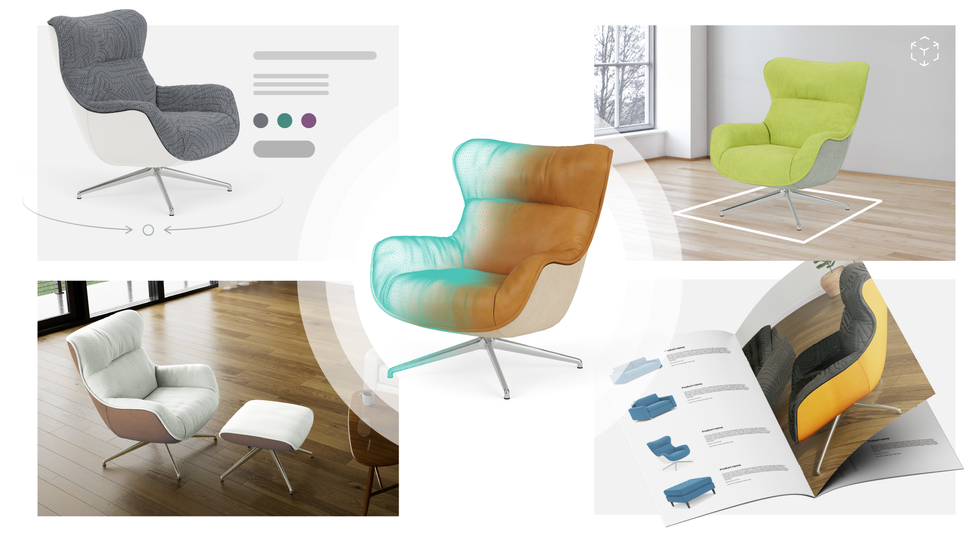
Platform Demo
### See how Cylindo supports AI-ready product infrastructure
Book a platform demo to see how Cylindo can help build a scalable visual and product content foundation for your catalog.
[Book a Demo](https://www.cylindo.com/book-meeting/?utm_source=organic&utm_medium=blog&utm_campaign=ai-visibility&utm_content=inline-demo-cta)
### Frequently Asked Questions
#### What do AI shopping agents need to understand about furniture products?
AI shopping agents need access to five core areas of structured product information: accurate dimensions, machine-readable material specifications, relational configuration data, consistent pricing, and current availability.
#### How do I know if my furniture brand is ready for AI-driven product discovery?
Run the 10-question checklist above. Gaps in machine-readable dimensions, material specifications, configuration data, pricing, or availability can make it harder for automated systems to accurately retrieve and interpret your products.
#### What is ProductGroup schema and why does it matter for furniture?
ProductGroup schema describes related product variants and the attributes that distinguish them. Properties such as variesBy, hasVariant, and productGroupID help automated systems understand the breadth of an AI-readable furniture catalog.
#### How does Cylindo support AI discoverability?
Cylindo provides verified product infrastructure spanning accurate 3D geometry, PBR material specifications, structured configuration logic, and consistent visual content. Cylindo Export and the Content API help distribute that information from a consistent source across downstream channels. This infrastructure supports AI agent furniture visibility without guaranteeing how independent AI platforms will rank or recommend individual products.

## Jen Rasmussen
Jen Rasmussen leads the global marketing organization at Cylindo, where she is responsible for strategy, brand, and demand generation. With more than 15 years in B2B SaaS marketing, she brings deep expertise in optimizing operations, enabling sales, and delivering measurable growth.
## [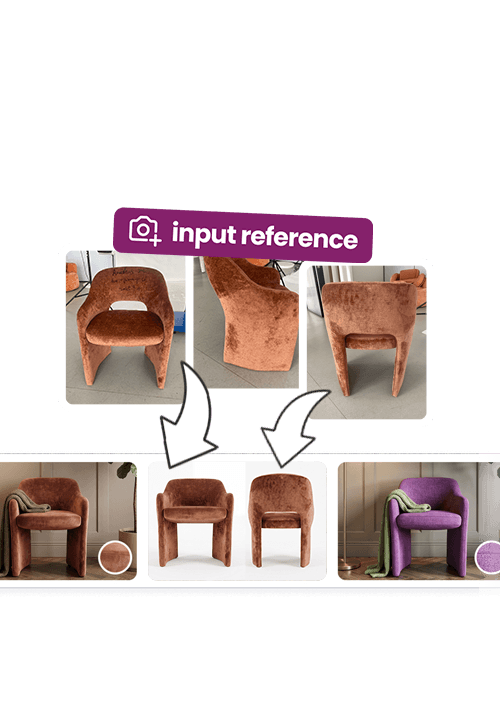 Free test Get studio-quality product visuals in 24 hours. Try AI Assets](https://www.cylindo.com/ai-master-assets-test/)
## Subscribe to our monthly newsletter.
Share
## [ Previous How Luxury Furniture Brands Are Using 3D to Win Premium Positioning Online Without Studio Photography](https://blog.cylindo.com/how-luxury-furniture-brands-are-using-3d-to-win-premium-positioning-online-without-studio-photography/)
## Related Posts
[](https://www.chaos.com/)
Platform
- [How it works](https://www.cylindo.com/how-it-works/)
- [Core platform](https://www.cylindo.com/platform/core/)
- [Lifestyle bundle](https://www.cylindo.com/platform/lifestyle/)
- [3D design bundle](https://www.cylindo.com/platform/3d-design/)
- [Compare bundles](https://www.cylindo.com/platform/compare-bundles/)
Products
- [Augmented reality](https://www.cylindo.com/platform/products/augmented-reality/)
- [Curator](https://www.cylindo.com/platform/products/curator/)
- [Create](https://www.cylindo.com/platform/products/export/)
- [Analytics](https://www.cylindo.com/platform/products/analytics/)
- [Dimension shots](https://www.cylindo.com/platform/products/dimension-shots/)
- [Quickshot](https://www.cylindo.com/platform/products/quickshot/)
- [Studio](https://www.cylindo.com/platform/products/studio/)
- [Modular Designer](https://www.cylindo.com/platform/products/modular-designer/)
Company
- [About](https://www.cylindo.com/about-us/)
- [Leadership](https://www.cylindo.com/about-us#leadership)
- [Contact us](https://www.cylindo.com/about-us#contact-us)
- [Careers](https://careers.chaos.com/)
- [News](https://www.chaos.com/press)
Resources
- [Customer Success Stories](https://www.cylindo.com/customers/customer-stories/)
- [Customer Showcase](https://www.cylindo.com/customers/customer-showcase/)
- [Learning center](https://learn.cylindo.com/help)
- [Cylindo Blog](https://blog.cylindo.com)
- [Cylindo Library](https://www.cylindo.com/cylindo-content-library/)
- [Furniture Briefings](https://resources.cylindo.com/furniture-briefings-subscribe)
## Follow us
-
-
-
-
© 2026 Cylindo. All Rights Reserved.
- [Cookie policy](https://www.cylindo.com/cookies-policy/)
- [Privacy policy](https://www.cylindo.com/privacy/)
```json
{
"@context" : "https://schema.org",
"@type" : "FAQPage",
"mainEntity" : [ {
"@type" : "Question",
"acceptedAnswer" : {
"@type" : "Answer",
"text" : "AI shopping agents need access to five core areas of structured product information: accurate dimensions, machine-readable material specifications, relational configuration data, consistent pricing, and current availability."
},
"name" : "What do AI shopping agents need to understand about furniture products?"
}, {
"@type" : "Question",
"acceptedAnswer" : {
"@type" : "Answer",
"text" : "Run the 10-question checklist. Gaps in machine-readable dimensions, material specifications, configuration data, pricing, or availability can make it harder for automated systems to accurately retrieve and interpret your products."
},
"name" : "How do I know if my furniture brand is ready for AI-driven product discovery?"
}, {
"@type" : "Question",
"acceptedAnswer" : {
"@type" : "Answer",
"text" : "ProductGroup schema describes related product variants and the attributes that distinguish them. Properties such as variesBy, hasVariant, and productGroupID help automated systems understand the breadth of an AI-readable furniture catalog."
},
"name" : "What is ProductGroup schema and why does it matter for furniture?"
}, {
"@type" : "Question",
"acceptedAnswer" : {
"@type" : "Answer",
"text" : "Cylindo provides verified product infrastructure spanning accurate 3D geometry, PBR material specifications, structured configuration logic, and consistent visual content. Cylindo Export and the Content API help distribute that information from a consistent source across downstream channels."
},
"name" : "How does Cylindo support AI discoverability?"
} ]
}
```