

Key points:
From File Chaos to Headless Infrastructure: Traditional workflows treat visuals as isolated files, leading to version control nightmares and regional drift. API-first architecture decouples visualization from the storefront, turning your 3D assets into a single "headless" source of truth that updates every channel instantly.
Performance Without Compromise: Self-hosting heavy 3D assets often hurts page load speeds and SEO. An API-first approach offloads rendering and streams optimized assets based on the specific device, ensuring high-fidelity visuals without sacrificing Core Web Vitals.
Future-Proof Agility: Launching new regions becomes a connection exercise rather than a content project. Because assets are centrally accessible via API, your brand is automatically ready for new channels, from mobile apps today to spatial computing tomorrow, without rebuilding your library.
The Chaos of Global Scale
You are launching in three new regions, on two different commerce platforms, plus a mobile app. Now answer one simple question. How do you make sure the “red sofa” looks exactly the same everywhere?
In most enterprises today, the answer is uncomfortable. Visual assets live in folders. Spreadsheets track versions. Teams manually upload files to different storefronts. Regional partners localize content independently. Marketing updates imagery in one place while e-commerce forgets to update another.
This is how global brands drift into inconsistency.
What starts as a manageable workflow quickly becomes operational chaos. Products appear differently across regions. Old visuals resurface. Performance suffers. Teams lose confidence in what is live where.
The root problem is architectural. Visuals are treated as files instead of infrastructure.
An API-first approach changes that. It decouples visualization from storefronts and turns your visual commerce platform into a headless content engine that feeds every channel automatically.
This is not about better images. It is about building a system that scales.
What Is API-First Visualization?
API-first visualization applies the same principles that modern engineering teams use for content, commerce, and data. It is a headless model.
Think of it this way.
-
The “body” holds your heavy 3D assets, rendering logic, and configuration rules. That body lives inside your visual commerce platform.
-
The “heads” are everything your customers interact with: websites, mobile apps, in-store kiosks, partner portals, even future devices.
Instead of embedding visuals directly into each experience, every channel simply calls the same API.
Change the asset once, and it updates everywhere.
Update a fabric material in Cylindo, and it instantly propagates to your US site, your German storefront, your dealer network, and your mobile experience.
No manual uploads. No duplicated files. No regional drift.
Why This Matters
API-first visualization gives enterprises three critical advantages.
1. Single source of truth
Every channel pulls from the same asset library. There is no version ambiguity. What customers see is always current.
2. Device-aware delivery
The API automatically serves optimized assets based on the requesting device. A 4K kiosk gets high-resolution visuals. A mobile browser gets compressed streams. No manual optimization required.
3. Operational agility
Teams stop managing files and start managing rules. Visualization becomes programmable.
This is what transforms visualization from content into infrastructure.
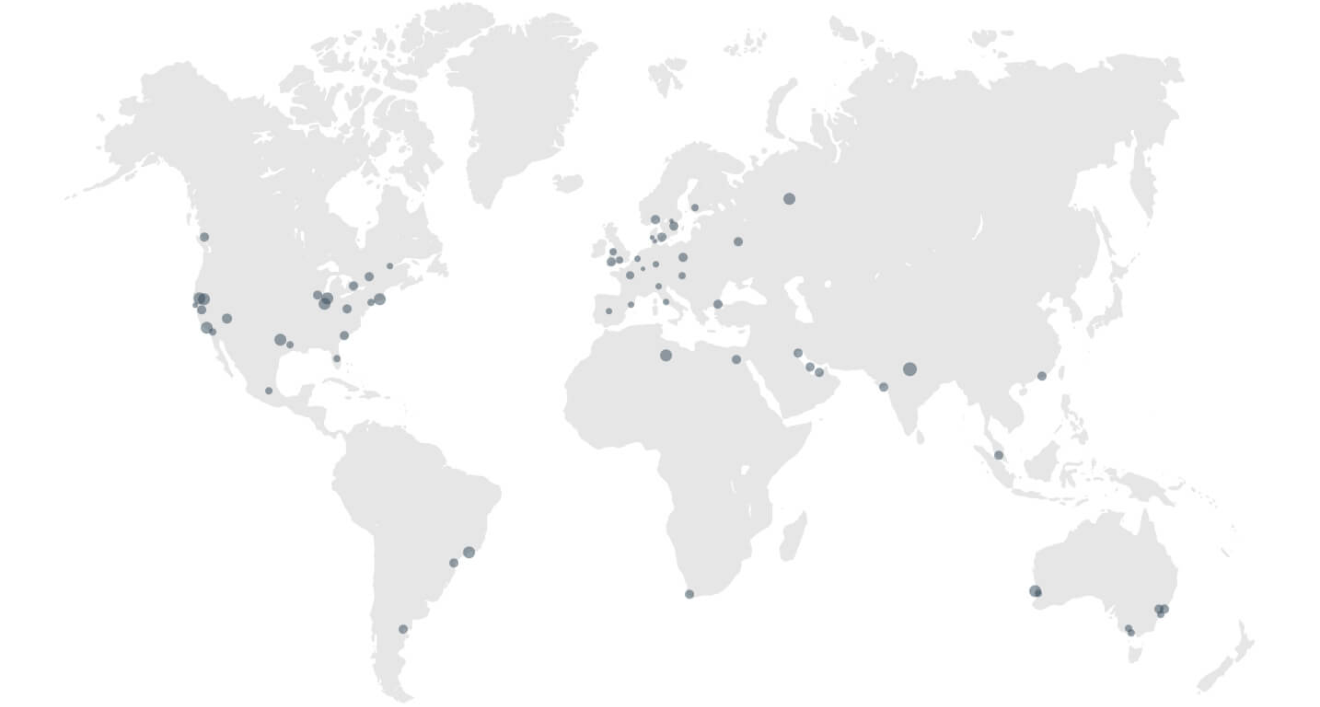
Speed to Market: Launching New Regions Without Rebuilding
International expansion traditionally comes with a hidden tax.
Every new region requires new assets, new uploads, new workflows, and new coordination between global and local teams. Hard-coded visualizations slow everything down.
By the time the regional site launches, the visuals are already outdated.
API-first architecture removes this friction.
1. Plug In and Go
With an API-first strategy, launching a new regional storefront becomes a connection exercise, not a content project.
The region simply plugs into your existing 3D asset library.
There is no need to recreate imagery. No need to duplicate configurations. The same models power every market.
2. Regional Merchandising via Rules
API-first also enables instant merchandising.
You can control which configurations appear in which regions through API rules.
For example:
- Show leather options only in Italy
- Hide specific finishes in APAC
- Promote certain fabrics in Northern Europe
All without duplicating assets.
These rules live centrally. Regional experiences update automatically.
This allows global teams to maintain brand consistency while local teams retain merchandising control. Speed to market improves because content no longer gates expansion.
Performance at Scale and Core Web Vitals
Three-dimensional content is heavy.
If you attempt to self-host 3D assets, page load times suffer. Core Web Vitals turn red. SEO rankings decline. Conversion drops.
This is where many visualization initiatives fail. Great visuals mean nothing if they slow the site.
1. The Technical Reality
Rendering 3D content on the client side without optimization places enormous strain on browsers and networks. Each region experiences different latency. Each device handles assets differently.
Without a purpose-built delivery layer, performance becomes unpredictable.
2. The Cylindo Edge
Cylindo’s API acts as a global content delivery and rendering layer.
Instead of shipping raw 3D files to every device, rendering happens off-site. Only what is needed is streamed to the user’s browser.
This ensures:
- High-fidelity visuals without blocking page load
- Region-aware delivery for global audiences
- Consistent performance across devices
This is where 3D product visualization becomes enterprise-grade. Rendering is abstracted away from your frontend. Your storefronts stay fast. Your visuals stay premium.
The result is simple. Photorealistic experiences with zero operational drag.
Google Core Web Vitals remain healthy. Customers get immersive visuals without waiting.
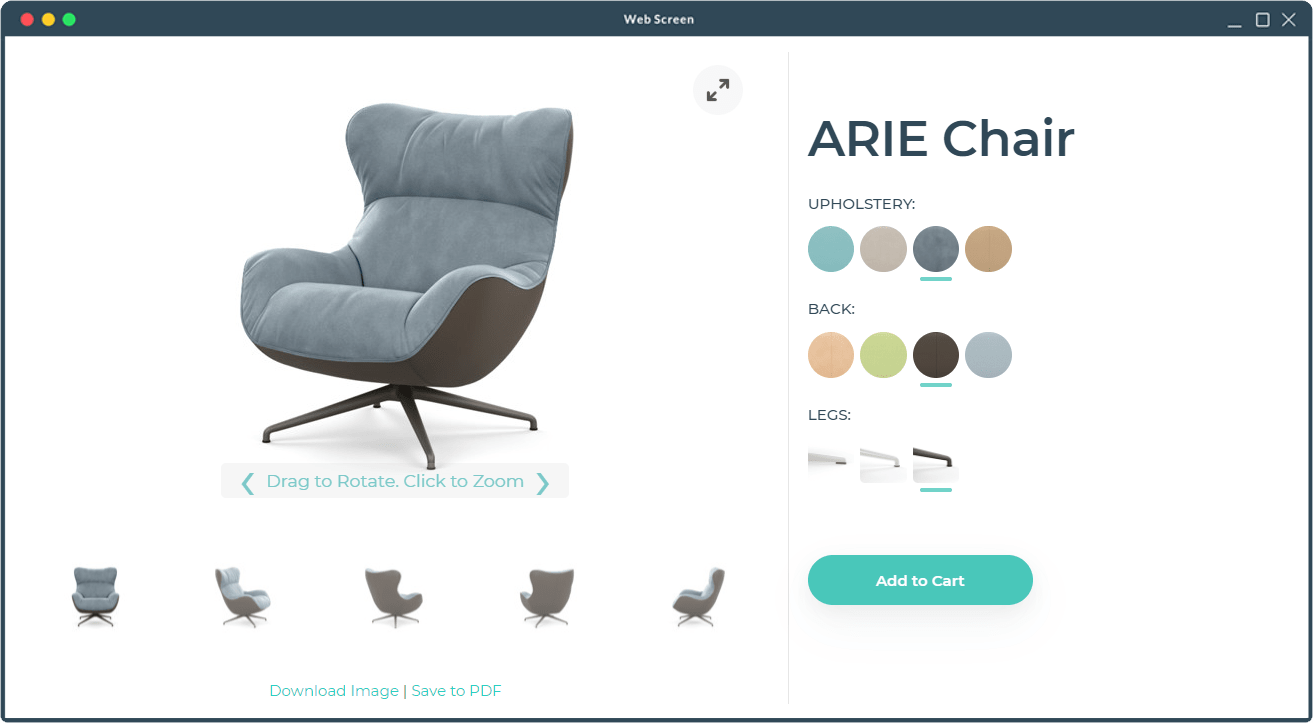 Future-Proofing for Channels That Do Not Exist Yet
Today it is web and mobile. Tomorrow it might be smart mirrors, automotive dashboards, spatial computing, or immersive retail environments.
Most brands are not architected for this future.
They hard-code visualization into each experience. When a new channel emerges, they start over.
API-first visualization avoids this trap.
Because assets are centrally accessible via API, you do not rebuild your library for new devices. You simply build a new “head” and connect it to the same backend.
-
Your 3D catalog already exists.
-
Your configuration logic already exists.
-
Your rendering infrastructure already exists.
This is how enterprises stay agile in a changing technology landscape. Instead of reacting to new platforms, you are ready for them by default.
Infrastructure Is Strategy
Global brands often invest heavily in visual quality while neglecting delivery architecture. That is a mistake.
Beautiful visuals are useless if you cannot deploy them consistently, performantly, and at scale. API-first visualization is the difference between a clumsy giant and an agile enterprise.
It replaces manual workflows with automation. It replaces duplicated assets with centralized control. It replaces fragile integrations with programmable experiences.
Most importantly, it gives leadership confidence that what customers see in one market is what they see everywhere.
This is not a tooling decision. It is a strategic one.
🚫Stop Managing Files ✅Start Scaling.
Your visual strategy shouldn't be limited by manual uploads and spreadsheets. Switch to the headless architecture that powers global leaders.
Ready to launch faster and consistent everywhere? Discover how our customizable platform can be tailored to your specific needs and deliver fast ROI.