---
title: Bridging the Physical Showroom and Digital Cart with AR
description: One AR asset serves the mobile PDP, the in-store associate's tablet, and the desktop QR code simultaneously. EQ3 and FEST Amsterdam have both built this infrastructure. Here is how it works and what it produces commercially.
image: https://blog.cylindo.com/hubfs/blog%20posts/2025/Science%20of%20seating/ar-in-room.jpg
---
[  Cylindo Logo](https://www.cylindo.com/)
- Platform
Overview
- [How it works](https://www.cylindo.com/how-it-works/)
Core Platform
- [Asset Hosting A visual source of truth for every product.](https://www.cylindo.com/platform/core/#asset-hosting)
- [Content Creation Produce channel-ready content at catalog scale.](https://www.cylindo.com/platform/core/#content-creation)
- [Commerce Tools Turn product pages into digital showrooms.](https://www.cylindo.com/platform/core/#commerce-tools)
- [Distribution Compose, push, and measure across channels.](https://www.cylindo.com/platform/core/#distribution)
Bundles
- [Lifestyle Add-on 3D and AI lifestyle imagery tools - (Best for visuals at scale)](https://www.cylindo.com/platform/lifestyle/)
- [3D Design Customize multi-component or multi-product bundles in real time. - (Best for e-commerce)](https://www.cylindo.com/platform/3d-design/)
- [Compare bundles Check which bundle fit your needs](https://www.cylindo.com/platform/compare-bundles/)
[](https://cta-service-cms2.hubspot.com/web-interactives/public/v1/track/click?encryptedPayload=AVxigLI6OOO%2FX2J5LDxKXkS4hv6vtKaU6HSjeVDZjXWZcmceLj8daUydus447qAu%2BlJ559eJAETFdNThy3brmpc78RjSqK91TBGV3DRXWAT9CYaUwQTfpUcS4gyKy0BGxMrUXfiXXfPcuqDC4YFL2Q4t8zSqa5LBCOoe2%2B239nHYL4sjznAmPVn12nKAd0a4eGw%3D&portalId=4585441)
- Use cases
By outcome
- [Convert more shoppers](https://www.cylindo.com/use-cases/outcome/#convert-more)
- [Scale content creation](https://www.cylindo.com/use-cases/outcome/#scale-content)
- [Win across every channel](https://www.cylindo.com/use-cases/outcome/#win-across-every-channel)
By vertical
- [Furniture & home furnishings](https://www.cylindo.com/use-cases/verticals/#home-furniture)
- [Kitchen & bath](https://www.cylindo.com/use-cases/verticals/#kitchen-bath)
- [Lighting](https://www.cylindo.com/use-cases/verticals/#lighting)
- [Cabinetry](https://www.cylindo.com/use-cases/verticals/#cabinetry)
- [Outdoor living](https://www.cylindo.com/use-cases/verticals/#outdoor-living)
- [Contract & commercial](https://www.cylindo.com/use-cases/verticals/#contract-commercial)
By team
- [Creative](https://www.cylindo.com/use-cases/team/#creative)
- [Marketing](https://www.cylindo.com/use-cases/team/#marketing)
- [Digital & E-commerce](https://www.cylindo.com/use-cases/team/#digital-e-commerce)
###### [ Boosts online revenue +75% and AOV +44% with Cylindo Read more \>](https://cta-service-cms2.hubspot.com/web-interactives/public/v1/track/click?encryptedPayload=AVxigLKugaXLIJ%2FBi8rQ6ZH3KScymjpgFZMcslnX61buCaP7eztqyM%2FImxHLX0dtAnupUJVVBxkGawM3jYjCADACR7YiwNpGfaglek7MHXGRWftKwG7GteizyxZu8v4WpsEWrFZus%2Fqgv%2Fptk4DWBS%2FxWd2Sz72hNE9rvQIpn%2FyvuOFQoOyDEsBtEbUQ7wUe8xfZasMvt6gQZf%2FMx0eDGfZRZoo6%2BBs%3D&portalId=4585441)
- Customers
Customers
- [Customer Stories](https://www.cylindo.com/customer-case-studies/)
- [Customer Showcase](https://www.cylindo.com/customers/customer-showcase/)
Who we serve
- [B2B](https://www.cylindo.com/customers/who-we-serve/#b2b)
- [B2C](https://www.cylindo.com/customers/who-we-serve/#b2c)
###### [ Introducing AI Master Assets Send four product photos and Cylindo produces four studio-quality silo shots in your chosen material, anchored to a 3D asset, with no content creation fee. Read more \>](https://cta-service-cms2.hubspot.com/web-interactives/public/v1/track/click?encryptedPayload=AVxigLKSbU1o5Ysj%2BcPHemzhD%2BQkYuIdvXHUOoj2SSm65frD8BvU5oP5VLFHOkvUADHGADgl04yRtO%2F3Jqiaet2IuCz1XbqguPoyO3c92XWtIN8Q898MYXZrbe2u9R7UN8Ce1CUFr5%2BOkaGZ22CGY8pDTNfyy3htJSI3nfzs96PEjUL2WpHb6vVuwzjqYeFJvRYAJpVWvH4l8jP9&portalId=4585441)
- Resources
Learn
- [Blog](https://blog.cylindo.com)
- [Cylindo library](https://www.cylindo.com/cylindo-content-library/)
Evaluate
- [ROI calculator](https://www.cylindo.com/roi-calculator/)
- [AI Master Assets test](https://www.cylindo.com/ai-master-assets-test/)
- [Business Impact](https://www.cylindo.com/business-impact/)
- [Free custom 3D and AI report](https://www.cylindo.com/custom-report/)
Support
- [Help center](https://learn.cylindo.com/help)
- [Ask support](https://learn.cylindo.com)
- [Change log](https://learn.cylindo.com/changelog)
###### [ Modern Search Discoverability Guide Learn how Google's 2026 AI search updates affect furniture discovery—and what to do to keep your products visible in AI-powered search. Download \>](https://cta-service-cms2.hubspot.com/web-interactives/public/v1/track/click?encryptedPayload=AVxigLJEl7T5dyLLkk%2FWEwwy6TlSBb9kSsYlkDUJ6tN9HhhUvn2hsLUaVYADFKjCAZUMYOr%2BPNOJgpkY2PJicVb3%2FGWl538Jmd3qJuCz8hf19svC47f2bjpQkoTlSgztHrzKcSDNaxvFrc0rZaFt1%2F75i9%2FVuns6K6Hkjfj7dt3UXOSlN1T4Ca%2Bt77aBq2Sgij0EtMCEjYZ%2Bc6O4olPgSsi2vkIcBzleG5bv9eDOO4D%2B%2BwNV2TMwtKv4x3g%3D&portalId=4585441)
- [Book demo](https://www.cylindo.com/book-meeting/)
- [Receive pricing](https://www.cylindo.com/receive-pricing/)
- [Login](https://app.cylindo.com/login)
- Platform
- [How it works](https://www.cylindo.com/how-it-works/)
- [Asset Hosting A visual source of truth for every product.](https://www.cylindo.com/platform/core/#asset-hosting)
- [Content Creation Produce channel-ready content at catalog scale.](https://www.cylindo.com/platform/core/#content-creation)
- [Commerce Tools Turn product pages into digital showrooms.](https://www.cylindo.com/platform/core/#commerce-tools)
- [Distribution Compose, push, and measure across channels.](https://www.cylindo.com/platform/core/#distribution)
- [Lifestyle Add-on 3D and AI lifestyle imagery tools - (Best for visuals at scale)](https://www.cylindo.com/platform/lifestyle/)
- [3D Design Customize multi-component or multi-product bundles in real time. - (Best for e-commerce)](https://www.cylindo.com/platform/3d-design/)
- [Compare bundles Check which bundle fit your needs](https://www.cylindo.com/platform/compare-bundles/)
- Use cases
- [Convert more shoppers](https://www.cylindo.com/use-cases/outcome/#convert-more)
- [Scale content creation](https://www.cylindo.com/use-cases/outcome/#scale-content)
- [Win across every channel](https://www.cylindo.com/use-cases/outcome/#win-across-every-channel)
- [Furniture & home furnishings](https://www.cylindo.com/use-cases/verticals/#home-furniture)
- [Kitchen & bath](https://www.cylindo.com/use-cases/verticals/#kitchen-bath)
- [Lighting](https://www.cylindo.com/use-cases/verticals/#lighting)
- [Cabinetry](https://www.cylindo.com/use-cases/verticals/#cabinetry)
- [Outdoor living](https://www.cylindo.com/use-cases/verticals/#outdoor-living)
- [Contract & commercial](https://www.cylindo.com/use-cases/verticals/#contract-commercial)
- [Creative](https://www.cylindo.com/use-cases/team/#creative)
- [Marketing](https://www.cylindo.com/use-cases/team/#marketing)
- [Digital & E-commerce](https://www.cylindo.com/use-cases/team/#digital-e-commerce)
- Customers
- [Customer Stories](https://www.cylindo.com/customer-case-studies/)
- [Customer Showcase](https://www.cylindo.com/customers/customer-showcase/)
- [B2B](https://www.cylindo.com/customers/who-we-serve/#b2b)
- [B2C](https://www.cylindo.com/customers/who-we-serve/#b2c)
- Resources
- [Blog](https://blog.cylindo.com)
- [Cylindo library](https://www.cylindo.com/cylindo-content-library/)
- [ROI calculator](https://www.cylindo.com/roi-calculator/)
- [AI Master Assets test](https://www.cylindo.com/ai-master-assets-test/)
- [Business Impact](https://www.cylindo.com/business-impact/)
- [Free custom 3D and AI report](https://www.cylindo.com/custom-report/)
- [Help center](https://learn.cylindo.com/help)
- [Ask support](https://learn.cylindo.com)
- [Change log](https://learn.cylindo.com/changelog)
- [Book demo](https://www.cylindo.com/book-meeting/)
- [Receive pricing](https://www.cylindo.com/receive-pricing/)
- [Login](https://app.cylindo.com/login)
[Back to Blog](https://blog.cylindo.com/all)
# Bridging the Physical Showroom and Digital Cart with AR

[Jen Rasmussen](https://blog.cylindo.com/author/jen-rasmussen) Published: September 24, 2026
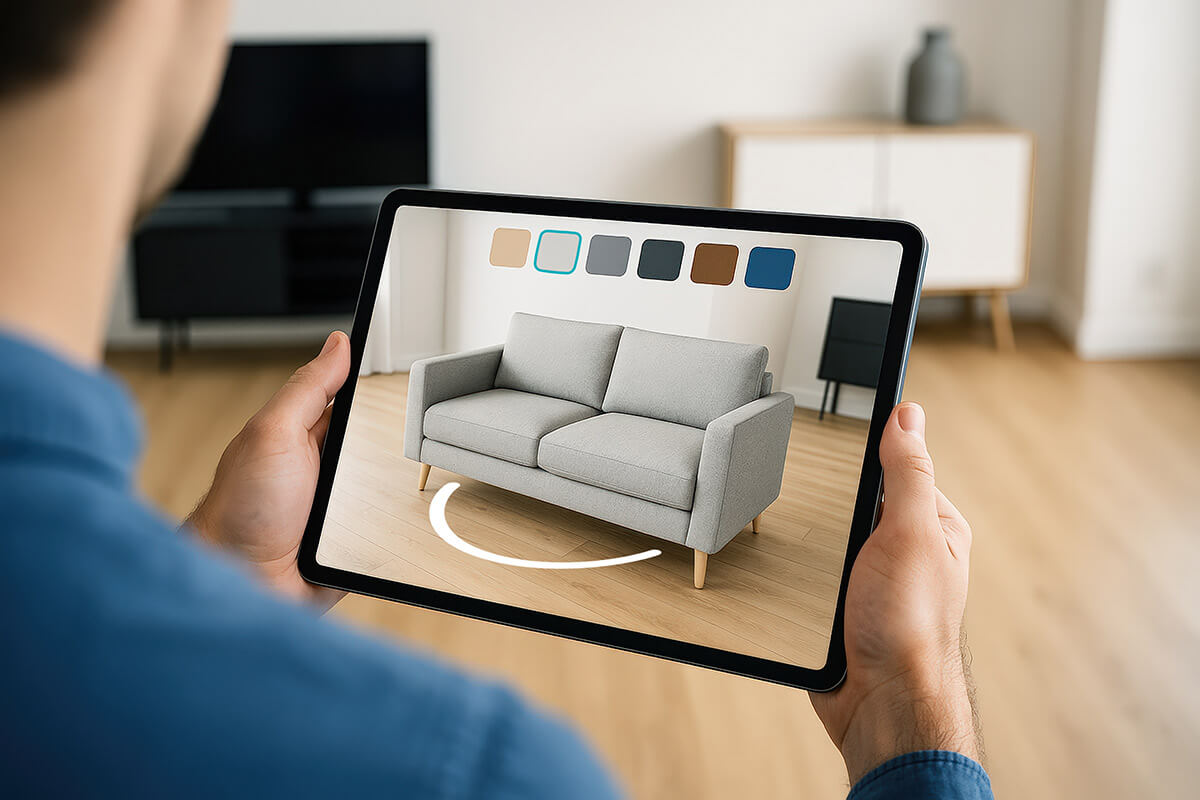
> TL;DR: The same AR asset that lets a shopper place a sofa in their living room from a mobile browser can also power an in-store associate's tablet presentation and a desktop QR experience. One verified 3D asset, every surface. EQ3 and FEST Amsterdam have both deployed this model at commercial scale.
For furniture retailers, showroom and digital cart strategies connect online product discovery, at-home visualization, and the physical showroom through the same verified product asset.
## The AR asset extends across the customer journey
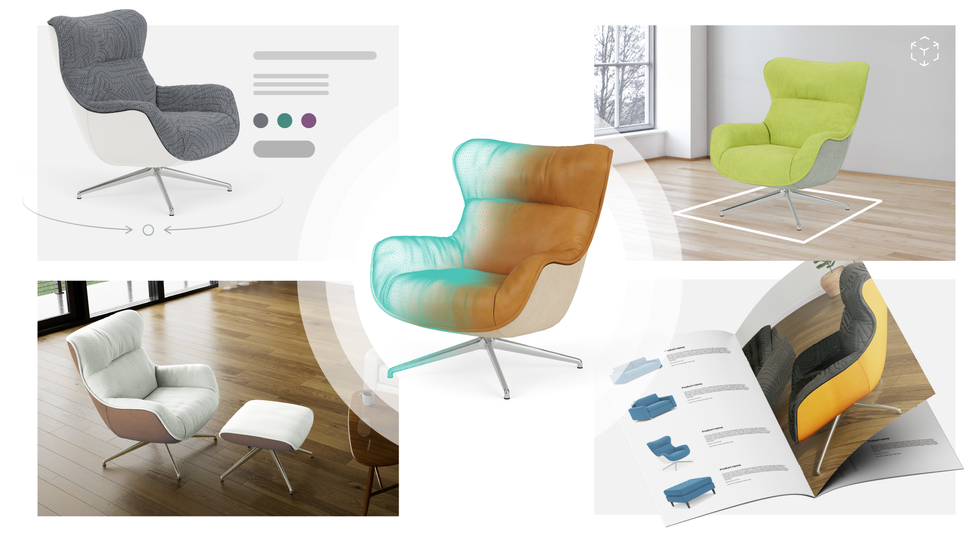
Furniture AR is often associated with the "View in your room" experience on a mobile product page. The same verified 3D asset can also support a desktop shopper moving to AR through a QR code, an associate helping a customer in-store with a tablet, or an AR experience within a showroom.
This allows furniture retailers to connect experiences across devices, channels, and physical locations while keeping the product itself consistent.
For an omnichannel furniture retailer, a customer may research a sofa on a laptop, visualize it at home on a phone, and then visit a store before purchasing. A shared AR asset helps create continuity across each interaction and gives shoppers another way to evaluate size, scale, and fit throughout the purchase journey.
## EQ3: connecting the desktop product page to the room
EQ3 provides a clear example of how furniture augmented reality can bridge devices. On desktop product pages, shoppers can use a QR code to launch the AR experience on their mobile device. The QR code provides a direct path from product research to placing the furniture in the shopper's physical space.
For a high-consideration purchase like furniture, this helps shoppers answer an important question: will this product work in my home? They can evaluate how the dimensions and scale of a product relate to their existing space before making a purchase decision.
Dan Gange, Director of E-commerce at EQ3, describes the commercial value:
> Augmented reality finds a valuable use case in the furniture industry. We have seen in customer surveys that AR is referenced as a common reason for purchase completion.
The [EQ3 use case](https://blog.cylindo.com/eq3-web-ar-for-furniture) shows how the desktop experience can become an entry point to AR. The same verified product asset extends from the desktop product page to the shopper's mobile device and into their physical room, without requiring the shopper to restart their product search when moving between devices.
## FEST Amsterdam: bringing the digital experience into the showroom
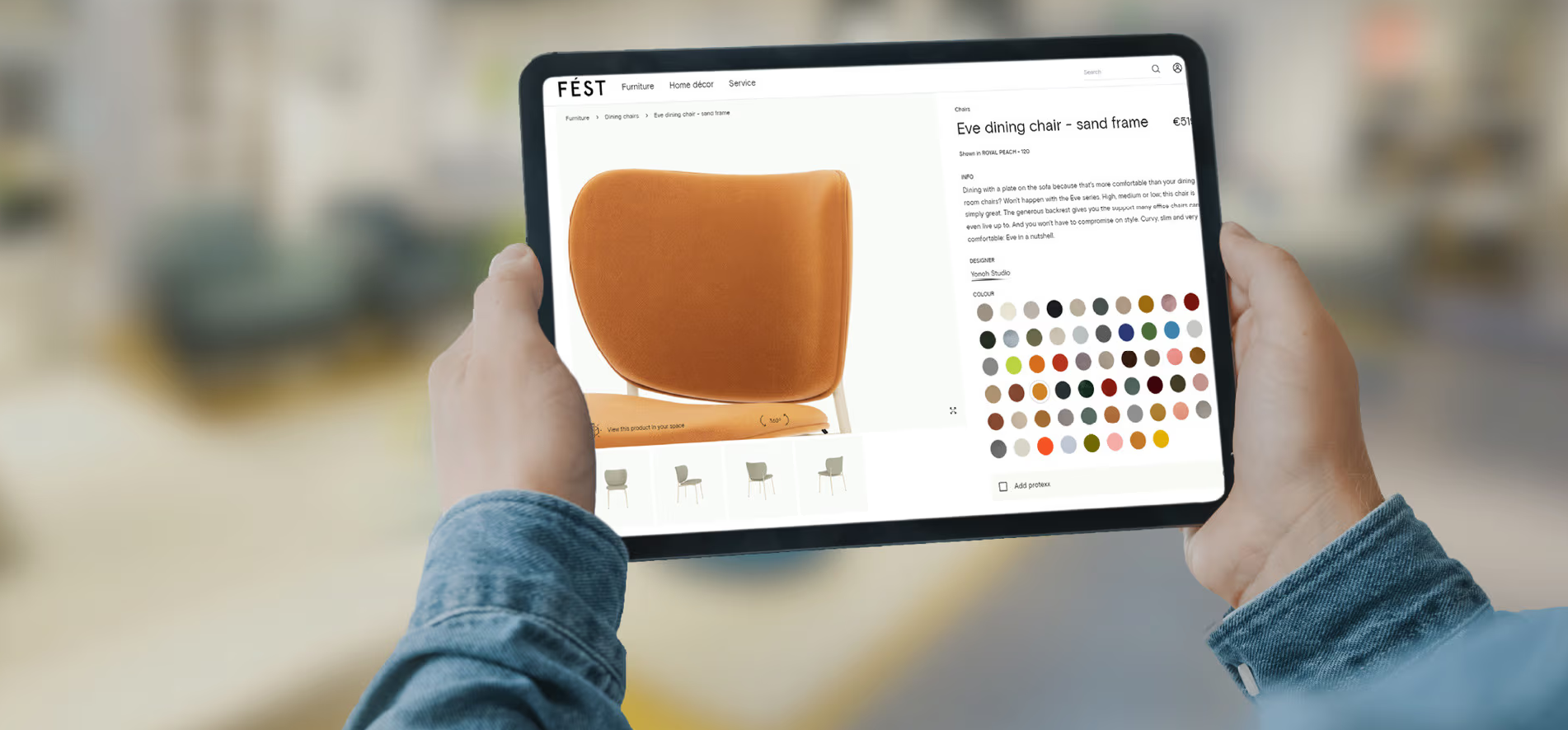
[FEST Amsterdam](https://www.cylindo.com/customer-case-studies/festamsterdam/) uses Cylindo-powered experiences on tablets to support interior design sessions with customers in-store. The same verified product foundation used online supports associates as they help shoppers make decisions in the physical showroom.
This is particularly useful when size and fit are difficult to judge from a showroom display alone. A retailer cannot display every product, configuration, fabric, or finish within a physical location. Digital visualization gives associates a way to expand the assortment available to shoppers during the store visit.
Frank Tervoert, Head of Growth at FEST Amsterdam, explains:
> It fits perfectly with our omnichannel strategy. With many of the Dutch population living in small places, furniture sizes can be a major issue, which is why Cylindo AR is a good way to clear any size-related concerns.
FEST Amsterdam has also been able to bring collections live in as little as one month. The physical and digital experiences work from the same verified asset, helping the product remain consistent as the shopper moves between channels. Associates can use digital visualization to support conversations about size, configuration, and how a piece will work within the shopper's space.
## Web-native AR removes a major adoption barrier
For connected AR experiences to work across the customer journey, shoppers need easy access to them. [Cylindo AR](https://www.cylindo.com/platform/products/augmented-reality/) enables shoppers to visualize furniture directly in their space through a web-native experience without requiring an app download.
[Sofacompany](https://www.cylindo.com/customer-case-studies/sofacompany/) found that 19% of product page visitors activated AR without being prompted. Nearly one in five visitors chose to use the experience while evaluating a high-consideration purchase.
Web-native delivery reduces the steps between product research and visualization. A shopper can move directly from the product page to placing the furniture in their room through the browser. This accessibility is especially relevant for furniture, where shoppers often need additional confidence around dimensions, scale, and how a product will look alongside existing furniture.
## One asset, every surface
Omnichannel AR furniture retail connects touchpoints through a consistent product foundation. A mobile PDP, desktop QR experience, in-store tablet, and showroom experience can all be powered by the same verified 3D asset. The shopper sees the same product as they move between devices and channels.
A desktop shopper can scan a QR code and continue the experience on mobile. A shopper researching at home can later work with an associate in-store. An associate can use a tablet to help the customer visualize products or configurations that may not be physically displayed in the showroom. The context changes. The underlying product asset stays consistent.
This positions [AR](https://www.cylindo.com/platform/products/augmented-reality/) as part of the [visual commerce infrastructure](https://www.cylindo.com/) supporting the customer journey rather than a standalone mobile feature. The same product foundation helps shoppers evaluate products wherever the purchase decision happens: on the PDP, in their room, or inside the showroom.
Platform Demo
### See connected AR across online and in-store commerce
Book a platform demo to see how Cylindo supports connected product experiences across the full customer journey.
[Book a Demo](https://www.cylindo.com/book-meeting/?utm_source=organic&utm_medium=blog&utm_campaign=ar-showroom&utm_content=inline-demo-cta)
### Frequently Asked Questions
#### How does AR bridge the physical showroom and digital cart in furniture retail?
The same verified 3D AR asset can power the mobile product page, desktop QR experience, and in-store tablet. A shopper can visualize a sofa at home and later encounter the same product experience with an associate in the showroom, creating continuity between digital research and the physical store.
#### What is web-native AR for furniture and why does it matter?
Web-native AR launches directly from the browser without requiring an app download. Sofacompany saw 19% of product page visitors activate AR unprompted, demonstrating that shoppers will engage with furniture AR when it is easily accessible within the digital shopping experience.
#### How do furniture brands use QR codes to extend AR from desktop to mobile?
EQ3 uses a QR code on its desktop product page to launch AR on the shopper's mobile device. The QR code creates a direct connection between desktop product research and mobile visualization without requiring the shopper to find the product again on another device.
#### Can AR be used in physical furniture showrooms?
Yes. FEST Amsterdam equips store associates with tablets for Cylindo-powered interior design sessions with customers in-store. The same verified product foundation used online supports the in-store experience, helping shoppers and associates visualize products at the correct scale.

## Jen Rasmussen
Jen Rasmussen leads the global marketing organization at Cylindo, where she is responsible for strategy, brand, and demand generation. With more than 15 years in B2B SaaS marketing, she brings deep expertise in optimizing operations, enabling sales, and delivering measurable growth.
## [ Free test Get studio-quality product visuals in 24 hours. Try AI Assets](https://www.cylindo.com/ai-master-assets-test/)
## Subscribe to our monthly newsletter.
Share
## [ Previous AI Shopping Agents & Shoppable Commerce: Are You Visible in AI?](https://blog.cylindo.com/ai-shopping-agents-shoppable-commerce-are-you-visible-in-ai/)
## Related Posts
[](https://www.chaos.com/)
Platform
- [How it works](https://www.cylindo.com/how-it-works/)
- [Core platform](https://www.cylindo.com/platform/core/)
- [Lifestyle bundle](https://www.cylindo.com/platform/lifestyle/)
- [3D design bundle](https://www.cylindo.com/platform/3d-design/)
- [Compare bundles](https://www.cylindo.com/platform/compare-bundles/)
Products
- [Augmented reality](https://www.cylindo.com/platform/products/augmented-reality/)
- [Curator](https://www.cylindo.com/platform/products/curator/)
- [Create](https://www.cylindo.com/platform/products/export/)
- [Analytics](https://www.cylindo.com/platform/products/analytics/)
- [Dimension shots](https://www.cylindo.com/platform/products/dimension-shots/)
- [Quickshot](https://www.cylindo.com/platform/products/quickshot/)
- [Studio](https://www.cylindo.com/platform/products/studio/)
- [Modular Designer](https://www.cylindo.com/platform/products/modular-designer/)
Company
- [About](https://www.cylindo.com/about-us/)
- [Leadership](https://www.cylindo.com/about-us#leadership)
- [Contact us](https://www.cylindo.com/about-us#contact-us)
- [Careers](https://careers.chaos.com/)
- [News](https://www.chaos.com/press)
Resources
- [Customer Success Stories](https://www.cylindo.com/customers/customer-stories/)
- [Customer Showcase](https://www.cylindo.com/customers/customer-showcase/)
- [Learning center](https://learn.cylindo.com/help)
- [Cylindo Blog](https://blog.cylindo.com)
- [Cylindo Library](https://www.cylindo.com/cylindo-content-library/)
- [Furniture Briefings](https://resources.cylindo.com/furniture-briefings-subscribe)
## Follow us
-
-
-
-
© 2026 Cylindo. All Rights Reserved.
- [Cookie policy](https://www.cylindo.com/cookies-policy/)
- [Privacy policy](https://www.cylindo.com/privacy/)
```json
{
"@context" : "https://schema.org",
"@type" : "FAQPage",
"mainEntity" : [ {
"@type" : "Question",
"acceptedAnswer" : {
"@type" : "Answer",
"text" : "The same verified 3D AR asset powers the mobile product page, desktop QR experience, and in-store tablet. A shopper can visualize a sofa at home and later encounter the same product experience with an associate in the showroom, creating continuity between digital research and the physical store."
},
"name" : "How does AR bridge the physical showroom and digital cart in furniture retail?"
}, {
"@type" : "Question",
"acceptedAnswer" : {
"@type" : "Answer",
"text" : "Web-native AR launches directly from the browser without requiring an app download. Sofacompany saw 19% of product page visitors activate AR unprompted, demonstrating that shoppers engage with furniture AR when it is easily accessible within the digital shopping experience."
},
"name" : "What is web-native AR for furniture and why does it matter?"
}, {
"@type" : "Question",
"acceptedAnswer" : {
"@type" : "Answer",
"text" : "EQ3 uses a QR code on its desktop product page to launch AR on the shopper's mobile device. The QR code creates a direct connection between desktop product research and mobile visualization without requiring the shopper to find the product again on another device."
},
"name" : "How do furniture brands use QR codes to extend AR from desktop to mobile?"
}, {
"@type" : "Question",
"acceptedAnswer" : {
"@type" : "Answer",
"text" : "Yes. FEST Amsterdam equips store associates with tablets for Cylindo-powered interior design sessions with customers in-store. The same verified product foundation used online supports the in-store experience, helping shoppers and associates visualize products at the correct scale."
},
"name" : "Can AR be used in physical furniture showrooms?"
} ]
}
```