---
title: Google Just Changed eCommerce. Are Home Furnishings and other eCommerce Brands Ready?
description: Google's shift toward AI-assisted shopping changes everything. Learn why furniture brands must optimize their product intelligence and visual data to stay visible.
image: https://blog.cylindo.com/hubfs/7%20Trends%20for%20Furniture%20E-commerce%20Success%20in%202024/7%20Trends%20for%20Furniture%20Ecommerce%20Success.png
---
[  Cylindo Logo](https://www.cylindo.com/)
- Platform
Overview
- [How it works](https://www.cylindo.com/how-it-works/)
Core Platform
- [Asset Hosting A visual source of truth for every product.](https://www.cylindo.com/platform/core/#asset-hosting)
- [Content Creation Produce channel-ready content at catalog scale.](https://www.cylindo.com/platform/core/#content-creation)
- [Commerce Tools Turn product pages into digital showrooms.](https://www.cylindo.com/platform/core/#commerce-tools)
- [Distribution Compose, push, and measure across channels.](https://www.cylindo.com/platform/core/#distribution)
Bundles
- [Lifestyle Add-on 3D and AI lifestyle imagery tools - (Best for visuals at scale)](https://www.cylindo.com/platform/lifestyle/)
- [3D Design Customize multi-component or multi-product bundles in real time. - (Best for e-commerce)](https://www.cylindo.com/platform/3d-design/)
- [Compare bundles Check which bundle fit your needs](https://www.cylindo.com/platform/compare-bundles/)
[](https://cta-service-cms2.hubspot.com/web-interactives/public/v1/track/click?encryptedPayload=AVxigLI6OOO%2FX2J5LDxKXkS4hv6vtKaU6HSjeVDZjXWZcmceLj8daUydus447qAu%2BlJ559eJAETFdNThy3brmpc78RjSqK91TBGV3DRXWAT9CYaUwQTfpUcS4gyKy0BGxMrUXfiXXfPcuqDC4YFL2Q4t8zSqa5LBCOoe2%2B239nHYL4sjznAmPVn12nKAd0a4eGw%3D&portalId=4585441)
- Use cases
By outcome
- [Convert more shoppers](https://www.cylindo.com/use-cases/outcome/#convert-more)
- [Scale content creation](https://www.cylindo.com/use-cases/outcome/#scale-content)
- [Win across every channel](https://www.cylindo.com/use-cases/outcome/#win-across-every-channel)
By vertical
- [Furniture & home furnishings](https://www.cylindo.com/use-cases/verticals/#home-furniture)
- [Kitchen & bath](https://www.cylindo.com/use-cases/verticals/#kitchen-bath)
- [Lighting](https://www.cylindo.com/use-cases/verticals/#lighting)
- [Cabinetry](https://www.cylindo.com/use-cases/verticals/#cabinetry)
- [Outdoor living](https://www.cylindo.com/use-cases/verticals/#outdoor-living)
- [Contract & commercial](https://www.cylindo.com/use-cases/verticals/#contract-commercial)
By team
- [Creative](https://www.cylindo.com/use-cases/team/#creative)
- [Marketing](https://www.cylindo.com/use-cases/team/#marketing)
- [Digital & E-commerce](https://www.cylindo.com/use-cases/team/#digital-e-commerce)
###### [ Boosts online revenue +75% and AOV +44% with Cylindo Read more \>](https://cta-service-cms2.hubspot.com/web-interactives/public/v1/track/click?encryptedPayload=AVxigLKugaXLIJ%2FBi8rQ6ZH3KScymjpgFZMcslnX61buCaP7eztqyM%2FImxHLX0dtAnupUJVVBxkGawM3jYjCADACR7YiwNpGfaglek7MHXGRWftKwG7GteizyxZu8v4WpsEWrFZus%2Fqgv%2Fptk4DWBS%2FxWd2Sz72hNE9rvQIpn%2FyvuOFQoOyDEsBtEbUQ7wUe8xfZasMvt6gQZf%2FMx0eDGfZRZoo6%2BBs%3D&portalId=4585441)
- Customers
Customers
- [Customer Stories](https://www.cylindo.com/customer-case-studies/)
- [Customer Showcase](https://www.cylindo.com/customers/customer-showcase/)
Who we serve
- [B2B](https://www.cylindo.com/customers/who-we-serve/#b2b)
- [B2C](https://www.cylindo.com/customers/who-we-serve/#b2c)
###### [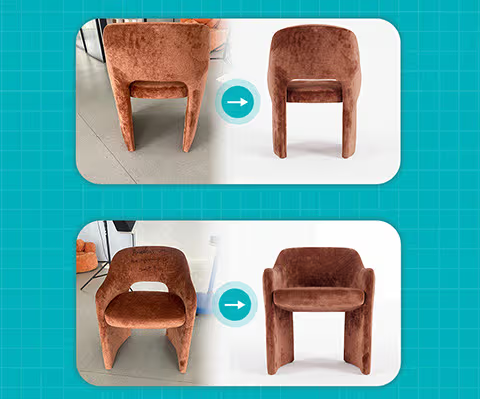 Introducing AI Master Assets Send four product photos and Cylindo produces four studio-quality silo shots in your chosen material, anchored to a 3D asset, with no content creation fee. Read more \>](https://cta-service-cms2.hubspot.com/web-interactives/public/v1/track/click?encryptedPayload=AVxigLKSbU1o5Ysj%2BcPHemzhD%2BQkYuIdvXHUOoj2SSm65frD8BvU5oP5VLFHOkvUADHGADgl04yRtO%2F3Jqiaet2IuCz1XbqguPoyO3c92XWtIN8Q898MYXZrbe2u9R7UN8Ce1CUFr5%2BOkaGZ22CGY8pDTNfyy3htJSI3nfzs96PEjUL2WpHb6vVuwzjqYeFJvRYAJpVWvH4l8jP9&portalId=4585441)
- Resources
Learn
- [Blog](https://blog.cylindo.com)
- [Cylindo library](https://www.cylindo.com/cylindo-content-library/)
Evaluate
- [ROI calculator](https://www.cylindo.com/roi-calculator/)
- [AI Master Assets test](https://www.cylindo.com/ai-master-assets-test/)
- [Business Impact](https://www.cylindo.com/business-impact/)
- [Free custom 3D and AI report](https://www.cylindo.com/custom-report/)
Support
- [Help center](https://learn.cylindo.com/help)
- [Ask support](https://learn.cylindo.com)
- [Change log](https://learn.cylindo.com/changelog)
###### [ Modern Search Discoverability Guide Learn how Google's 2026 AI search updates affect furniture discovery—and what to do to keep your products visible in AI-powered search. Download \>](https://cta-service-cms2.hubspot.com/web-interactives/public/v1/track/click?encryptedPayload=AVxigLJEl7T5dyLLkk%2FWEwwy6TlSBb9kSsYlkDUJ6tN9HhhUvn2hsLUaVYADFKjCAZUMYOr%2BPNOJgpkY2PJicVb3%2FGWl538Jmd3qJuCz8hf19svC47f2bjpQkoTlSgztHrzKcSDNaxvFrc0rZaFt1%2F75i9%2FVuns6K6Hkjfj7dt3UXOSlN1T4Ca%2Bt77aBq2Sgij0EtMCEjYZ%2Bc6O4olPgSsi2vkIcBzleG5bv9eDOO4D%2B%2BwNV2TMwtKv4x3g%3D&portalId=4585441)
- [Book demo](https://www.cylindo.com/book-meeting/)
- [Receive pricing](https://www.cylindo.com/receive-pricing/)
- [Login](https://app.cylindo.com/login)
- Platform
- [How it works](https://www.cylindo.com/how-it-works/)
- [Asset Hosting A visual source of truth for every product.](https://www.cylindo.com/platform/core/#asset-hosting)
- [Content Creation Produce channel-ready content at catalog scale.](https://www.cylindo.com/platform/core/#content-creation)
- [Commerce Tools Turn product pages into digital showrooms.](https://www.cylindo.com/platform/core/#commerce-tools)
- [Distribution Compose, push, and measure across channels.](https://www.cylindo.com/platform/core/#distribution)
- [Lifestyle Add-on 3D and AI lifestyle imagery tools - (Best for visuals at scale)](https://www.cylindo.com/platform/lifestyle/)
- [3D Design Customize multi-component or multi-product bundles in real time. - (Best for e-commerce)](https://www.cylindo.com/platform/3d-design/)
- [Compare bundles Check which bundle fit your needs](https://www.cylindo.com/platform/compare-bundles/)
- Use cases
- [Convert more shoppers](https://www.cylindo.com/use-cases/outcome/#convert-more)
- [Scale content creation](https://www.cylindo.com/use-cases/outcome/#scale-content)
- [Win across every channel](https://www.cylindo.com/use-cases/outcome/#win-across-every-channel)
- [Furniture & home furnishings](https://www.cylindo.com/use-cases/verticals/#home-furniture)
- [Kitchen & bath](https://www.cylindo.com/use-cases/verticals/#kitchen-bath)
- [Lighting](https://www.cylindo.com/use-cases/verticals/#lighting)
- [Cabinetry](https://www.cylindo.com/use-cases/verticals/#cabinetry)
- [Outdoor living](https://www.cylindo.com/use-cases/verticals/#outdoor-living)
- [Contract & commercial](https://www.cylindo.com/use-cases/verticals/#contract-commercial)
- [Creative](https://www.cylindo.com/use-cases/team/#creative)
- [Marketing](https://www.cylindo.com/use-cases/team/#marketing)
- [Digital & E-commerce](https://www.cylindo.com/use-cases/team/#digital-e-commerce)
- Customers
- [Customer Stories](https://www.cylindo.com/customer-case-studies/)
- [Customer Showcase](https://www.cylindo.com/customers/customer-showcase/)
- [B2B](https://www.cylindo.com/customers/who-we-serve/#b2b)
- [B2C](https://www.cylindo.com/customers/who-we-serve/#b2c)
- Resources
- [Blog](https://blog.cylindo.com)
- [Cylindo library](https://www.cylindo.com/cylindo-content-library/)
- [ROI calculator](https://www.cylindo.com/roi-calculator/)
- [AI Master Assets test](https://www.cylindo.com/ai-master-assets-test/)
- [Business Impact](https://www.cylindo.com/business-impact/)
- [Free custom 3D and AI report](https://www.cylindo.com/custom-report/)
- [Help center](https://learn.cylindo.com/help)
- [Ask support](https://learn.cylindo.com)
- [Change log](https://learn.cylindo.com/changelog)
- [Book demo](https://www.cylindo.com/book-meeting/)
- [Receive pricing](https://www.cylindo.com/receive-pricing/)
- [Login](https://app.cylindo.com/login)
[Back to Blog](https://blog.cylindo.com/all)
# Google Just Changed eCommerce. Are Home Furnishings and other eCommerce Brands Ready?

[Jen Rasmussen](https://blog.cylindo.com/author/jen-rasmussen) Updated: August 19, 2026
> TL;DR: Google's latest AI shopping updates signal a massive shift from keyword search to conversational recommendations. To remain visible, furniture brands must fix their fragmented data and build a structured Visual Content Supply Chain that AI shopping agents can actually understand.
### Key points:
- SEO is Evolving: Search is fragmenting. Brands must now combine traditional SEO with Generative Engine Optimization (GEO) and Answer Engine Optimization (AEO) to remain discoverable.
- The Product Intelligence Problem: AI cannot recommend what it does not understand. Fragmented data across PIMs, ERPs, and local folders makes highly configurable products invisible to recommendation engines.
- The Visual Content Supply Chain: Consolidating 3D assets, metadata, and configuration logic into a single system is the only way to build an "AI-ready" catalog at scale.
If you sell online, especially in the furniture and home furnishings sector, Google’s latest announcements should get your attention.
At this year’s [Google I/O](https://blog.google/products-and-platforms/products/search/search-io-2026/) and [Google Marketing Live](https://blog.google/products/ads-commerce/google-marketing-live-search-ads/), Google made something increasingly clear: [the future of product discovery is changing](https://blog.google/products-and-platforms/products/shopping/google-shopping-cart/). Consumers are moving beyond typing keywords into a search bar and scrolling through lists of links.
Instead, Google is investing heavily in conversational shopping experiences, AI-generated recommendations, visual discovery, and shopping agents designed to help consumers compare, evaluate, and ultimately choose products for them.
In practical terms, consumers are increasingly moving from: “Show me a list of sofas.” to “Help me find a light grey sectional for a family room with kids, durable fabric, under $3,000.” That shift matters more than many brands realize.
## This Is Bigger Than SEO
For years, eCommerce teams optimized around search rankings, paid media, product detail pages (PDPs), and conversion rate optimization. Those things still matter, and traditional search is not disappearing overnight.
But product discovery is fragmenting. Consumers are now discovering products through a combination of traditional search, AI-generated answers, recommendation engines, conversational assistants, and shopping agents.
As [Vogue](https://www.vogue.com/article/google-just-redefined-how-were-going-to-shop) observed following Google’s announcements, shopping is increasingly shifting from traditional search behavior toward more personalized, AI-assisted experiences that help consumers narrow decisions earlier in the journey.
> The shift in discoverability: Historically, brands competed to rank. Increasingly, brands will compete to be understood.
The uncomfortable question brands should be asking is this: Are we actually prepared for how commerce is changing? Because the brands that are easiest for AI to understand, recommend, and trust are likely to gain an advantage.
The brands that are not ready may experience something far more concerning than a rankings decline. They risk becoming increasingly invisible.
Many conversations around Google’s recent announcements have focused on SEO. That framing misses the bigger story. We are quickly moving toward a world where brands must think about SEO, GEO, and AEO together:
- Search Engine Optimization (SEO): The traditional discipline of helping webpages rank in search engines.
- Generative Engine Optimization (GEO): Structuring content so generative AI platforms can understand, reference, and recommend your products.
- Answer Engine Optimization (AEO): Optimizing content so AI-powered systems surface your brand as the answer to customer questions.
These concepts are related, but they point to the same broader shift. Discovery is moving from keyword matching to understanding and recommendation.
That distinction matters because AI cannot confidently recommend products it does not fully understand. And that is where many eCommerce brands have a problem.
## This Is Not Really an SEO Problem. It Is a Product Intelligence Problem.
At a high level, what is happening in commerce is not really an SEO problem. It is a product intelligence problem.
AI-powered shopping experiences do not “see” products the way humans do. They rely on structured information to interpret what a product is, how it compares to alternatives, whether it meets a shopper’s needs, and whether it is trustworthy enough to recommend.
That means details that may have once felt operational or technical suddenly become commercially strategic. This includes:
- Structured product data
- Metadata and taxonomy
- Dimensions and specifications
- Materials and finishes
- Configuration logic
- Product relationships and variants
- Rich, accurate visual content
Take furniture as an example. A shopper may ask: “Find me a light grey modular sofa for a small family room that is durable enough for kids.”
That recommendation depends on significantly more than keywords. The system needs to understand everything listed above.
If that information is fragmented, inconsistent, or difficult to interpret, the product becomes harder to confidently recommend. And confidence matters, because recommendation systems increasingly surface products they can understand clearly and explain with confidence.
Brands that are difficult for AI to interpret risk declining visibility across emerging discovery experiences. Over time, that can mean fewer PDP visits, lower consideration, and ultimately fewer online sales.
## Google’s Universal Cart Makes This Even More Real
If Google’s AI shopping updates signaled where commerce is heading, the company’s newly announced [Universal Cart](https://blog.google/products-and-platforms/products/shopping/google-shopping-cart/) makes the shift feel much more tangible.
Google is now creating a connected shopping experience across Search, Gemini, YouTube, and Gmail. This allows consumers to save, compare, revisit, and ultimately purchase products in a more seamless way.
Free Report
### Six Trends That Will Shape Furniture & Visual Commerce in 2026
Discover how leading furniture brands are utilizing AI content, rich PDP visualization, and real-time configuration to drive trust, conversions, and ROI.
[Get the Report](https://www.cylindo.com/cylindo-content-library/reports/6-trends-that-will-shape-furniture-and-visual-commerce-2026/?utm_source=organic&utm_medium=blog&utm_campaign=trends-report-2026&utm_content=inline-report-cta)
In other words, Google is increasingly positioning itself not simply as a search engine, but as a shopping layer helping consumers move from inspiration to purchase across multiple surfaces.
Why does this matter? Because it reinforces a much bigger shift: Product discovery and early-stage evaluation are increasingly happening before a shopper reaches your website.
Historically, brands focused heavily on driving traffic to PDPs, where consumers evaluated options and narrowed decisions. Increasingly, AI may do some of that work first.
Consumers may compare products, ask questions, narrow preferences, and receive recommendations inside AI-powered shopping experiences before ever clicking through to a retailer.
That does not mean PDPs become less important. It means the stakes for being recommendation-ready become much higher.
In an environment where Google and AI assistants increasingly influence consideration, product quality alone is not enough. Products must also be understandable.
## Why Furniture Brands Are Especially Exposed
For configurable and highly customizable categories like furniture, this shift may actually create an advantage. Furniture brands are not disadvantaged because products are complex. They are disadvantaged when product complexity is difficult for machines to understand.
Brands that can clearly structure dimensions, materials, fabrics, finishes, modular configurations, and visual representations may ultimately be easier for AI to recommend with confidence.
Furniture brands sit at the center of this shift. Unlike simpler retail categories, furniture products are highly customizable, visually driven, and high consideration. A sofa is rarely just a sofa; it often has:
- Multiple configurations
- Dozens of fabrics
- Finish options
- Modular layouts
- Dimension dependencies
- Material tradeoffs
- Lifestyle context
Unfortunately, fragmentation is exactly what many brands are dealing with today. Product intelligence often lives across disconnected Product Information Management (PIM) systems, Digital Asset Management (DAM) platforms, and Enterprise Resource Planning (ERP) systems.
It lives in PDFs and spreadsheets, product imagery repositories, and disconnected visual workflows. The result? A product experience built for humans, but increasingly difficult for machines to understand.
## Why Cylindo Is Well Positioned to Help
At [Cylindo](https://www.cylindo.com/), we believe this shift reinforces something we have believed for some time: The future of commerce depends on better product intelligence. Visual commerce is no longer just about creating assets; it is about creating a system.
A connected, structured, and scalable way to manage how product information and visual content move across commerce experiences is crucial. That is the foundation of what we call the Visual Content Supply Chain.
At a high level, it means bringing together:
- Inputs: Structured product data, materials, configurations, and dimensions.
- Creation: Photoreal visuals, product imagery, 3D experiences, and lifestyle content.
- Management: Governance, approvals, metadata, and consistency.
- Orchestration: Adapting content across channels, markets, and formats.
- Distribution: Utilizing [asset distribution software and image export tools](https://www.cylindo.com/platform/products/export/) to activate content everywhere products show up, from PDPs and marketplaces to AI-powered shopping experiences.
This matters because AI increasingly depends on the same things strong commerce experiences depend on: Accuracy. Consistency. Structure. Rich visual context. Trustworthy product representation.
Most brands already have pieces of this puzzle, but few have it connected. That creates an opportunity. Not simply to react to AI-driven commerce, but to build an advantage around it.
## What Brands Should Do Now
The good news? This is still early enough to act. The brands that move now are likely to have an advantage over those waiting for disruption to feel obvious.
1\. Audit your product intelligence
Ask a simple question: Could an AI system accurately understand and explain our products today? Look critically at your
- Product attributes
- Metadata quality
- Taxonomy consistency
- Configuration logic
- Variant clarity
- Structured data markup
- Image consistency
If answers are fragmented or inconsistent, that is the first signal.
2\. Think beyond SEO
Your search strategy should expand. This is no longer just about ranking pages. It is about becoming discoverable, understandable, and recommendable inside AI-driven environments. That means thinking about SEO plus GEO and AEO together.
3\. Treat visual content as structured intelligence
Visuals are no longer cosmetic. They are evidence. If metadata, imagery, and product information conflict, trust declines.
4\. Prepare for AI-assisted buying journeys
Many brands still optimize for Search → PDP → Purchase. Increasingly, journeys may become: Question → AI recommendation → narrowed consideration → PDP → Purchase.
That changes how brands think about discoverability and raises the stakes for being recommendation-ready. Implementing a dedicated [AI visual commerce and 3D product visualization platform](https://www.cylindo.com/) ensures your catalog adapts to these new journeys seamlessly.
## A Final Thought: The Cost of Waiting
I do not believe brands should panic. But I also do not believe this is something brands can afford to ignore. The risk is not that traditional search disappears tomorrow. The risk is that consumer behavior evolves faster than commerce organizations do.
Google’s latest announcements are a signal that commerce is becoming increasingly conversational, recommendation-driven, and AI-assisted. The brands that win this next chapter of commerce will likely be the ones that invest early in making products easier for machines to understand, explain, and recommend.
Because in an AI-driven commerce world, visibility becomes earned differently. You are no longer only competing for rankings. You are competing for recommendation.
And the brands that are difficult for AI systems to understand risk slowly becoming invisible in the moments that matter most.
Platform Demo
### Book your free demo
Leading companies worldwide are using Cylindo to deliver superior omnichannel product experiences for their customers. Want to see why and what you can do with it?
[Book a Demo](https://www.cylindo.com/book-meeting/?utm_source=organic&utm_medium=blog&utm_campaign=visual-ai-infrastructure&utm_content=inline-demo-cta)
### Frequently Asked Questions
#### Is traditional SEO dead?
No. SEO still matters and will continue to matter. But brands optimizing only for traditional search are preparing for yesterday’s buying journey. The future is likely a combination of SEO, GEO (Generative Engine Optimization), and AEO (Answer Engine Optimization) working together.
#### What is the biggest risk if brands are not prepared for Google’s search changes?
The risk is not simply losing rankings. The bigger risk is reduced discoverability. If AI increasingly influences shopping decisions, products that are difficult to understand or represent visually will be surfaced less often in recommendation experiences. Less visibility means fewer opportunities to win consideration.
#### Why are home furnishings brands uniquely impacted?
Furniture is highly configurable and visually complex. AI-powered shopping experiences need richer product understanding to confidently recommend items like sofas, sectionals, and modular systems. This raises the importance of structured product intelligence.
#### What makes a product catalog “AI-ready”?
At a minimum, an AI-ready catalog requires structured product data, clear taxonomy and metadata, rich, consistent visuals, product attributes and specifications (like dimensions), variant and configuration clarity, and consistency across systems and channels. Simply put: Can AI accurately understand and represent your products? That is the question brands should be asking.

## Jen Rasmussen
Jen Rasmussen leads the global marketing organization at Cylindo, where she is responsible for strategy, brand, and demand generation. With more than 15 years in B2B SaaS marketing, she brings deep expertise in optimizing operations, enabling sales, and delivering measurable growth.
## [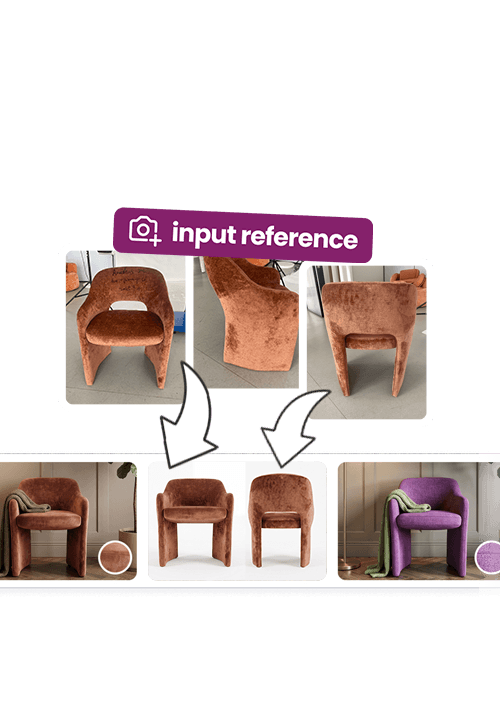 Free test Get studio-quality product visuals in 24 hours. Try AI Assets](https://www.cylindo.com/ai-master-assets-test/)
## Subscribe to our monthly newsletter.
Share
## [ Previous The End of the Search Bar: How AI and Guided 3D Selling Are Transforming Furniture Discovery](https://blog.cylindo.com/the-end-of-the-search-bar/)
## [ Next Integrating Visual Configuration with Shopify, Salesforce, and Your ERP](https://blog.cylindo.com/integrating-visual-configuration-with-shopify-salesforce-and-your-erp/)
## Related Posts
[](https://www.chaos.com/)
Platform
- [How it works](https://www.cylindo.com/how-it-works/)
- [Core platform](https://www.cylindo.com/platform/core/)
- [Lifestyle bundle](https://www.cylindo.com/platform/lifestyle/)
- [3D design bundle](https://www.cylindo.com/platform/3d-design/)
- [Compare bundles](https://www.cylindo.com/platform/compare-bundles/)
Products
- [Augmented reality](https://www.cylindo.com/platform/products/augmented-reality/)
- [Curator](https://www.cylindo.com/platform/products/curator/)
- [Create](https://www.cylindo.com/platform/products/export/)
- [Analytics](https://www.cylindo.com/platform/products/analytics/)
- [Dimension shots](https://www.cylindo.com/platform/products/dimension-shots/)
- [Quickshot](https://www.cylindo.com/platform/products/quickshot/)
- [Studio](https://www.cylindo.com/platform/products/studio/)
- [Modular Designer](https://www.cylindo.com/platform/products/modular-designer/)
Company
- [About](https://www.cylindo.com/about-us/)
- [Leadership](https://www.cylindo.com/about-us#leadership)
- [Contact us](https://www.cylindo.com/about-us#contact-us)
- [Careers](https://careers.chaos.com/)
- [News](https://www.chaos.com/press)
Resources
- [Customer Success Stories](https://www.cylindo.com/customers/customer-stories/)
- [Customer Showcase](https://www.cylindo.com/customers/customer-showcase/)
- [Learning center](https://learn.cylindo.com/help)
- [Cylindo Blog](https://blog.cylindo.com)
- [Cylindo Library](https://www.cylindo.com/cylindo-content-library/)
- [Furniture Briefings](https://resources.cylindo.com/furniture-briefings-subscribe)
## Follow us
-
-
-
-
© 2026 Cylindo. All Rights Reserved.
- [Cookie policy](https://www.cylindo.com/cookies-policy/)
- [Privacy policy](https://www.cylindo.com/privacy/)
```json
{
"@context" : "https://schema.org",
"@type" : "FAQPage",
"mainEntity" : [ {
"@type" : "Question",
"acceptedAnswer" : {
"@type" : "Answer",
"text" : "No. SEO still matters and will continue to matter. But brands optimizing only for traditional search are preparing for yesterday’s buying journey. The future requires a combination of SEO, GEO (Generative Engine Optimization), and AEO (Answer Engine Optimization) working together."
},
"name" : "Is traditional SEO dead?"
}, {
"@type" : "Question",
"acceptedAnswer" : {
"@type" : "Answer",
"text" : "The risk is not simply losing rankings; it is reduced discoverability. If AI increasingly influences shopping decisions, products that are difficult to understand or represent visually will be surfaced less often in recommendation experiences. Less visibility means fewer opportunities to win consideration."
},
"name" : "What is the biggest risk if brands are not prepared for Google’s search changes?"
}, {
"@type" : "Question",
"acceptedAnswer" : {
"@type" : "Answer",
"text" : "Furniture is highly configurable and visually complex. AI-powered shopping experiences need richer product understanding to confidently recommend items like sofas, sectionals, and modular systems. This raises the importance of deeply structured product intelligence."
},
"name" : "Why are home furnishings brands uniquely impacted?"
}, {
"@type" : "Question",
"acceptedAnswer" : {
"@type" : "Answer",
"text" : "At a minimum, an AI-ready catalog requires structured product data, clear taxonomy, product specifications (like dimensions), configuration logic, and rich, consistent visuals across all systems. Ultimately, if AI can accurately parse and represent your products, you are ready."
},
"name" : "What makes a product catalog “AI-ready”?"
} ]
}
```