Key Points:
-
Customers Expect One Unified Omnichannel Journey: The current separation between online and in-store channels causes friction due to visual and configuration inconsistencies. Retailers must move to a Unified Omnichannel model where all touchpoints share the same, consistent product information.
-
3D Visualization Unifies the Customer Experience: A single, photorealistic 3D model acts as the definitive product asset across all channels (web, mobile, in-store tools). This unified visual language eliminates conflicting visuals and allows for seamless, accurate configuration in any environment.
-
Unified Commerce Drives Sales and Efficiency via Scale: Implementing unified commerce with 3D visualization significantly increases sales conversion, reduces training costs, and speeds up product launches. Cylindo's 3D visualization software provides the scalable, centralized 3D infrastructure required to achieve this consistency across the enterprise.
The Death of the Channel Divide
Consumers no longer shop in channels. A typical journey starts with browsing on a phone, checking dimensions on a laptop, visiting a showroom to sit on a sofa, and completing the purchase later on a tablet. To the customer this is one continuous experience. To most retailers it is not.
Online channels offer endless configurations, high-quality visuals, and deep content. Physical stores offer tactile evaluation, guidance from associates, and emotional reassurance. The problem is that these two environments often function independently.
A sofa configured online may not match what a store associate can display. Swatch books cannot reflect the thousands of variations available digitally. Product data, imagery, and configurations fall out of sync, causing confusion and slowing conversions.
Retailers have unintentionally created a channel divide, but customers expect one unified journey. The future is Unified Omnichannel Commerce, a seamless experience where online, mobile, and in-store interactions share the same information, visuals, and product logic. This article explores how 3D visualization bridges that divide and why platforms like Cylindo’s 3d product visualization software make this unification possible at enterprise scale.
The Fragmentation Problem in Retail
The separation between online and retail channels creates three major sources of friction.
1. Visual Disparity
Static photography and in-store samples rarely match. Online images may look brighter than the showroom lighting. Store displays may show only one or two fabrics while dozens are available through e-commerce. Customers receive conflicting information. This reduces confidence and increases hesitation because shoppers cannot tell which representation is accurate.
2. Configuration Breakage
Customers often begin designing their product online. They invest time choosing fabrics, finishes, and configurations. When they walk into a store, the associate cannot access this design or cannot visualize it accurately. The associate may have only printed sheets or a swatch book. The customer loses momentum, and the experience feels disconnected.
3. Inventory and Data Silos
Online systems and in-store tools rarely speak the same language. Associates have limited visibility into digital configurations, and digital teams have limited insight into showroom behavior. These silos force teams to duplicate training, recreate workflows, and manually sync information across tools. The result is slower sales cycles, inconsistent guidance, and inefficient operations.
These forms of fragmentation weaken brand trust. Customers expect accuracy and simplicity. Any sign of inconsistency, whether visual or informational, introduces doubt. Unified Omnichannel Commerce removes this friction by ensuring every touchpoint presents the same product, the same data, and the same experience.
Visualization as the Unified Language
A unified commerce experience requires a single visual foundation that can power every interaction. This is where 3D visualization becomes the engine of connection between channels.
1. The 3D Advantage
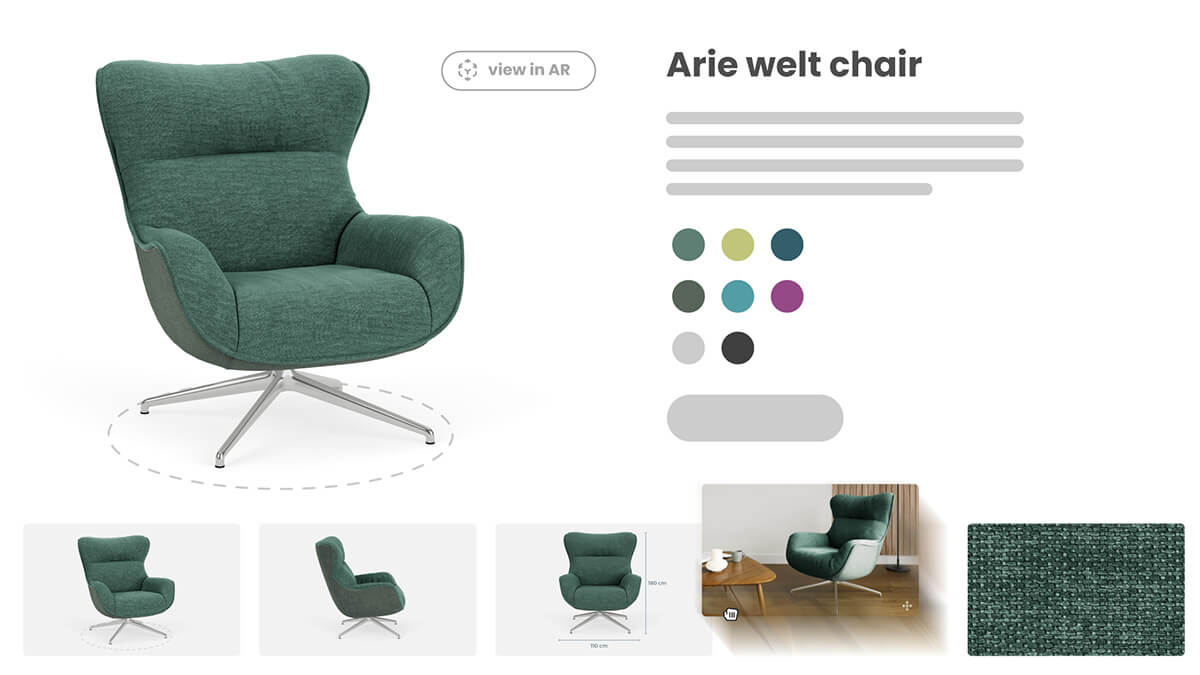
Photorealistic 3D visualization provides a single source of truth for product representation. One high-fidelity model becomes the asset used across e-commerce, mobile apps, in-store tools, kiosk displays, and AR experiences. Customers never see conflicting visuals because the asset is the same everywhere.
2. Online Experience
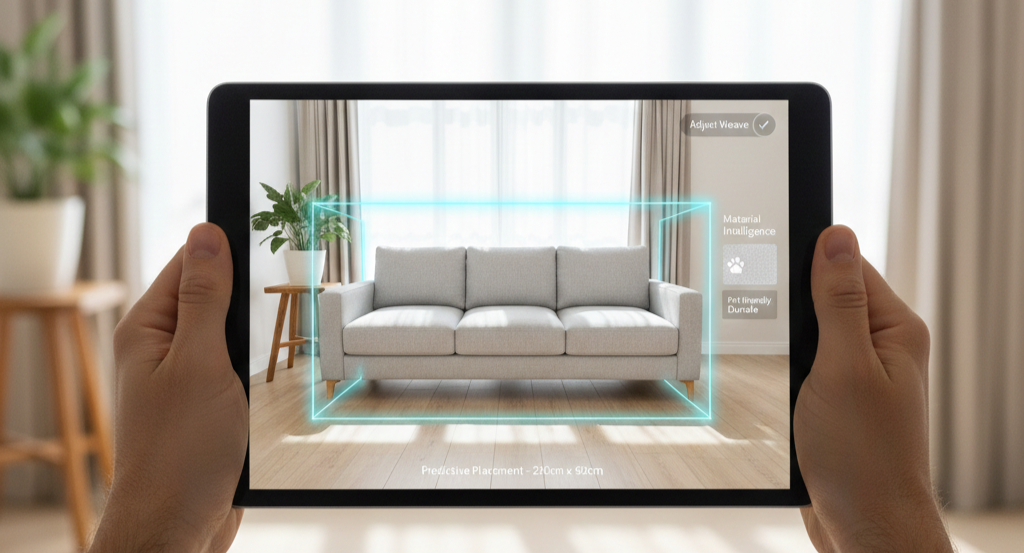
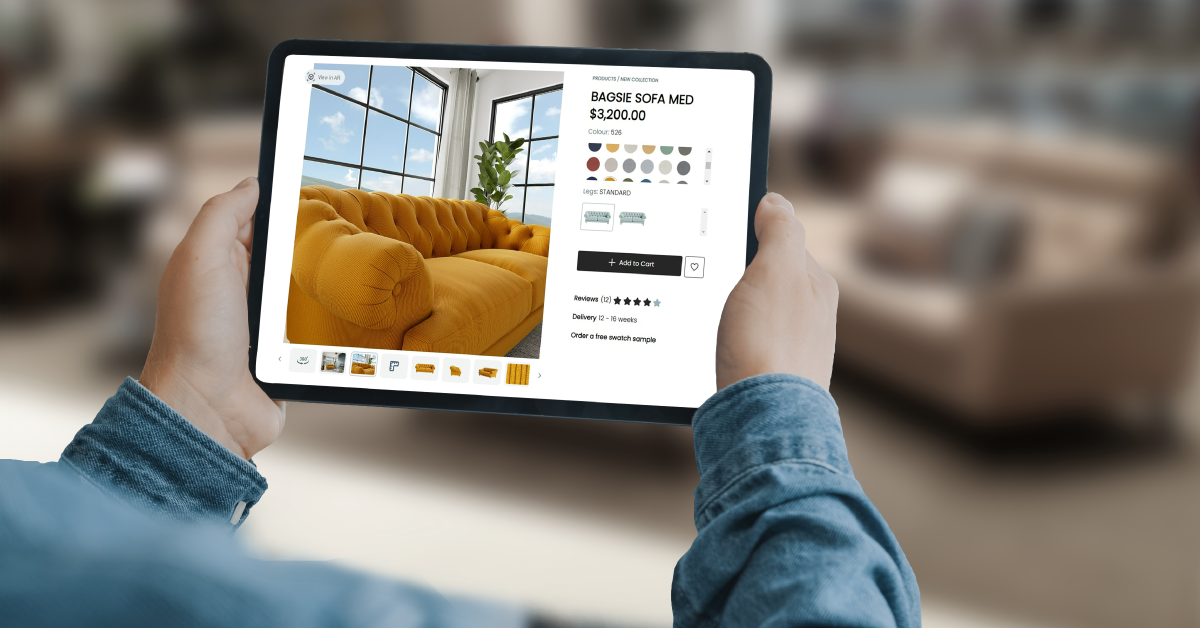
Digital shoppers benefit from unlimited, real-time configuration. They can rotate the product, zoom into materials, swap fabrics instantly, and view accurate lighting and textures. They can also preview their designs in their homes through AR, reducing uncertainty and increasing confidence.
3. In-Store Experience
With unified 3D assets, the in-store journey becomes an extension of the online experience. Associates can pull up the exact configuration the customer saved at home, view all materials and colors digitally, and show the product in photorealistic detail on tablets or large screens. This eliminates the limitations of physical samples and empowers associates to act as consultants rather than navigators of complex SKU lists.
For retailers offering complex modular or configurable products, tools like Cylindo’s visual commerce platform provide the consistency needed for every channel to use the same information instantly.
Cylindo’s Role in creating Unified Omnichannel Commerce
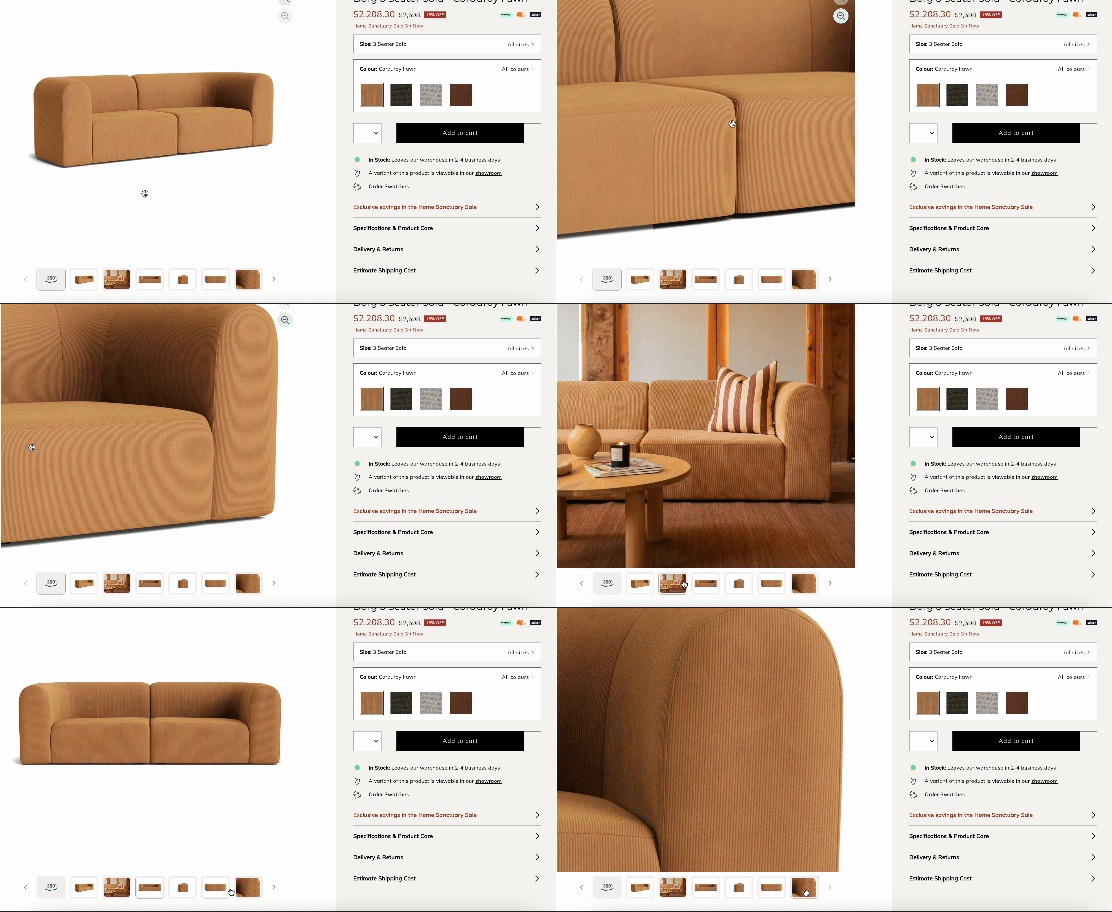
Unified Omnichannel Commerce only works if visualization is scalable, accurate, and centralized. Cylindo provides the infrastructure that manages 3D assets across the entire enterprise.
Every environment pulls from the same visualization system, ensuring consistency regardless of channel, device, or use case. This enables true phygital commerce, where customers and associates can trust that what they see on screen is exactly what will arrive at their door.
Quantifiable Impact of Unified Commerce
Unifying the customer journey is not only an experience upgrade. It has measurable business impact across sales, training, satisfaction, and operational efficiency.
1. Increased Sales Conversion
Online to offline sales, often referred to as O2O, accelerate when associates can visually confirm and modify the customer’s online configuration in real time. The customer enters the store already informed and confident. The associate becomes a facilitator who finalizes the purchase rather than restarting the sales process from the beginning.
2. Reduced Training Costs
Associates no longer need to memorize product variations or search through binders and swatch books. The interactive 3D experience becomes the universal reference. This reduces onboarding time and ensures every associate can guide customers accurately and confidently.
3. Higher Customer Satisfaction
When the visuals are identical across channels, customers know exactly what they are buying. This alignment between online imagery, in-store visualization, and final delivered product creates trust. Customers feel reassured that the brand understands them and respects their time and effort.
4. Faster Time to Market
With traditional workflows, launching a new product requires scheduling photoshoots, building showroom displays, and distributing images to various teams. With a unified 3D model, retailers deploy new products instantly across web, mobile, and store systems. This eliminates delays and allows teams to react quickly to trends or seasonal shifts.
Unified Omnichannel Commerce becomes a competitive advantage because it accelerates decision-making, reduces workflow friction, and creates a seamless path from discovery to purchase.
The Future Is a Unified Customer Journey
Retail’s future is not about choosing between online or physical stores. It is about removing the barriers between them. Customers expect one journey, with consistent information, accurate visuals, and effortless transitions from screen to showroom.
This unification cannot happen without a centralized visualization backbone. Static images and disconnected systems cannot keep up with customer expectations. Photorealistic 3D models solve this challenge by ensuring every stakeholder sees the same representation of the product at every step.
Platforms like Cylindo’s 3d product visualization software and modular, scalable tools such as Cylindo Modular Designer give retailers the technical foundation to realize this unified future. By investing in the right visualization layer, retailers ensure accuracy, scalability, and trust across every environment.
👍Connect Your Channels. Unify Your Commerce.
Don't let channel friction cost you sales. Cylindo provides the single-source 3D visualization platform that guarantees a seamless, accurate, and interactive product experience whether your customer is browsing at home or engaging with an associate in-store. Start building your Unified Omnichannel future today. Request a Demo Today!