TL;DR: Phygital commerce is not a retail concept. It is an infrastructure decision. Brands that treat 3D visualization as shared infrastructure across online and in-store channels build a single source of truth that converts shoppers wherever they are. Brands that treat it as a channel-specific add-on get inconsistency, and inconsistency loses sales.
For decades, furniture retail ran two separate operations under one brand. The e-commerce team owned the website. The retail team owned the stores. Different tools, different assets, different metrics. The customer walked between both and expected them to match. They rarely did.
That is the gap phygital commerce closes. Not as a technology trend, but as an operational decision: to treat visualization as shared infrastructure rather than channel-specific content. The brands that have made this decision are not running smarter marketing. They are running a fundamentally different business model. And it is showing up in their conversion rates.
What phygital commerce actually means in practice
Phygital commerce is the integration of digital depth into physical retail spaces, and physical confidence into digital environments. It removes the boundary between online and in-store by treating visualization as shared infrastructure rather than channel-specific content.
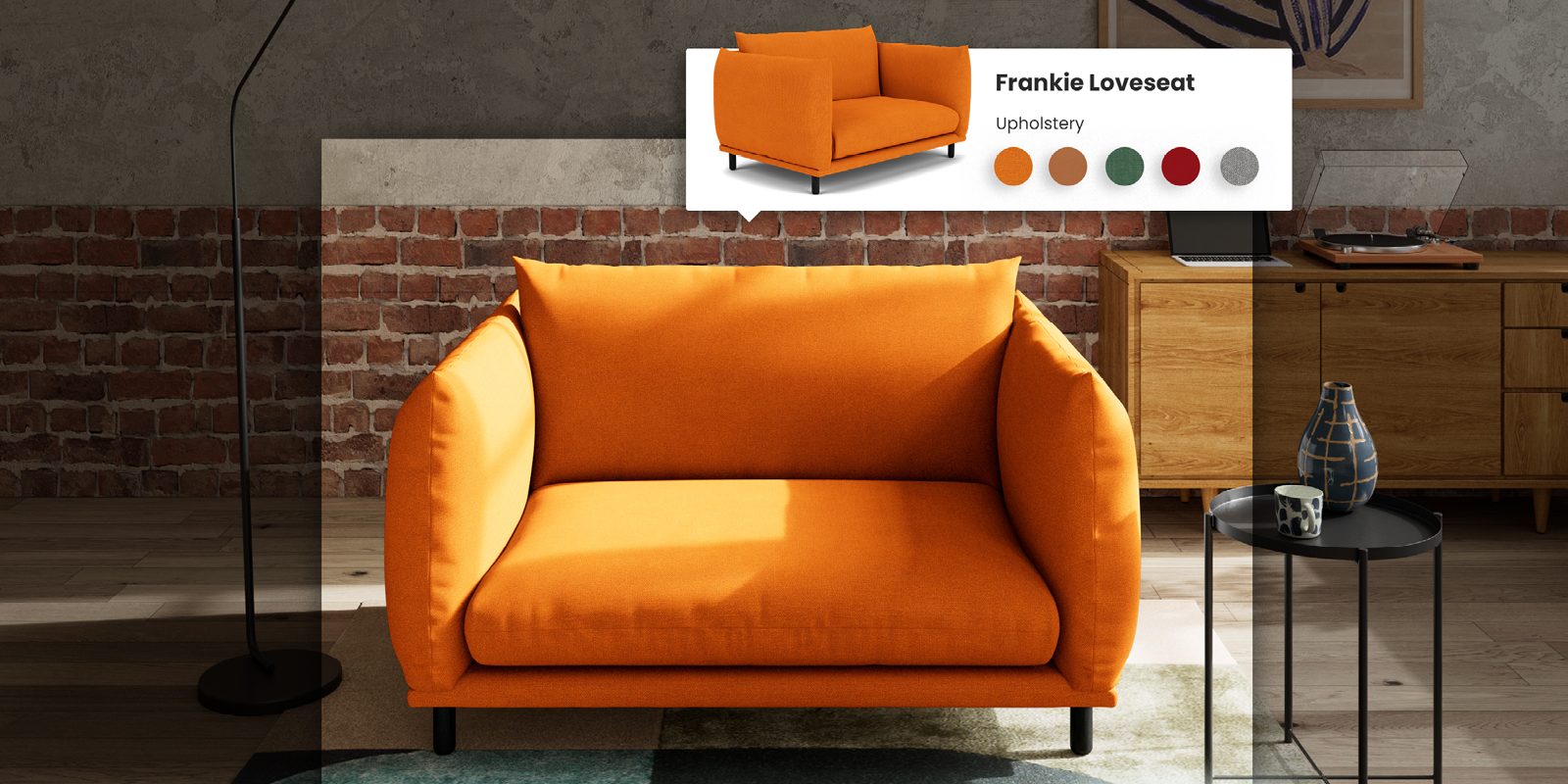
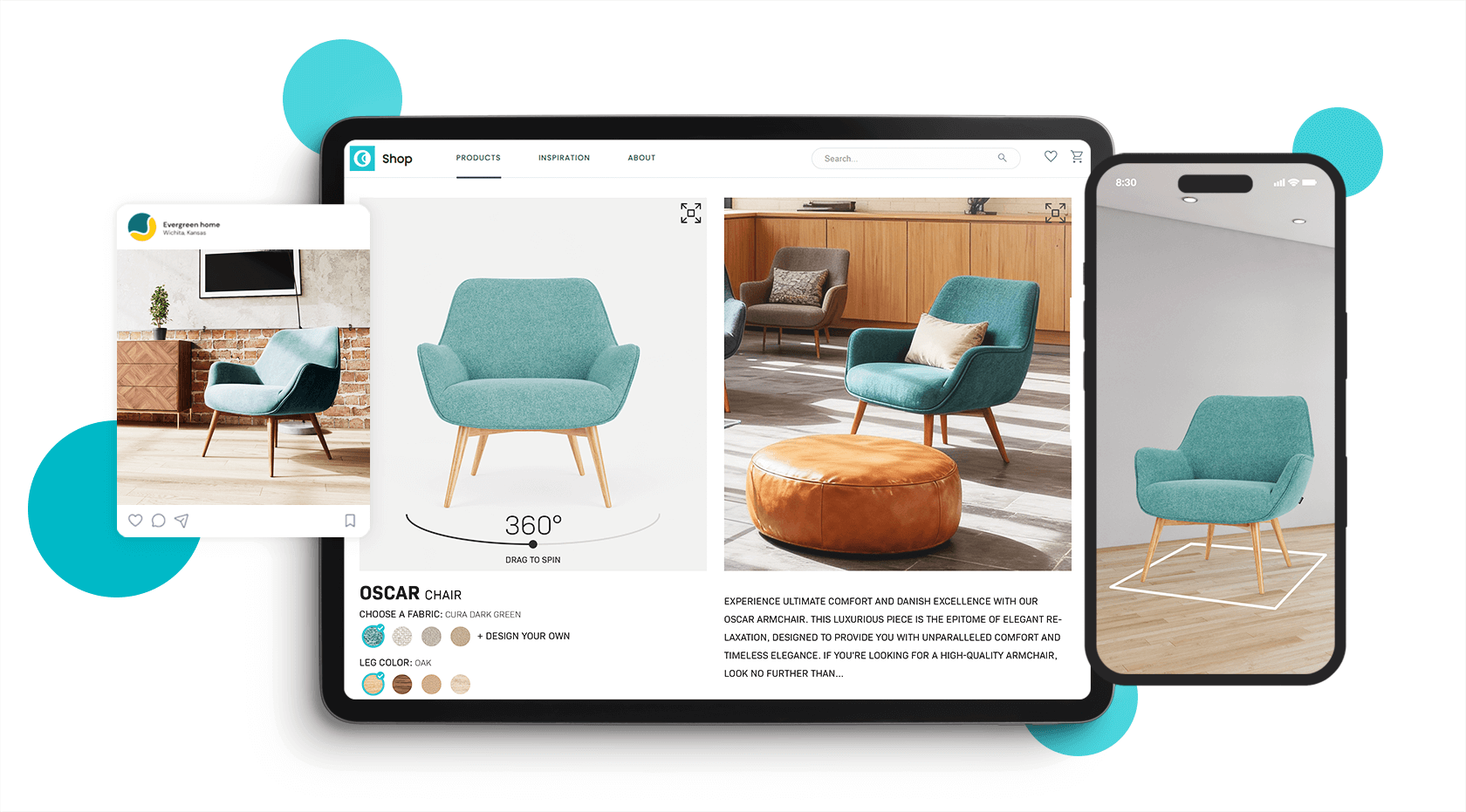
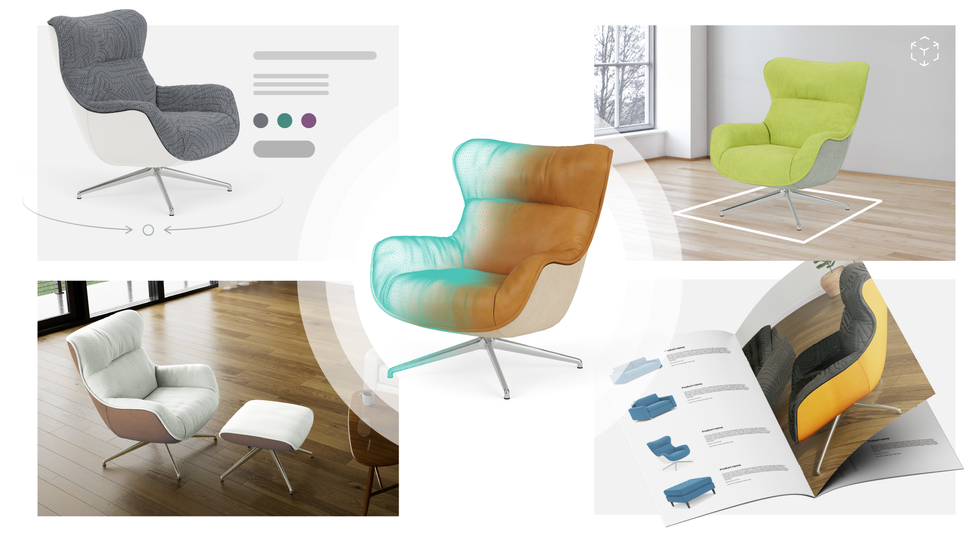
At the center of this shift is 3D visualization. When a brand centralizes its product assets on a 3D product visualization platform, every downstream channel draws from the same verified source: web configurator, mobile AR, in-store kiosk, dealer portal, campaign imagery. One update propagates everywhere. One asset governs every touchpoint.
Not a technical aspiration. The operational requirement for any brand trying to convert a shopper who discovered the product on Instagram, configured it on a laptop, and then walked into a store expecting the same experience.
The in-store problem phygital solves
Physical retail has always faced a hard constraint: showrooms are finite. A furniture showroom can display 40 sofas. The brand may sell 400 configurations of each sofa. Associates with swatch books and imagination have been the historical answer to this gap. It is an inadequate answer for a shopper who spent two hours configuring their exact specification online before walking through the door.
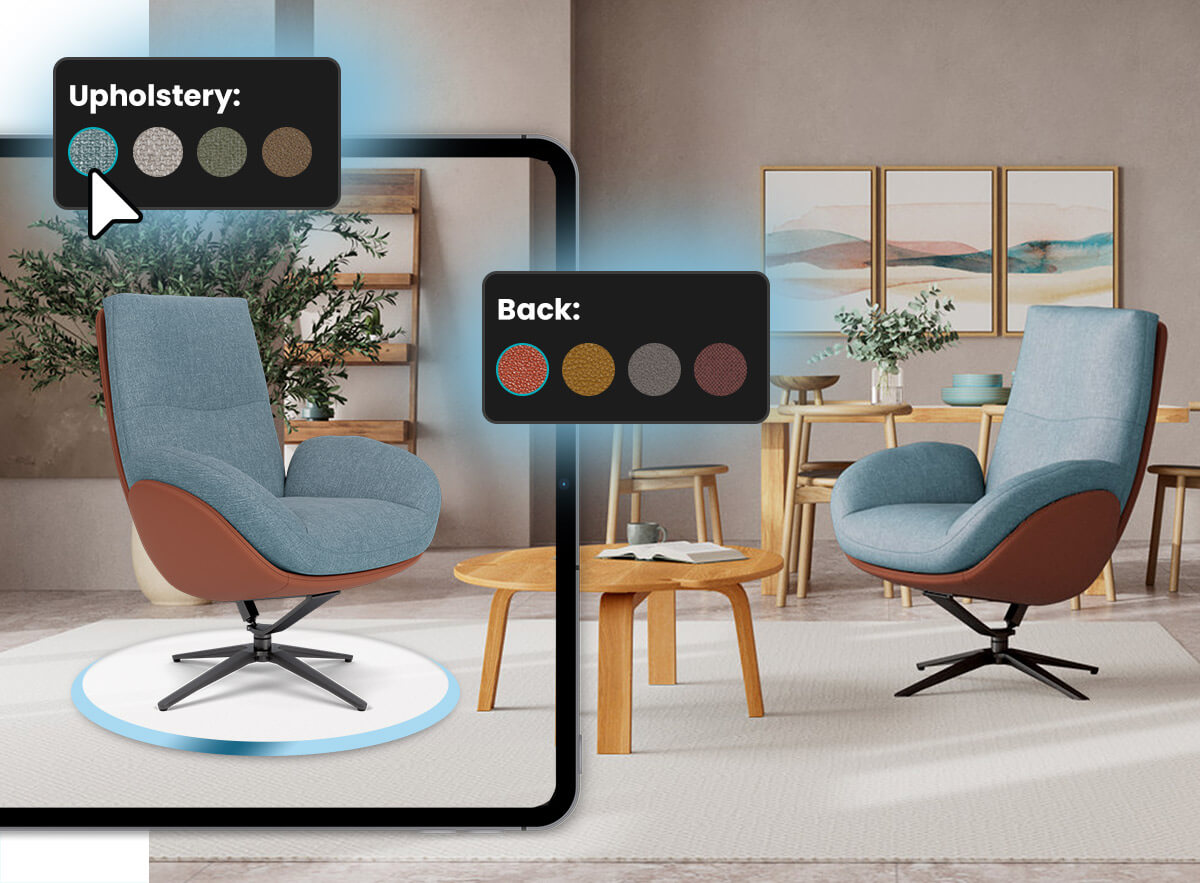
The phygital solution replaces imagination with certainty. In-store kiosks powered by the same 3D asset library as the brand's website let shoppers explore every fabric, finish, and modular combination in photorealistic detail, on a screen that matches exactly what they saw at home. Associates equipped with the same tools can configure alongside the customer, show lifestyle imagery in the shopper's preferred colorway, and hand off a saved configuration directly to checkout.
That is the endless aisle: not a catalog on a screen, but the full visual range of the product line available interactively, at any point in the store, powered by the same verified asset that runs the digital experience.
Proof of Impact: MAKE Nordic
10% to 50% Customization Adoption. 5x Increase. YoY Revenue Growth.
MAKE Nordic made configuration visually explorable across every channel, online and in-store, rather than text-listed in a swatch book. Customization adoption moved from 10% to 50% of orders, a 5x increase that contributed directly to year-over-year revenue growth. The product range did not change. The visual infrastructure did.
Read the full case study here.
AR as the bridge between online and physical
Phygital commerce does not only mean bringing digital tools into stores. It also means extending physical confidence into digital environments. The most powerful tool for this is web-native augmented reality: the ability for a shopper to place a photorealistic, true-to-scale version of a product in their actual room before ordering.
AR removes the single biggest source of furniture returns: the scale mismatch. A shopper who has seen a sofa at true scale in their living room, in their exact chosen configuration, has resolved the primary objection that drives purchase hesitation and post-delivery regret.
"Augmented reality finds a valuable use case in the furniture industry. We have seen in customer surveys that AR is referenced as a common reason for purchase completion."
— Dan Gange, Director of E-commerce, EQ3
The critical requirement: the AR experience uses the same verified 3D asset as the website and the in-store kiosk. A shopper who configured a sofa in ivory boucle online and then places it in AR should see the identical product, not an approximation. One asset, verified, deployed everywhere, always accurate.
Why consistency is the competitive advantage
The brands losing market share in furniture are not losing on product quality or price alone. They are losing on confidence. A shopper who cannot get a consistent, accurate picture of what they are buying, across channels, across devices, across the online-to-store transition, defaults to a competitor who can give them that certainty.
Phygital commerce, built on centralized 3D infrastructure, is the operational answer to the confidence problem. It does not require separate technology investments for online and in-store. It requires one platform, one asset library, and the decision to deploy both everywhere simultaneously.
Proof of Impact: Sofacompany
19% Unprompted AR Activation Rate.
After deploying Cylindo web-native AR, Sofacompany saw 19% of product page visitors activate AR without any prompt beyond a visible button. For an optional interactive feature on a high-consideration product, nearly one in five shoppers choosing to use it represents mainstream adoption, and a direct signal of how much visual confidence matters in the purchasing decision.
Read the full case study here.
The brands building phygital infrastructure now are not doing so because their current setup is broken. They are doing so because the brands they compete with are either already there or moving fast. The cost of inconsistency, in returns, in abandoned baskets, in showroom visits that do not convert, compounds every quarter it goes unaddressed. The brands that centralize first set a standard their competitors will spend years trying to match.
Frequently Asked Questions
What is phygital commerce in furniture retail?
Phygital commerce is the integration of digital depth into physical retail and physical confidence into digital environments. In furniture, this means a shopper can configure a product online, place it in AR on their phone, walk into a showroom and continue the same configuration on a kiosk, and complete the purchase, all from one consistent visual experience. It requires a centralized 3D asset infrastructure that serves every touchpoint from the same verified source.
How does 3D visualization support phygital retail strategy?
3D visualization provides the shared infrastructure that makes phygital commerce possible. A single 3D Master Asset powers the website configurator, the AR experience, the in-store kiosk, the dealer portal, and the lifestyle imagery simultaneously. When a product changes, a new fabric is added, a configuration option is discontinued, the update happens once and propagates to every channel automatically, ensuring consistency across every touchpoint.
What is the endless aisle and how does it work in furniture stores?
The endless aisle replaces the physical constraint of showroom floor space with digital access to the brand's full product range. Rather than displaying 40 sofa configurations physically, a brand can deploy a 3D kiosk or associate tablet that gives access to every fabric, finish, and modular combination in photorealistic detail. The asset powering the kiosk is identical to the one on the website, so the experience is consistent whether the shopper is at home or in the store.
How does web-native AR reduce furniture returns?
Most furniture returns happen because the product did not match what the shopper expected: wrong scale, wrong colour, wrong feel in context. Web-native AR lets shoppers place the product at true scale in their actual room before ordering, resolving the spatial mismatch that drives most return decisions. Because AR uses the same verified 3D asset as the PDP, the product a shopper places in AR is identical to what will arrive at their door. Ann Gish saw a 35% reduction in buyer's remorse returns on Wayfair after deploying Cylindo visualization.