Key Points
-
Eliminating Visual Inconsistency: The primary failure in omnichannel retail is the "visual mismatch" between platforms. A centralized 3D asset ensures that the product looks identical on Instagram, a website configurator, and an AR room-planner, preventing the "trust break" caused by inconsistent 2D photography.
-
Operational Velocity via "Create Once, Publish Everywhere": Traditional photography is a "dead" siloed cost. Centralizing 3D assets allows brands to instantly generate marketing stills, social content, and in-store kiosk visuals from a single master model, moving products from design to digital launch without waiting for physical photoshoots.
-
The ROI of Accuracy: Centralization transforms visualization from a recurring expense into a scalable business asset. By providing photorealistic accuracy across all touchpoints, brands see a dual impact: a conversion lift of up to 5x and a significant reduction in return rates (often from 15% down to 10% or less).
From Photography Silos to Asset Ecosystems
Most retailers talk about omnichannel as a logistical challenge. They focus on fulfillment, inventory, and handoffs between online and in-store teams. The real failure point, however, is visual consistency. A customer discovers a product on Instagram, customizes it on a website, and views it in their home through AR. If the visuals do not match perfectly at every step, trust breaks instantly.
This problem exists because most omnichannel strategies are built on static, disconnected content. Two-dimensional photography is dead content. It cannot scale, adapt, or stay consistent across channels. Every new campaign, product variation, or market expansion triggers another expensive production cycle. Teams commission separate assets for web, AR, print, and in-store displays, creating silos that slow down digital transformation.
The future of omnichannel retail depends on a centralized 3D asset strategy. By adopting a visual commerce platform, brands can create once and publish everywhere. Visualization becomes a reusable business asset rather than a recurring cost. Cylindo's visual commerce software provides the infrastructure that centralizes these assets and ensures photorealistic quality across every customer touchpoint, turning omnichannel from a promise into a capability.
The Pillars of a Centralized 3D Strategy
Centralizing 3D assets changes how omnichannel works at an operational level. Instead of thinking in terms of channels, retailers think in terms of capabilities powered by a shared asset foundation.
Pillar 1: Content Velocity
Physical photography limits speed. Lead times stretch into weeks or months as samples are produced, shipped, styled, and shot. A centralized 3D model removes that delay. Once the master model is finalized, teams can instantly generate product imagery, lifestyle scenes, and variations for web, social, and marketing campaigns.
This enables instant merchandising. Products can launch digitally the moment design is approved. Marketing teams no longer wait on studios. E-commerce teams can respond to trends in real time. Content velocity becomes a competitive advantage rather than a bottleneck.
Pillar 2: Emotional Confidence
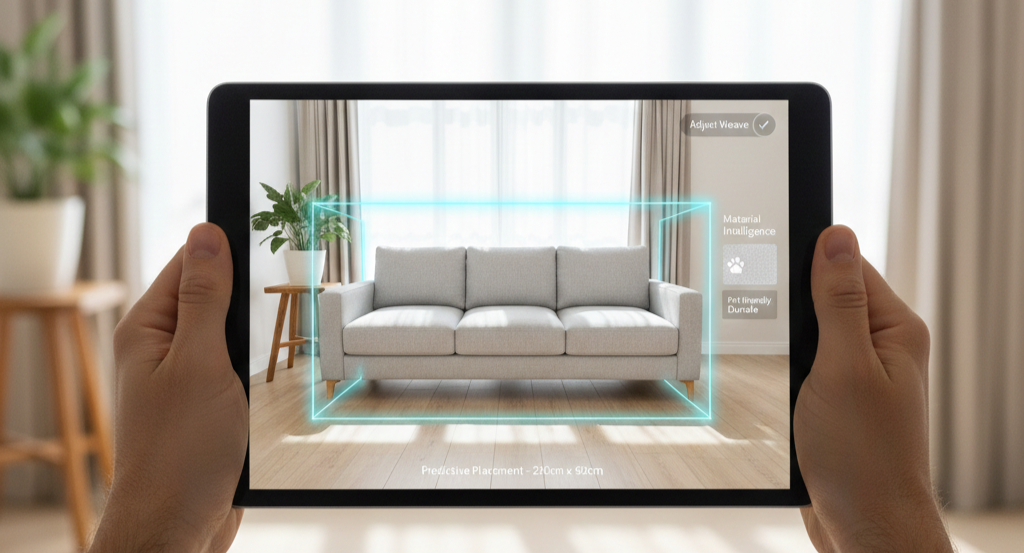
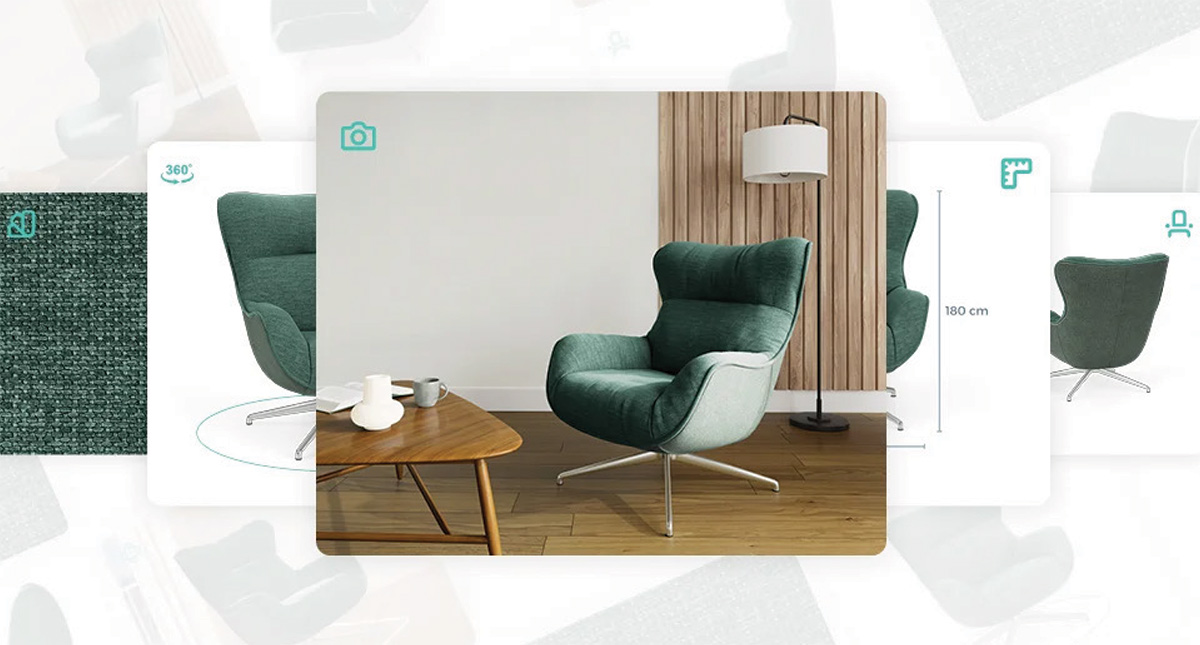
High-consideration purchases fail when customers lack confidence. They ask whether the product will fit, look right, or match expectations. Centralized 3D assets power configurators and AR experiences that eliminate these doubts. The same asset that drives the web experience also appears in room visualization tools, ensuring accuracy across every interaction.
This consistency creates a trust loop. Customers see the same product representation on social media, on the website, in AR, and in-store. Confidence increases because nothing changes between channels.
Pillar 3: Channel Fluidity
Omnichannel breaks down when assets cannot move freely. Centralized 3D models solve this by enabling reuse across digital and physical environments. High-resolution stills generated from 3D assets can be used for print catalogs and point-of-sale materials. The same models can power in-store kiosks and associate tablets.
The result is a unified brand voice. Customers never encounter conflicting visuals. Channels stop competing with each other and begin reinforcing the same story.

Breaking the 2D Content Ceiling
Two-dimensional imagery places a hard ceiling on both revenue growth and operational efficiency. Centralized 3D assets remove that ceiling.
1. Revenue Impact: Conversion and AOV
Interactive visualization increases time on page and buyer confidence. When customers can rotate, inspect, and configure products in real time, they feel more informed and more certain. Industry benchmarks show that interaction with 3d product visualization software can lead to conversion lifts of two to five times compared to static imagery.
Customization also drives higher average order value. Seeing premium materials or upgraded configurations in photorealistic detail encourages customers to trade up. These revenue gains compound across channels when the same asset powers web, mobile, and in-store experiences.
2. Cost Impact: Returns and Rework
Returns are often driven by mismatched expectations. In furniture, a return rate of fifteen percent is not uncommon when customers guess at scale or material. Centralized 3D assets close this gap. The model used in AR is the same model used on the website and in-store. That accuracy reduces surprises and lowers return rates to ten percent or less.
Centralization also eliminates redundant production. Instead of commissioning separate photoshoots for each channel, retailers invest once in a master model. The cost of managing fifty photoshoots across regions and teams disappears. The savings grow as catalogs expand.
3. The Math of Centralization
A simple comparison makes the value clear. One master 3D model costs a fixed amount. That model generates unlimited assets across every channel. Traditional photography requires repeated investment for each variation, campaign, and market. Centralization turns a variable cost into a scalable asset.
👉 Is your content strategy hitting a 2D ceiling?
Discover how to turn your product visuals into a reusable, high-performance ecosystem that scales with your business. Explore our visual commerce software.
Scalability Requires a Visual Commerce Platform
Centralizing assets is not possible without the right infrastructure. Managing raw 3D files manually quickly becomes unmanageable, especially at enterprise scale.
1. The Management Trap
Without a platform, teams rely on file servers, manual exports, and custom workflows. Performance suffers. Assets are duplicated, outdated, or improperly optimized for different devices. What starts as a visualization initiative turns into a DevOps problem.
Mid-market and enterprise brands need a system that functions as a digital asset manager for 3D. Assets must be stored, optimized, versioned, and delivered consistently across every environment.
2. Cylindo Curator
Cylindo’s visual commerce software solves this challenge by managing 3D assets as living infrastructure. Assets are not just stored. They are optimized for performance, rendered in real time, and delivered appropriately whether the customer is on a mobile browser, desktop site, or in-store screen.
The platform ensures zero latency and consistent quality, protecting the customer experience while enabling teams to scale without friction.
3. Infrastructure as a Growth Engine
Centralized 3D infrastructure allows ROI to scale with the business. As catalogs grow, new channels emerge, or markets expand, the same asset foundation supports them all. Visualization stops being a project and becomes a permanent capability embedded in the organization.
The Blueprint for Visual Sovereignty
Omnichannel is not a destination. It is a capability built on data, systems, and assets. Centralizing 3D assets is the only way to meet modern expectations for speed, realism, and consistency across channels.
High-consideration retail demands more than pictures. It requires accuracy, confidence, and continuity. Retailers must stop taking pictures and start managing assets. Those who do gain visual sovereignty over their brand experience and remove the friction that breaks trust.
Centralized 3D assets are not just ready for today’s web and store environments. They are prepared for the next wave of spatial computing, from advanced AR to emerging mixed reality platforms. Investing in this infrastructure future-proofs the business.
Build Your Omnichannel Engine Today
Are you ready to move beyond static imagery? Cylindo’s visual commerce software gives you the tools to centralize your 3D assets and fuel your entire omnichannel strategy from a single source of truth.