TL;DR: A wholesale buyer evaluating a furniture vendor in 2026 is not just evaluating the product. They are evaluating the brand's ability to provide visual coverage across their entire range, in every fabric, every configuration, and every regional market, at the speed their merchandising cycles demand. Brands with 3D catalog infrastructure can say yes to all of that. Brands on photography cannot.
Key points:
-
Major wholesale buyers now expect complete visual coverage at the vendor's product cycle speed, not at the photoshoot calendar's speed. Every new SKU, every new fabric, every regional market, and every product update requires a separate shoot under a photography model. The production calendar becomes the ceiling on how fast the brand can respond to buyer requirements.
-
3D catalog infrastructure changes the pitch from promise to demonstration. Complete coverage is shown to the buyer in their exact channel format, populated with the exact SKU set they will carry, rendered in every configuration. The question shifts from "do you have a lookbook?" to "can you deliver complete visual coverage of our range in our formats?", and only one type of vendor answers that question with a yes.
-
The commercial evidence lands at CFO level, not just merchandising level. Polly Products expanded its marketing budget from $130,000 to $409,000 after deploying 3D visualization, a 215% increase driven by performance data the platform made visible. Riverside Furniture saves $100,000 annually distributing to 3,500+ retail partners from one library. Visualization costs drop 58% on average across the Cylindo customer base.
What wholesale buyers now expect
The bar wholesale buyers set for vendor visual coverage has moved sharply in the last two years, and most furniture brands still pitching those buyers have not fully absorbed the shift. Major retail buyers now expect complete visual coverage across every SKU the brand offers, in every configuration and fabric option, delivered in the exact formats and dimensions their digital channels require. They expect the content to be updated when the products change, not when the vendor's next photoshoot happens to land in the production calendar. And they expect consistency across every regional market the retailer operates in, so the sofa displayed in a German store matches the sofa shown on the UK website matches the sofa listed in the US catalog, with no visual drift between the three.
The uncomfortable reality is that photography-dependent brands cannot reliably meet any of those expectations at the scale a major retailer requires. Every new SKU is a shoot. Every new fabric variant is another shoot. Every regional market wants its own lifestyle context, which is another shoot. Every product update triggers a reshoot, and the production calendar becomes the ceiling on how fast the brand can respond to the buyer's actual needs.
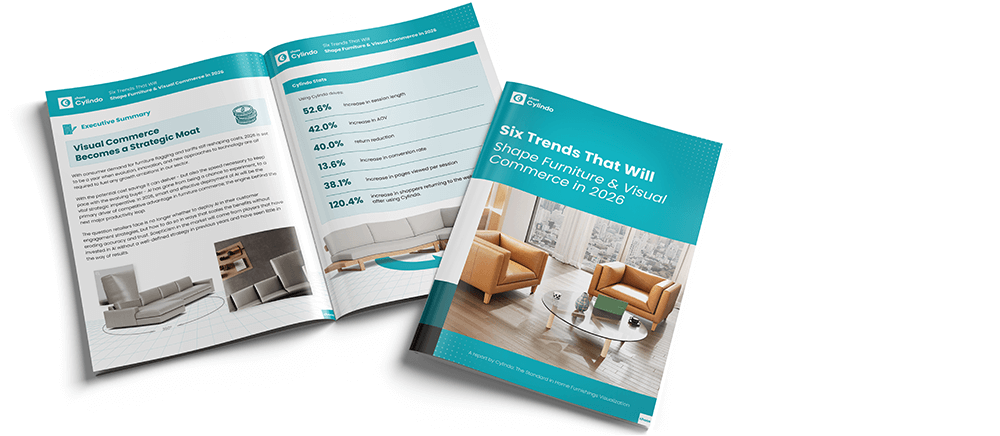
The pitch conversation quietly becomes a negotiation about which coverage gaps the buyer will accept rather than a demonstration of what the brand can deliver. The Six Trends Report 2026 identifies the tempo of this problem accelerating, shorter product cycles now require visual content in days rather than weeks, and a photoshoot-dependent vendor cannot operate at that cadence without proportionally scaling their production budget.
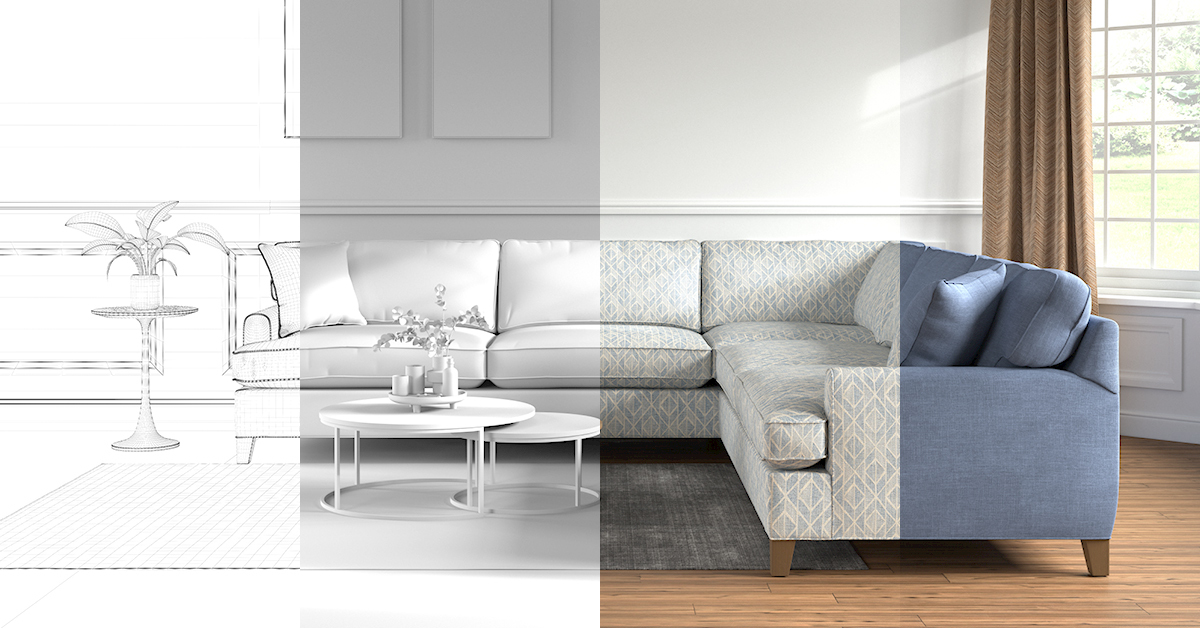
Brands with 3D asset infrastructure enter the same conversation from a completely different position. Complete coverage is not a promise. It is a demonstration. The pitch deck stops showing curated hero imagery and starts showing the buyer their exact channel format, populated with the exact SKU set they will carry, rendered in every configuration the shopper might actually choose.
The performance data that wins the conversation
The commercial evidence that a 3D catalog changes the wholesale conversation is worth walking through explicitly, because it is the part of the pitch that lands with the CFO on the buyer's side rather than only with the merchandising lead.
Polly Products expanded its annual marketing budget from $130,000 to $409,000, a 215% increase, after deploying 3D visualization, alongside 3x engagement on the new visual content and 17% growth in organic traffic. The budget expansion was not speculative. It was a direct response to the performance data the platform made visible, and it changed the internal investment conversation from a matter of belief to a matter of evidence. A brand that walks into a wholesale pitch with that kind of attribution data is demonstrating category performance with actual numbers the buyer's analytics team can validate, not asking the buyer to trust a lookbook.
Proof of Impact: Polly Products
Marketing Budget $130K to $409K. 3x Engagement. +17% Organic Traffic.
Polly Products deployed Cylindo 3D visualization to accurately reflect the material quality their products were built with. Engagement tripled, organic traffic grew 17%, and the marketing budget expanded from $130,000 to $409,000, because the performance data the platform generated justified further investment at board level. Better product data produced better performance data, which unlocked the budget to scale.
Read the full case study here.
Riverside Furniture rounds out the case at wholesale scale. The brand saves roughly $100,000 annually by distributing consistent visual coverage to more than 3,500 retail partners from a single Cylindo Studio library. The wholesale model behind those numbers is what makes the Cylindo investment commercially defensible at board level, the saving scales with distribution reach rather than degrading with it.
At the platform level, the executive headline that lands in enterprise procurement conversations: visualization costs drop by an average of 58% across the Cylindo customer base, according to the Nordic and US Retailers Reports 2026. That figure is the vendor-overhead argument the retailer's procurement team is actively looking for from every category vendor they evaluate.
What a 3D catalog actually delivers
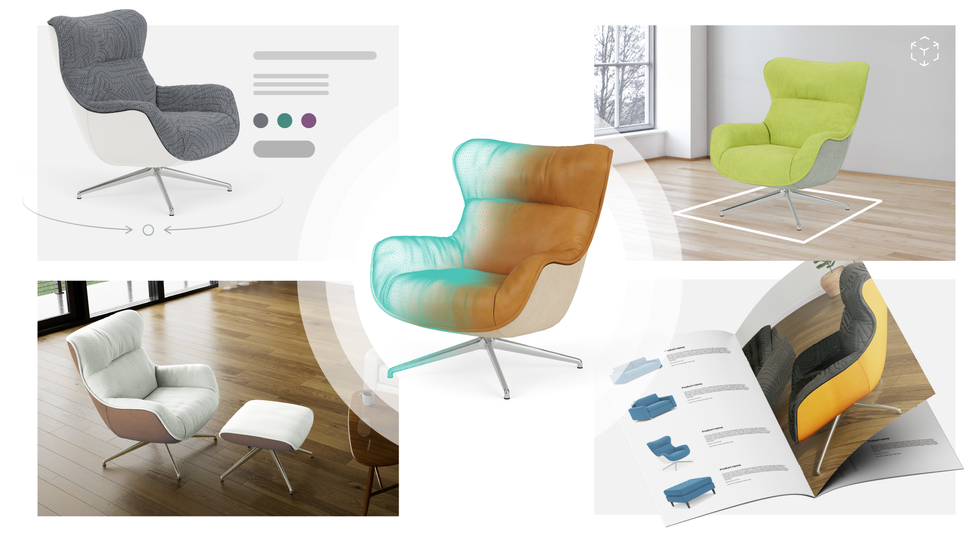
A 3D catalog is not a document format, and it is not a slicker version of the lookbook the buyer has already politely thumbed through from three other vendors this quarter. It is a system that delivers four capabilities photography cannot match at wholesale scale.
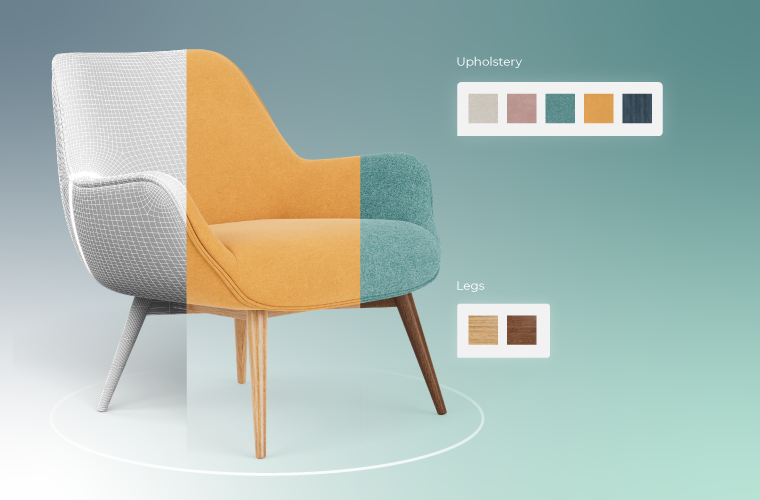
Complete visual coverage. Every SKU rendered in every fabric and configuration option from a single 3D archetype, the buyer sees the actual product they will carry rather than a representative sample they have to extrapolate from.
Market-specific content. Regional lifestyle imagery generated from the same asset without a separate photoshoot per market, consistent quality reaching every regional market the retailer operates in without parallel production streams.
Buyer-ready formats. Cylindo Export packages assets in the exact pixel dimensions, file formats, and metadata structures each retail partner requires, so the buyer never has to ask whether the brand can support their specific channel setup.
Real-time updates. When a fabric is discontinued or a new collection launches, the asset library is updated and all downstream content is regenerated without a new photoshoot, the buyer's channel stays current at the tempo the brand's actual product cycle runs.
FEST Amsterdam illustrates the tempo dimension in practice. The brand can launch a new collection live in approximately one month, with assets deployed across channels from one 3D library, because the underlying content model does not require parallel production streams to keep parallel channels in sync. That speed is precisely what a major retailer's merchandising calendar requires from a serious vendor, and it is what photography-based competitors structurally cannot match.
Proof of Impact: Riverside Furniture
$100,000 Annual Saving. 3,500+ Retail Partners. One Cylindo Studio Library.
Riverside Furniture distributes consistent visual content to a network of more than 3,500 retail partners from a single Cylindo Studio library, saving up to $100,000 annually. The saving scales with distribution reach, adding a new retail partner does not require adding a new content production run.
Read the full case study here.
The enterprise digital twin argument
The strategic frame that ties this argument together comes from the Cylindo Structured Data ebook: structured product truth has become mandatory infrastructure for competing in an overcrowded market. The wholesale channel is exactly where that mandate lands hardest, because the buyer is evaluating not just what the vendor sells but whether the vendor has the infrastructure to deliver against a modern retail operation.
The brands that can demonstrate 1:1 digital twin coverage of their product range, accurate geometry, PBR materials, and configuration logic encoded structurally rather than described in marketing copy, are the brands wholesale buyers trust to deliver consistent visual execution at scale. Cylindo Studio is the tool that generates the market-appropriate lifestyle imagery on top of that digital twin foundation, making regional coverage economically viable rather than budget-breaking.
One 3D library powers the wholesale catalog, the brand website, and the marketplace listings simultaneously. Build it once, pitch it everywhere, and let the infrastructure demonstrate vendor readiness rather than asking the buyer to take the pitch on faith.
Frequently Asked Questions
What do major wholesale furniture buyers expect from vendor visual coverage in 2026?
Complete SKU coverage in every configuration and fabric option, delivered in channel-ready formats and dimensions, updated on the brand's product cycle rather than on a photoshoot schedule, and consistent across all regional markets the retailer operates in. Photography-based vendors cannot reliably meet all four requirements at wholesale scale. Brands with 3D asset infrastructure built on platforms like Cylindo can.
How does a 3D catalog differ from a traditional lookbook in a wholesale pitch?
A traditional lookbook shows a curated selection of hero products in a fixed format. A 3D catalog demonstrates complete visual coverage of the entire range, every SKU, every fabric, every configuration, and shows the buyer exactly how their channel's specific format requirements will be met via Cylindo Export. It also includes performance data, engagement lift, conversion lift, cost reduction, that a lookbook cannot provide and that lands with the CFO rather than only with the merchandising lead.
What did Polly Products achieve after investing in 3D visualization?
Polly Products expanded its annual marketing budget from $130,000 to $409,000, a 215% increase, after deploying 3D visualization, because the performance data the platform generated justified the investment. Engagement rose 3x and organic traffic grew 17%. The data changed the investment conversation at board level from a matter of belief to a matter of evidence, which is exactly the kind of attribution a wholesale pitch needs to land with a buyer's CFO.
How does Cylindo Export support wholesale distribution?
Cylindo Export packages image assets generated from the brand's 3D library in the exact formats, dimensions, and metadata structures each retail partner requires, all from a single generation event. When products change, the asset library is updated and all downstream content is regenerated without a new photoshoot. Riverside Furniture uses this model to distribute visual content consistently across more than 3,500 retail partners, saving roughly $100,000 annually.