TL;DR: Furniture shoppers move across Instagram, Amazon, retailer sites, and showrooms without thinking in "channels," but many brands still present a different version of the same product at every stop. According to Cylindo's guide, Your Product, Everywhere: The Furniture Brand Guide to Omnichannel Readiness, that inconsistency compounds into five measurable costs, and the brands fixing it are seeing double-digit gains in conversion, order value, and engagement.
Key points:
-
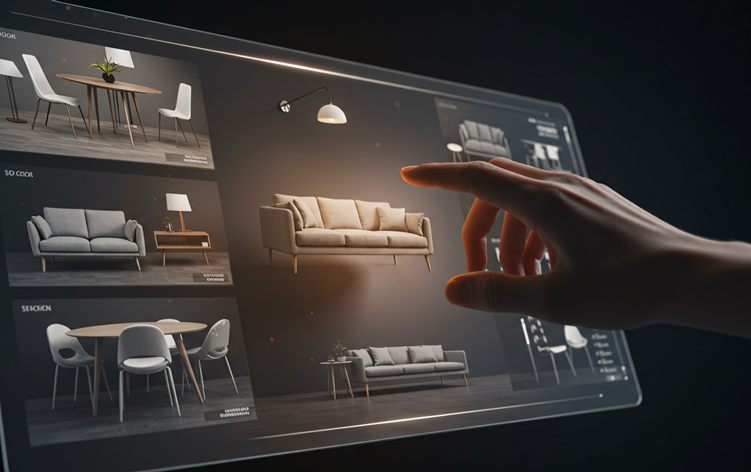
The channel-hopping shopper is already the norm. A single product can appear as a compressed marketplace thumbnail, a styled lifestyle shot, a glossy staged scene, a zoomable 3D render, and influencer-generated content, often produced by different teams with no shared source of truth.
-
Inconsistency is not cosmetic. It is costly. Poor product presentation is a leading cause of returns, accounting for an estimated 34% of all return volume across categories, while brands with a consistent visual identity see a 33% increase in revenue.
-
EQ3 is a documented example of the fix working. After centralizing its visual assets with Cylindo, the Canadian furniture brand saw a 36% increase in conversions, an 88% increase in average order value, and a 116% increase in page views, along with reduced returns.
-
The performance gap between consistent and inconsistent PDPs is already measurable, showing up in conversion rate, average order value, pages per session, and how often shoppers come back.
The omnichannel reality: one product, endless touchpoints
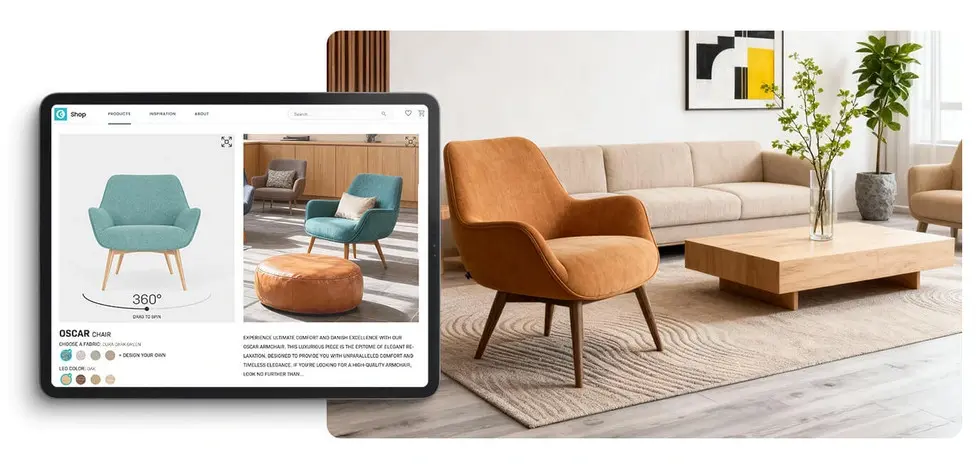
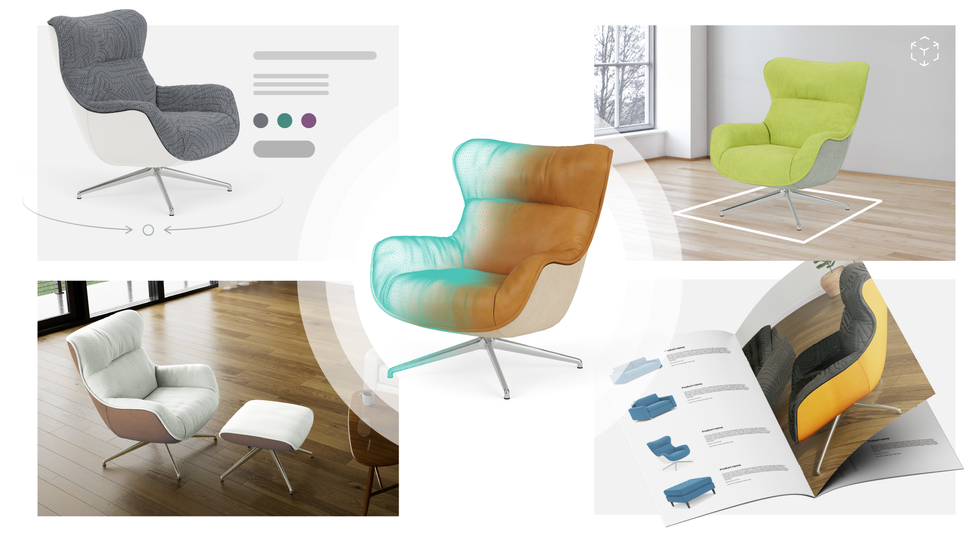
A shopper does not discover a sofa once. They encounter it again and again across a kind of hide-and-seek path through retail channels: a compressed, metadata-stripped thumbnail on a marketplace, a highly styled lifestyle shot on Instagram, a glossy staged scene in an email campaign, a zoomable technical 3D render on the brand's own PDP, a print catalogue page, an in-store kiosk, and increasingly, influencer-generated content the brand did not even produce itself.
Each of those touchpoints is a chance to win the customer over. It is also a chance to lose them. Without a single source of truth for product visuals, every channel quietly becomes its own silo. A marketing team tweaks lighting for Instagram. An ecommerce team resizes images for Wayfair. A shipping or ops team optimizes thumbnails for Amazon. None of that work is wrong on its own, but done independently, it slowly splinters the product's identity until the same sofa looks like three different sofas depending on where the customer meets it.
Five ways inconsistency quietly drains revenue
According to Cylindo's guide, visual inconsistency creates five compounding problems, and none of them show up as a single line item on a P&L.
Brand erosion. Mixed visual signals weaken identity and trust. When shoppers see the same product represented differently across touchpoints, they internalize uncertainty, and over time that uncertainty makes the brand harder to recall and easier to forget.
Lost conversions. Mobile shoppers make snap judgments. A buyer who sees the same dining chair styled differently on two sites may second-guess which version is real, and that hesitation is often enough to send them off to compare elsewhere instead of clicking add to cart.
Operational drag. Without a shared workflow, teams spend hours resizing, reformatting, and manually recreating the same visuals for every platform instead of producing new content. Every handoff between teams adds a chance for errors to creep in.
Escalating return rates. Poor product presentation is estimated to drive 34% of all return volume across categories. For furniture specifically, every return triggers a costly chain of logistics, inspection, repackaging, and resale at a discount, if the item can be resold at all. Capital tied up in reverse logistics is capital that is not funding marketing or product development.
The trust tax. When what arrives at a customer's door does not match what they saw online, disappointment is close to inevitable, even if the customer keeps the item. That lost goodwill takes far more effort to rebuild than it did to lose, and in a review-driven market, it spreads faster than any campaign can repair it.
Brands with a consistent visual identity see a 33% increase in revenue. The inverse is also true. Inconsistency is not a design nitpick. It is a direct drain on the bottom line.
Proof of Impact: EQ3
+36% Conversions. +88% Average Order Value. +116% Page Views.
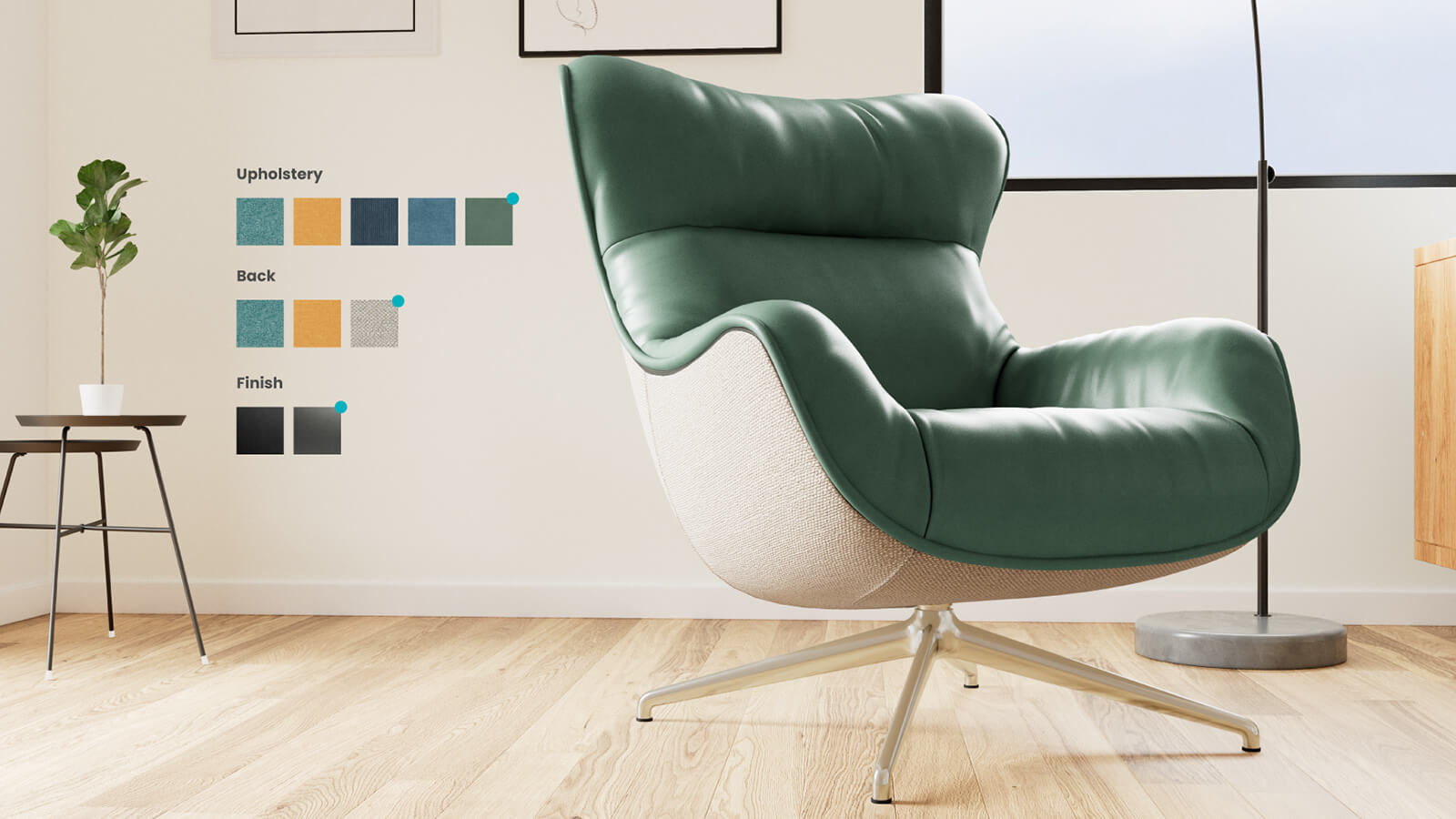
EQ3, one of Canada's leading furniture brands, built its identity on deep customization, with products offering millions of possible configurations. That complexity was exactly where visuals splintered fastest: a sofa could appear one way on EQ3.com, another on Amazon, and another again on Wayfair, driving shopper confusion, brand dilution, and higher returns. After centralizing its visual assets with Cylindo, including a 360 HD viewer for photorealistic exploration and AR previews launched directly from the product page, EQ3 reduced its image generation process for a major marketplace integration from six months to hours, and now presents every product with the same quality, finish, and detail whether the shopper is on EQ3.com, Wayfair, Amazon, or Instagram.
Read the full case study here.
What omnichannel readiness actually requires
The fix Cylindo's guide points to is a Master Asset Library: a single source of truth where a product visual is created once and then adapted and syndicated across retail partners, marketplaces, and owned channels, rather than recreated from scratch every time a new platform or retailer requires a slightly different format. Instead of a marketing team, an ecommerce team, and a retailer all working from separate versions of the same sofa, everyone works from one asset that updates everywhere the moment it changes.
Getting there follows a four-step path the guide lays out in full: audit, centralize, automate, and control. Each step moves a brand from confusion toward a state where a single update, a new finish, a corrected texture, a fresh lifestyle shot, flows automatically to every channel without a manual rebuild. The detailed roadmap, including what to check at each stage, is in the guide.
The performance gap is already measurable
Cylindo's benchmark data shows a meaningful gap between PDPs built on this kind of centralized visual infrastructure and those without it, across conversion rate, average order value, pages per session, and how often shoppers return to browse again. Brands that achieve omnichannel readiness are seeing conversion gains in the double digits and average order value gains even larger than that, consistent with what EQ3 experienced after centralizing its own assets. The full platform-by-platform comparison, including how Cylindo stacks up against other visualization tools on the market, is broken out in detail inside the guide.
The pattern across all of this is consistent. The brands treating visual consistency as a technical afterthought are paying for it in returns, operational hours, and quiet conversion loss. The brands treating it as infrastructure, one library, one update, every channel, are turning that same discipline into a growth lever.
Frequently Asked Questions
What is the "trust tax" in furniture ecommerce?
The trust tax refers to the goodwill a furniture brand loses when a product that arrives at a customer's home looks different from what they saw online, in color, proportion, or material. Even when the customer keeps the item, that mismatch erodes trust, and rebuilding it takes far more effort than maintaining consistent visuals in the first place.
How much revenue do furniture brands lose to inconsistent product visuals?
Poor product presentation is estimated to drive 34% of all return volume across categories, while brands with a consistent visual identity see a 33% increase in revenue. Inconsistency also shows up as lost conversions from shopper hesitation and operational drag from teams manually resizing and reformatting the same images for every channel.
What is a Master Asset Library and how does it fix omnichannel visual consistency?
A Master Asset Library is a single source of truth for product visuals. Instead of separate teams recreating and resizing the same image for every retailer, platform, and marketing channel, one asset is created and updated once, then automatically syndicated everywhere the product appears, from PDPs to marketplace thumbnails to in-store kiosks.
What results has EQ3 seen from centralizing its visual assets with Cylindo?
EQ3 saw a 36% increase in conversions, an 88% increase in average order value, and a 116% increase in page views after centralizing its product visuals with Cylindo, along with reduced returns from visuals that set more accurate customer expectations. The brand also cut a major marketplace image generation process from six months to hours.