

TL;DR: A PIM manages structured product information. A DAM manages digital files. Neither manages visual product truth: the accurate 3D geometry, material specifications, and configuration logic that make a furniture product visually explorable across every channel. That is what Cylindo does. It is not a PIM replacement. It is the visual commerce layer that sits between your product data and every downstream channel that needs to show the product accurately.
The gap between PIM, DAM, and visual commerce
Most furniture brands already have a PIM. Many have a DAM. And yet the question of how to get accurate, consistent product visuals to every channel, every retailer, and every customer touchpoint remains one of the most expensive operational problems in the category.
The reason: a PIM manages structured product attributes: SKUs, dimensions, materials, pricing. A DAM manages digital files: photography, PDFs, video assets. What neither manages is the visual product truth layer: the verified geometry, material specifications, and configuration logic that make a product visually accurate and deployable everywhere simultaneously.
For furniture brands with large catalogs and complex configurable products, that gap is not a minor inconvenience. It is the source of the photoshoot cycles, the inconsistent retailer imagery, the manual asset packages, and the configuration options that exist in a dropdown but cannot be shown visually.
A visual commerce platform fills that gap. Cylindo fills it specifically for furniture.
What a Visual PIM does
A Visual PIM strengthens the connection between structured product records and the visual assets representing them. The PIM remains the information layer, managing attributes. Visual catalog capabilities connect those records with photography, video, 3D models, and other assets.
A DAM approaches the same problem from the asset side: centralized management for digital media, often extending beyond product content into brand assets, campaign materials, and general file storage.
For furniture brands, 3D product data management introduces a third requirement neither system fully addresses: creating accurate visual representations of complex products across configurations, materials, angles, environments, and interactive experiences. A sofa in 50 fabrics, three modular configurations, and five finish options is not a file management problem. It is a visual production and distribution problem at catalog scale.
That is where Cylindo sits.
Cylindo's role: the visual commerce platform
Cylindo starts with the product and its specifications. CAD files, physical samples, dimensions, materials, supplier specifications, and reference images. From those inputs, Cylindo creates verified 3D Master Assets that accurately represent the product and every valid configuration it comes in.
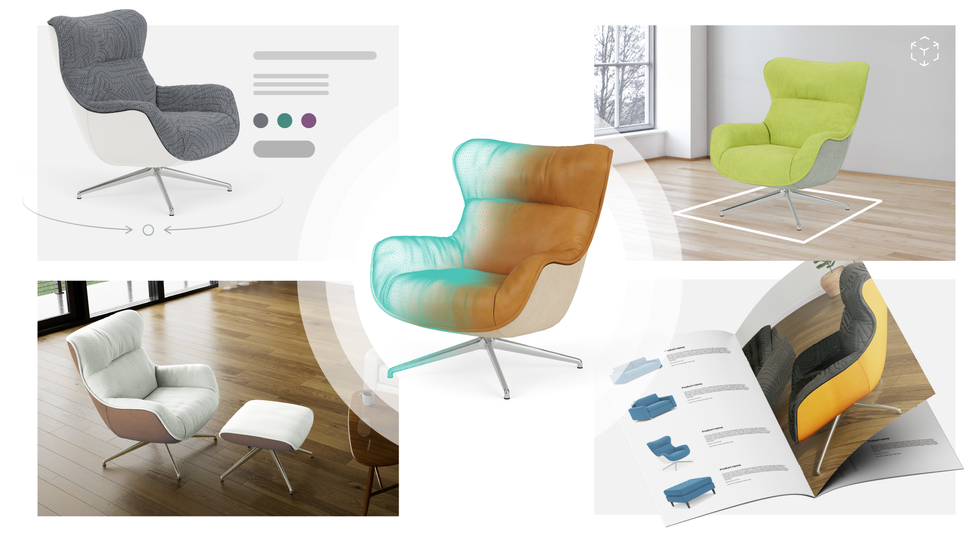
Those models become the foundation for everything visual. Silo imagery, 360-degree experiences, AR, lifestyle content, configurators, and dimension shots, all from one verified source. When a fabric changes, it updates once and propagates everywhere. No new photoshoot. No per-retailer rebuild.
The Curator dashboard gives e-commerce and merchandising teams central management of how that content appears across product pages, without developer involvement. The Content API and Export distribute it to downstream channels programmatically.
The result is a visual commerce infrastructure that sits clearly between the PIM and the channel: PIM owns product information, Cylindo owns visual product truth, and the Content API delivers it everywhere.
FEST Amsterdam: one visual foundation across four channels
FEST Amsterdam runs Cylindo-powered content across four surfaces simultaneously: PDP configurator, mobile AR, in-store tablets, and B2B partner presentations. New collections go live across all four in as little as a few weeks.
Each surface has a different merchandising requirement. The PDP needs interactive visualization. Mobile needs AR. The showroom needs digital content for associate-led conversations. B2B teams need compelling visuals for pitches and proposals.
Frank Tervoert, Head of Growth at FEST Amsterdam:
We do projects for the service industry (hotels, restaurants) and regularly use Cylindo 3D models in our presentations and pitches. The final result looks stunning, giving us an edge over our competitors.
One 3D Master Asset. Four surfaces. No separate content creation process for each. That is what visual product information management looks like when it works at commercial scale: product information stays in the PIM, and Cylindo provides the models, visuals, and experiences to merchandise it everywhere else.
Proof of Impact: Riverside Furniture
$100,000 Annual Saving. 3,500+ Retail Partners. One Asset Library.
Riverside Furniture distributes consistent product assets to more than 3,500 retail partners from a single centralized Cylindo library. Every partner gets current, accurate product content. No per-partner rebuild. No asset package emails. One source, everywhere.
Read the full case study here.
How Cylindo integrates with the existing technology stack
Cylindo does not replace the PIM or DAM. It completes the stack.
The PIM manages structured product information. The DAM manages broader digital media. Cylindo creates and manages the 3D product foundation and distributes the visuals and experiences derived from it. Each system has a distinct role and none of the three duplicates the other.
The stack looks like this:
PIM: product information and attributes.
Visual PIM: product information with deeper visual asset associations.
DAM: digital media and file management.
Cylindo: 3D product models, verified visual content, and visual commerce experiences distributed across every channel.
This architecture also matters increasingly for AI-powered commerce. Accurate geometry, material specifications, configuration logic, and consistent visual assets give AI shopping agents the structured product data they need to evaluate and recommend furniture products with confidence. A brand whose product data lives in a PIM but whose visual layer is incomplete or inconsistent will appear less complete to an AI agent evaluating it at query time.
Cylindo's visual foundation closes that gap: the product information is in the PIM, the visual product truth is in Cylindo, and both are machine-readable from the same verified source.
Frequently Asked Questions
What is a Visual PIM and how is it different from a traditional PIM or DAM?
A Visual PIM is a PIM, or PIM capability, with greater emphasis on connecting structured product information with visual assets such as photography, video, and 3D models. A DAM focuses on managing digital media files. Cylindo is a visual commerce platform rather than a PIM or Visual PIM. It creates and manages the 3D product foundation and the visuals and experiences derived from it, sitting between the product data layer and the channels that need to display the product accurately.
How does Cylindo work with a Visual PIM for furniture brands?
Cylindo uses product inputs including CAD files, physical samples, dimensions, materials, and reference images to create verified 3D Master Assets. Those models support product imagery, 360-degree experiences, configurators, AR, lifestyle content, and other merchandising needs. The PIM continues to manage structured product information while Cylindo manages the visual product truth layer and distributes it across channels via the Content API.
Can Cylindo replace a furniture brand's existing PIM and DAM?
No. It is not designed to. Cylindo complements the existing technology stack. The PIM manages structured product information. The DAM manages broader digital media. Cylindo creates and manages the 3D product foundation and delivers visuals and visual commerce experiences across downstream channels. Each system has a distinct role.
How does a visual commerce platform help furniture brands distribute assets to retail partners?
A visual commerce platform provides a centralized foundation for creating, managing, and distributing product visuals from a single verified source. Riverside Furniture distributes consistent assets to more than 3,500 retail partners from a single Cylindo asset library, saving up to $100,000 annually. When a product changes, the update propagates across the network without rebuilding the asset for each partner individually.