---
title: Why Visual Governance is the New Competitive Edge in AI Commerce
description: AI makes generating visual content easy, but maintaining brand consistency is harder. Discover why visual governance and product truth are the future of e-commerce.
image: https://blog.cylindo.com/hubfs/1750243246952-1.jpeg
---
[  Cylindo Logo](https://www.cylindo.com/)
- Platform
Overview
- [How it works](https://www.cylindo.com/how-it-works/)
Core Platform
- [Asset Hosting A visual source of truth for every product.](https://www.cylindo.com/platform/core/#asset-hosting)
- [Content Creation Produce channel-ready content at catalog scale.](https://www.cylindo.com/platform/core/#content-creation)
- [Commerce Tools Turn product pages into digital showrooms.](https://www.cylindo.com/platform/core/#commerce-tools)
- [Distribution Compose, push, and measure across channels.](https://www.cylindo.com/platform/core/#distribution)
Bundles
- [Lifestyle Add-on 3D and AI lifestyle imagery tools - (Best for visuals at scale)](https://www.cylindo.com/platform/lifestyle/)
- [3D Design Customize multi-component or multi-product bundles in real time. - (Best for e-commerce)](https://www.cylindo.com/platform/3d-design/)
- [Compare bundles Check which bundle fit your needs](https://www.cylindo.com/platform/compare-bundles/)
[](https://cta-service-cms2.hubspot.com/web-interactives/public/v1/track/click?encryptedPayload=AVxigLI6OOO%2FX2J5LDxKXkS4hv6vtKaU6HSjeVDZjXWZcmceLj8daUydus447qAu%2BlJ559eJAETFdNThy3brmpc78RjSqK91TBGV3DRXWAT9CYaUwQTfpUcS4gyKy0BGxMrUXfiXXfPcuqDC4YFL2Q4t8zSqa5LBCOoe2%2B239nHYL4sjznAmPVn12nKAd0a4eGw%3D&portalId=4585441)
- Use cases
By outcome
- [Convert more shoppers](https://www.cylindo.com/use-cases/outcome/#convert-more)
- [Scale content creation](https://www.cylindo.com/use-cases/outcome/#scale-content)
- [Win across every channel](https://www.cylindo.com/use-cases/outcome/#win-across-every-channel)
By vertical
- [Furniture & home furnishings](https://www.cylindo.com/use-cases/verticals/#home-furniture)
- [Kitchen & bath](https://www.cylindo.com/use-cases/verticals/#kitchen-bath)
- [Lighting](https://www.cylindo.com/use-cases/verticals/#lighting)
- [Cabinetry](https://www.cylindo.com/use-cases/verticals/#cabinetry)
- [Outdoor living](https://www.cylindo.com/use-cases/verticals/#outdoor-living)
- [Contract & commercial](https://www.cylindo.com/use-cases/verticals/#contract-commercial)
By team
- [Creative](https://www.cylindo.com/use-cases/team/#creative)
- [Marketing](https://www.cylindo.com/use-cases/team/#marketing)
- [Digital & E-commerce](https://www.cylindo.com/use-cases/team/#digital-e-commerce)
###### [ Boosts online revenue +75% and AOV +44% with Cylindo Read more \>](https://cta-service-cms2.hubspot.com/web-interactives/public/v1/track/click?encryptedPayload=AVxigLKugaXLIJ%2FBi8rQ6ZH3KScymjpgFZMcslnX61buCaP7eztqyM%2FImxHLX0dtAnupUJVVBxkGawM3jYjCADACR7YiwNpGfaglek7MHXGRWftKwG7GteizyxZu8v4WpsEWrFZus%2Fqgv%2Fptk4DWBS%2FxWd2Sz72hNE9rvQIpn%2FyvuOFQoOyDEsBtEbUQ7wUe8xfZasMvt6gQZf%2FMx0eDGfZRZoo6%2BBs%3D&portalId=4585441)
- Customers
Customers
- [Customer Stories](https://www.cylindo.com/customer-case-studies/)
- [Customer Showcase](https://www.cylindo.com/customers/customer-showcase/)
Who we serve
- [B2B](https://www.cylindo.com/customers/who-we-serve/#b2b)
- [B2C](https://www.cylindo.com/customers/who-we-serve/#b2c)
###### [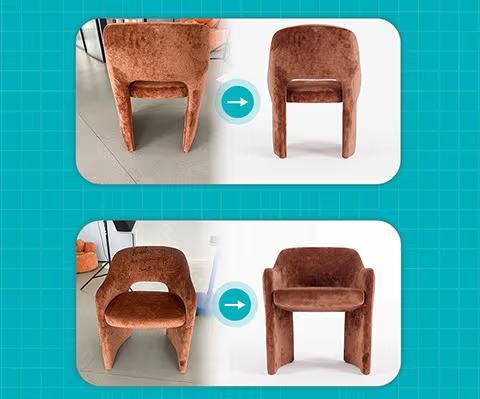 Introducing AI Master Assets Send four product photos and Cylindo produces four studio-quality silo shots in your chosen material, anchored to a 3D asset, with no content creation fee. Read more \>](https://cta-service-cms2.hubspot.com/web-interactives/public/v1/track/click?encryptedPayload=AVxigLKSbU1o5Ysj%2BcPHemzhD%2BQkYuIdvXHUOoj2SSm65frD8BvU5oP5VLFHOkvUADHGADgl04yRtO%2F3Jqiaet2IuCz1XbqguPoyO3c92XWtIN8Q898MYXZrbe2u9R7UN8Ce1CUFr5%2BOkaGZ22CGY8pDTNfyy3htJSI3nfzs96PEjUL2WpHb6vVuwzjqYeFJvRYAJpVWvH4l8jP9&portalId=4585441)
- Resources
Learn
- [Blog](https://blog.cylindo.com)
- [Cylindo library](https://www.cylindo.com/cylindo-content-library/)
Evaluate
- [ROI calculator](https://www.cylindo.com/roi-calculator/)
- [AI Master Assets test](https://www.cylindo.com/ai-master-assets-test/)
- [Business Impact](https://www.cylindo.com/business-impact/)
- [Free custom 3D and AI report new See what 3D + AI could be worth to your brand. Free custom report + ROI model in 48h.](https://www.cylindo.com/custom-report/)
- [Free AI readiness report new See how ChatGPT, Claude & Perplexity read your product pages, plus your top 10 fixes.](https://www.cylindo.com/ai-readiness-report/)
Support
- [Help center](https://learn.cylindo.com/help)
- [Ask support](https://learn.cylindo.com)
- [Change log](https://learn.cylindo.com/changelog)
###### [ Modern Search Discoverability Guide Learn how Google's 2026 AI search updates affect furniture discovery—and what to do to keep your products visible in AI-powered search. Download \>](https://cta-service-cms2.hubspot.com/web-interactives/public/v1/track/click?encryptedPayload=AVxigLJEl7T5dyLLkk%2FWEwwy6TlSBb9kSsYlkDUJ6tN9HhhUvn2hsLUaVYADFKjCAZUMYOr%2BPNOJgpkY2PJicVb3%2FGWl538Jmd3qJuCz8hf19svC47f2bjpQkoTlSgztHrzKcSDNaxvFrc0rZaFt1%2F75i9%2FVuns6K6Hkjfj7dt3UXOSlN1T4Ca%2Bt77aBq2Sgij0EtMCEjYZ%2Bc6O4olPgSsi2vkIcBzleG5bv9eDOO4D%2B%2BwNV2TMwtKv4x3g%3D&portalId=4585441)
- [Book demo](https://www.cylindo.com/book-meeting/)
- [Receive pricing](https://www.cylindo.com/receive-pricing/)
- [Login](https://app.cylindo.com/login)
- Platform
Overview
- [How it works](https://www.cylindo.com/how-it-works/)
Core Platform
- [Asset Hosting A visual source of truth for every product.](https://www.cylindo.com/platform/core/#asset-hosting)
- [Content Creation Produce channel-ready content at catalog scale.](https://www.cylindo.com/platform/core/#content-creation)
- [Commerce Tools Turn product pages into digital showrooms.](https://www.cylindo.com/platform/core/#commerce-tools)
- [Distribution Compose, push, and measure across channels.](https://www.cylindo.com/platform/core/#distribution)
Bundles
- [Lifestyle Add-on 3D and AI lifestyle imagery tools - (Best for visuals at scale)](https://www.cylindo.com/platform/lifestyle/)
- [3D Design Customize multi-component or multi-product bundles in real time. - (Best for e-commerce)](https://www.cylindo.com/platform/3d-design/)
- [Compare bundles Check which bundle fit your needs](https://www.cylindo.com/platform/compare-bundles/)
- Use cases
By outcome
- [Convert more shoppers](https://www.cylindo.com/use-cases/outcome/#convert-more)
- [Scale content creation](https://www.cylindo.com/use-cases/outcome/#scale-content)
- [Win across every channel](https://www.cylindo.com/use-cases/outcome/#win-across-every-channel)
By vertical
- [Furniture & home furnishings](https://www.cylindo.com/use-cases/verticals/#home-furniture)
- [Kitchen & bath](https://www.cylindo.com/use-cases/verticals/#kitchen-bath)
- [Lighting](https://www.cylindo.com/use-cases/verticals/#lighting)
- [Cabinetry](https://www.cylindo.com/use-cases/verticals/#cabinetry)
- [Outdoor living](https://www.cylindo.com/use-cases/verticals/#outdoor-living)
- [Contract & commercial](https://www.cylindo.com/use-cases/verticals/#contract-commercial)
By team
- [Creative](https://www.cylindo.com/use-cases/team/#creative)
- [Marketing](https://www.cylindo.com/use-cases/team/#marketing)
- [Digital & E-commerce](https://www.cylindo.com/use-cases/team/#digital-e-commerce)
- Customers
Customers
- [Customer Stories](https://www.cylindo.com/customer-case-studies/)
- [Customer Showcase](https://www.cylindo.com/customers/customer-showcase/)
Who we serve
- [B2B](https://www.cylindo.com/customers/who-we-serve/#b2b)
- [B2C](https://www.cylindo.com/customers/who-we-serve/#b2c)
- Resources
Learn
- [Blog](https://blog.cylindo.com)
- [Cylindo library](https://www.cylindo.com/cylindo-content-library/)
Evaluate
- [ROI calculator](https://www.cylindo.com/roi-calculator/)
- [AI Master Assets test](https://www.cylindo.com/ai-master-assets-test/)
- [Business Impact](https://www.cylindo.com/business-impact/)
- [Free custom 3D and AI report new See what 3D + AI could be worth to your brand. Free custom report + ROI model in 48h.](https://www.cylindo.com/custom-report/)
- [Free AI readiness report new See how ChatGPT, Claude & Perplexity read your product pages, plus your top 10 fixes.](https://www.cylindo.com/ai-readiness-report/)
Support
- [Help center](https://learn.cylindo.com/help)
- [Ask support](https://learn.cylindo.com)
- [Change log](https://learn.cylindo.com/changelog)
- [Book demo](https://www.cylindo.com/book-meeting/)
- [Receive pricing](https://www.cylindo.com/receive-pricing/)
- [Login](https://app.cylindo.com/login)
[Back to Blog](https://blog.cylindo.com/all)
# Why Visual Governance is the New Competitive Edge in AI Commerce

[Jen Rasmussen](https://blog.cylindo.com/author/jen-rasmussen) Published: May 12, 2026

> TL;DR: AI made visual content creation effectively infinite. The next challenge for enterprise brands is not generating more assets, but governing them. As AI-driven imagery scales, brands need connected systems that maintain product accuracy, visual consistency, and operational control across channels. The future of commerce belongs to companies that can orchestrate and govern visual truth at scale.
### Key points:
- The Shift from Creation to Coherence: Generative AI has successfully solved the problem of content creation by producing infinite images quickly. The new enterprise challenge is maintaining brand consistency, uniqueness, and accuracy across thousands of generated assets.
- Generic AI Lacks "Product Truth": Standard AI models are probabilistic and predictive—guessing how a product should look. In commerce, this leads to invented product details, scale drifts, and a loss of customer trust.
- Structured Governance is the Future: Winning companies will be those that govern content, not just generate it. Centralized "Master Assets" lock in exact product geometry and data, ensuring AI only imagines the background.
AI has made visual content effectively infinite. Product imagery, lifestyle scenes, and campaign creative can now be generated at a pace no enterprise team could have imagined two years ago.
The problem is that most brands were never built to govern content at this scale. Generating thousands of images is easy. Ensuring they remain accurate, consistent, and unmistakably on-brand is much harder.
That is the next major challenge in visual commerce: not creation, but coherence.
## AI is Creating a Brand Sameness Problem
The first wave of generative AI focused entirely on output. More images. Faster production. Lower costs. Infinite variations. And for a while, that was enough.
But the market is already starting to feel side effects like:
- Websites increasingly look the same.
- Campaign aesthetics are converging.
- Product imagery is becoming inconsistent across channels.
- Brands are producing more content than they can realistically govern.
The issue is not that AI-generated imagery is bad. The issue is that generic AI systems are probabilistic by design. They are optimized to generate visually plausible outputs, not preserve brand integrity or product truth.
That distinction matters enormously in commerce.
Especially in categories like furniture, kitchen and bath, lighting, and other design-driven or highly-customizable product industries where visual accuracy directly impacts conversion, returns, and customer confidence.
Because once content generation becomes effectively infinite, consistency becomes infrastructure.
## The Problem Is No Longer “Can We Generate Content?”
That problem is solved.
The real questions now are:
- How do you maintain visual consistency across thousands of AI-generated assets?
- How do you ensure products remain accurate across channels, campaigns, and regions?
- How do you scale content production without creating operational chaos or brand drift?
This is where many AI imagery workflows start to break down.
Most AI tools today are optimized for creative exploration, not enterprise orchestration. They generate outputs, but they do not provide a centralized system for managing, governing, activating, and distributing visual content across the business.
They work well for ideation and experimentation, but enterprise commerce content is operational content. It must:
- Match the product exactly
- Scale across thousands of SKUs
- Reflect real-world configurations
- Support omnichannel experiences
- Maintain visual consistency
- Stay connected to product systems and business logic
That requires more than image generation. It requires structured control.
It requires a [connected platform](https://www.cylindo.com/) that centralizes visual management, content creation, commerce experiences, and distribution in one place. A system where 3D, AI, product data, workflows, and downstream activation are all connected through the same source of truth.
## AI Is Predictive. It Is Not Product-Aware.
One of the biggest misconceptions in the current AI market is that foundation models alone solve enterprise visual commerce. They do not.
Generic AI systems understand patterns. They do not inherently understand products. If you provide a generic AI tool with a front-facing image of a sofa and ask it to generate a rear angle, the system guesses. It predicts geometry based on training data.
Sometimes the result looks close enough. But sometimes it invents entirely new product details. Scale drifts, materials shift, proportions change, and product configurations become inconsistent.
At enterprise scale, even small inconsistencies quickly compound across products, channels, and campaigns, which is why structured product intelligence becomes so important in commerce environments where accuracy and consistency directly impact customer trust and conversion.

Free Report
### Six Trends That Will Shape Furniture & Visual Commerce in 2026
Discover how leading furniture brands are utilizing AI content, rich PDP visualization, and real-time configuration to drive trust, conversions, and ROI.
[Get the Report](https://www.cylindo.com/cylindo-content-library/reports/6-trends-that-will-shape-furniture-and-visual-commerce-2026/?utm_source=organic&utm_medium=blog&utm_campaign=trends-report-2026&utm_content=inline-report-cta)
## The Future of AI Commerce Requires Structured Product Truth
At [Cylindo](https://www.cylindo.com/), we believe the future of visual commerce is not built on isolated image generation tools. It is built on structured product truth. That means every product exists as a reusable system of intelligence:
- Geometry
- Configuration logic
- Materials
- Dimensions
- Metadata
- Product rules
All connected in a centralized source of truth that powers the full visual content supply chain, from asset management and AI-generated imagery to immersive commerce experiences and omnichannel distribution.
We increasingly think about these systems as Master Assets: structured product intelligence that powers visualization, configuration, immersive commerce, and AI-generated content from the same product foundation.
Instead of fragmented workflows spread across disconnected AI tools, DAMs, render systems, commerce experiences, and publishing layers, brands need a unified platform where visual assets, product intelligence, AI generation, commerce tools, and distribution workflows operate together.
This changes the role AI plays entirely.
The AI is allowed to imagine the room. It is never allowed to imagine the product.
That distinction is the difference between generic AI imagery and production-grade visual AI infrastructure.
## The Next Competitive Advantage Is Visual Governance
The companies that win the next decade will not be the companies generating the most content. Everyone will generate content. The winners will be the companies that can operationalize visual content at scale without losing:
- Brand consistency
- Product fidelity
- Customer trust
- Workflow control
- Governance
- Omnichannel coherence
This is why the conversation is increasingly shifting beyond AI image generation alone and toward the systems required to manage, govern, distribute, and maintain visual consistency at scale.
As content production becomes effectively infinite, the long-term advantage will come from connected visual content supply chains that unify product intelligence, content creation, commerce experiences, and distribution within a centralized platform.
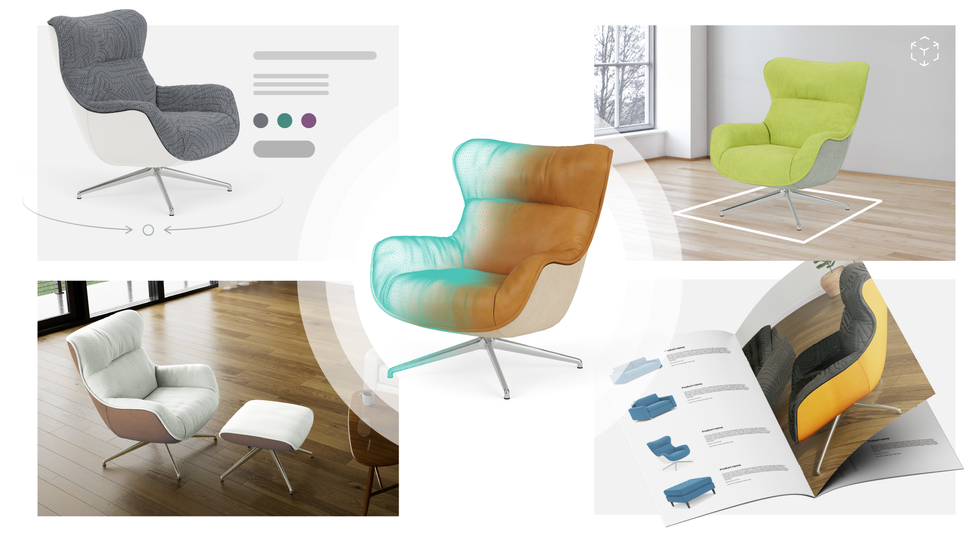
Platform Demo
### Book your free demo
Leading companies worldwide are using Cylindo to deliver superior omnichannel product experiences for their customers. Want to see why and what you can do with it?
[Book a Demo](https://www.cylindo.com/book-meeting/?utm_source=organic&utm_medium=blog&utm_campaign=visual-ai-infrastructure&utm_content=inline-demo-cta)
#### **What is the "brand sameness" problem in AI-generated content?**
Because generic AI systems are optimized to generate visually plausible outputs based on similar training data, brands relying heavily on these tools are experiencing converging aesthetics. Websites look the same, product imagery feels generic, and brands lose their distinct visual identity.
#### **Why shouldn't e-commerce brands rely solely on foundation AI models for product imagery?**
Foundation models are pattern-based and predict what an image should look like rather than understanding the actual physical product. If asked to generate a new angle of a sofa, the AI might invent new proportions, alter materials, or shift dimensions. This lack of accuracy can lead to customer confusion, lower conversion rates, and higher product returns.
#### **What does it mean to build "structured product truth"?**
"Structured product truth" means treating every product as a reusable, strictly governed system of intelligence—locking down its exact geometry, dimensions, configuration rules, and materials into a "Master Asset." This ensures that when AI is used to scale content, it only generates the lifestyle environment around the product, leaving the product itself 100% accurate and on-brand.

## Jen Rasmussen
Jen Rasmussen leads the global marketing organization at Cylindo, where she is responsible for strategy, brand, and demand generation. With more than 15 years in B2B SaaS marketing, she brings deep expertise in optimizing operations, enabling sales, and delivering measurable growth.
## [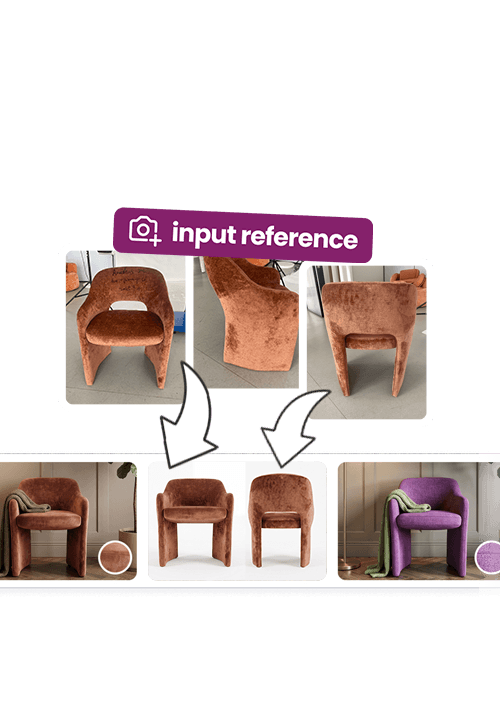 Free test Get studio-quality product visuals in 24 hours. Try AI Assets](https://www.cylindo.com/ai-master-assets-test/)
## Subscribe to our monthly newsletter.
Share
## [ Previous 3D as a Sales Enablement Tool: Empowering Your Showroom Staff](https://blog.cylindo.com/3d-as-a-sales-enablement-tool-empowering-your-showroom-staff/)
## [ Next The End of the Search Bar: How AI and Guided 3D Selling Are Transforming Furniture Discovery](https://blog.cylindo.com/the-end-of-the-search-bar/)
## Related Posts
[](https://www.chaos.com/)
Platform
- [How it works](https://www.cylindo.com/how-it-works/)
- [Core platform](https://www.cylindo.com/platform/core/)
- [Lifestyle bundle](https://www.cylindo.com/platform/lifestyle/)
- [3D design bundle](https://www.cylindo.com/platform/3d-design/)
- [Compare bundles](https://www.cylindo.com/platform/compare-bundles/)
Products
- [Augmented reality](https://www.cylindo.com/platform/products/augmented-reality/)
- [Curator](https://www.cylindo.com/platform/products/curator/)
- [Create](https://www.cylindo.com/platform/products/export/)
- [Analytics](https://www.cylindo.com/platform/products/analytics/)
- [Dimension shots](https://www.cylindo.com/platform/products/dimension-shots/)
- [Quickshot](https://www.cylindo.com/platform/products/quickshot/)
- [Studio](https://www.cylindo.com/platform/products/studio/)
- [Modular Designer](https://www.cylindo.com/platform/products/modular-designer/)
Company
- [About](https://www.cylindo.com/about-us/)
- [Leadership](https://www.cylindo.com/about-us#leadership)
- [Contact us](https://www.cylindo.com/about-us#contact-us)
- [Careers](https://careers.chaos.com/)
- [News](https://www.chaos.com/press)
Resources
- [Customer Success Stories](https://www.cylindo.com/customers/customer-stories/)
- [Customer Showcase](https://www.cylindo.com/customers/customer-showcase/)
- [Learning center](https://learn.cylindo.com/help)
- [Cylindo Blog](https://blog.cylindo.com)
- [Cylindo Library](https://www.cylindo.com/cylindo-content-library/)
- [Furniture Briefings](https://resources.cylindo.com/furniture-briefings-subscribe)
## Follow us
-
-
-
-
© 2026 Cylindo. All Rights Reserved.
- [Cookie policy](https://www.cylindo.com/cookies-policy/)
- [Privacy policy](https://www.cylindo.com/privacy/)
```json
{
"@context" : "https://schema.org",
"@type" : "FAQPage",
"mainEntity" : [ {
"@type" : "Question",
"acceptedAnswer" : {
"@type" : "Answer",
"text" : "Because generic AI systems are optimized to generate visually plausible outputs based on similar training data, brands relying heavily on these tools are experiencing converging aesthetics. Websites look the same, product imagery feels generic, and brands lose their distinct visual identity."
},
"name" : "What is the \"brand sameness\" problem in AI-generated content?"
}, {
"@type" : "Question",
"acceptedAnswer" : {
"@type" : "Answer",
"text" : "Foundation models are pattern-based and predict what an image should look like rather than understanding the actual physical product. If asked to generate a new angle of a sofa, the AI might invent new proportions, alter materials, or shift dimensions. This lack of accuracy can lead to customer confusion, lower conversion rates, and higher product returns."
},
"name" : "Why shouldn't e-commerce brands rely solely on foundation AI models for product imagery?"
}, {
"@type" : "Question",
"acceptedAnswer" : {
"@type" : "Answer",
"text" : "\"Structured product truth\" means treating every product as a reusable, strictly governed system of intelligence—locking down its exact geometry, dimensions, configuration rules, and materials into a \"Master Asset.\" This ensures that when AI is used to scale content, it only generates the lifestyle environment around the product, leaving the product itself 100% accurate and on-brand."
},
"name" : "What does it mean to build \"structured product truth\"?"
} ]
}
```