---
title: How EQ3 Increased Online Conversion and AOV With Web-AR for Furniture
description: Implementing web-AR has helped EQ3 reinvent the furniture shopping experience. They discovered that AR users have a 3x higher conversion rate.
image: https://blog.cylindo.com/hubfs/EQ3%20Blog%20post%20outline%20-%20hero%20image.jpg
---
[  Cylindo Logo](https://www.cylindo.com/)
- Platform
Overview
- [How it works](https://www.cylindo.com/how-it-works/)
Core Platform
- [Asset Hosting A visual source of truth for every product.](https://www.cylindo.com/platform/core/#asset-hosting)
- [Content Creation Produce channel-ready content at catalog scale.](https://www.cylindo.com/platform/core/#content-creation)
- [Commerce Tools Turn product pages into digital showrooms.](https://www.cylindo.com/platform/core/#commerce-tools)
- [Distribution Compose, push, and measure across channels.](https://www.cylindo.com/platform/core/#distribution)
Bundles
- [Lifestyle Add-on 3D and AI lifestyle imagery tools - (Best for visuals at scale)](https://www.cylindo.com/platform/lifestyle/)
- [3D Design Customize multi-component or multi-product bundles in real time. - (Best for e-commerce)](https://www.cylindo.com/platform/3d-design/)
- [Compare bundles Check which bundle fit your needs](https://www.cylindo.com/platform/compare-bundles/)
[](https://cta-service-cms2.hubspot.com/web-interactives/public/v1/track/click?encryptedPayload=AVxigLI6OOO%2FX2J5LDxKXkS4hv6vtKaU6HSjeVDZjXWZcmceLj8daUydus447qAu%2BlJ559eJAETFdNThy3brmpc78RjSqK91TBGV3DRXWAT9CYaUwQTfpUcS4gyKy0BGxMrUXfiXXfPcuqDC4YFL2Q4t8zSqa5LBCOoe2%2B239nHYL4sjznAmPVn12nKAd0a4eGw%3D&portalId=4585441)
- Use cases
By outcome
- [Convert more shoppers](https://www.cylindo.com/use-cases/outcome/#convert-more)
- [Scale content creation](https://www.cylindo.com/use-cases/outcome/#scale-content)
- [Win across every channel](https://www.cylindo.com/use-cases/outcome/#win-across-every-channel)
By vertical
- [Furniture & home furnishings](https://www.cylindo.com/use-cases/verticals/#home-furniture)
- [Kitchen & bath](https://www.cylindo.com/use-cases/verticals/#kitchen-bath)
- [Lighting](https://www.cylindo.com/use-cases/verticals/#lighting)
- [Cabinetry](https://www.cylindo.com/use-cases/verticals/#cabinetry)
- [Outdoor living](https://www.cylindo.com/use-cases/verticals/#outdoor-living)
- [Contract & commercial](https://www.cylindo.com/use-cases/verticals/#contract-commercial)
By team
- [Creative](https://www.cylindo.com/use-cases/team/#creative)
- [Marketing](https://www.cylindo.com/use-cases/team/#marketing)
- [Digital & E-commerce](https://www.cylindo.com/use-cases/team/#digital-e-commerce)
###### [ Boosts online revenue +75% and AOV +44% with Cylindo Read more \>](https://cta-service-cms2.hubspot.com/web-interactives/public/v1/track/click?encryptedPayload=AVxigLKugaXLIJ%2FBi8rQ6ZH3KScymjpgFZMcslnX61buCaP7eztqyM%2FImxHLX0dtAnupUJVVBxkGawM3jYjCADACR7YiwNpGfaglek7MHXGRWftKwG7GteizyxZu8v4WpsEWrFZus%2Fqgv%2Fptk4DWBS%2FxWd2Sz72hNE9rvQIpn%2FyvuOFQoOyDEsBtEbUQ7wUe8xfZasMvt6gQZf%2FMx0eDGfZRZoo6%2BBs%3D&portalId=4585441)
- Customers
Customers
- [Customer Stories](https://www.cylindo.com/customer-case-studies/)
- [Customer Showcase](https://www.cylindo.com/customers/customer-showcase/)
Who we serve
- [B2B](https://www.cylindo.com/customers/who-we-serve/#b2b)
- [B2C](https://www.cylindo.com/customers/who-we-serve/#b2c)
###### [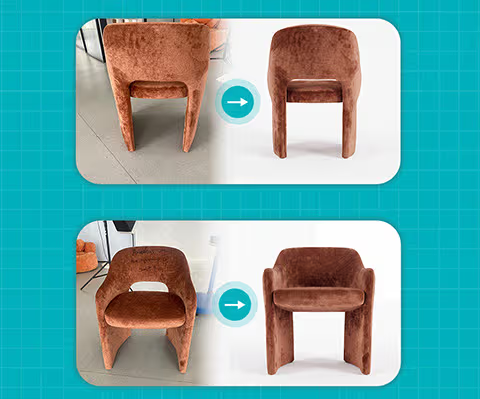 Introducing AI Master Assets Send four product photos and Cylindo produces four studio-quality silo shots in your chosen material, anchored to a 3D asset, with no content creation fee. Read more \>](https://cta-service-cms2.hubspot.com/web-interactives/public/v1/track/click?encryptedPayload=AVxigLKSbU1o5Ysj%2BcPHemzhD%2BQkYuIdvXHUOoj2SSm65frD8BvU5oP5VLFHOkvUADHGADgl04yRtO%2F3Jqiaet2IuCz1XbqguPoyO3c92XWtIN8Q898MYXZrbe2u9R7UN8Ce1CUFr5%2BOkaGZ22CGY8pDTNfyy3htJSI3nfzs96PEjUL2WpHb6vVuwzjqYeFJvRYAJpVWvH4l8jP9&portalId=4585441)
- Resources
Learn
- [Blog](https://blog.cylindo.com)
- [Cylindo library](https://www.cylindo.com/cylindo-content-library/)
Evaluate
- [ROI calculator](https://www.cylindo.com/roi-calculator/)
- [AI Master Assets test](https://www.cylindo.com/ai-master-assets-test/)
- [Business Impact](https://www.cylindo.com/business-impact/)
- [Free custom 3D and AI report](https://www.cylindo.com/custom-report/)
Support
- [Help center](https://learn.cylindo.com/help)
- [Ask support](https://learn.cylindo.com)
- [Change log](https://learn.cylindo.com/changelog)
###### [ Modern Search Discoverability Guide Learn how Google's 2026 AI search updates affect furniture discovery—and what to do to keep your products visible in AI-powered search. Download \>](https://cta-service-cms2.hubspot.com/web-interactives/public/v1/track/click?encryptedPayload=AVxigLJEl7T5dyLLkk%2FWEwwy6TlSBb9kSsYlkDUJ6tN9HhhUvn2hsLUaVYADFKjCAZUMYOr%2BPNOJgpkY2PJicVb3%2FGWl538Jmd3qJuCz8hf19svC47f2bjpQkoTlSgztHrzKcSDNaxvFrc0rZaFt1%2F75i9%2FVuns6K6Hkjfj7dt3UXOSlN1T4Ca%2Bt77aBq2Sgij0EtMCEjYZ%2Bc6O4olPgSsi2vkIcBzleG5bv9eDOO4D%2B%2BwNV2TMwtKv4x3g%3D&portalId=4585441)
- [Book demo](https://www.cylindo.com/book-meeting/)
- [Receive pricing](https://www.cylindo.com/receive-pricing/)
- [Login](https://app.cylindo.com/login)
- Platform
- [How it works](https://www.cylindo.com/how-it-works/)
- [Asset Hosting A visual source of truth for every product.](https://www.cylindo.com/platform/core/#asset-hosting)
- [Content Creation Produce channel-ready content at catalog scale.](https://www.cylindo.com/platform/core/#content-creation)
- [Commerce Tools Turn product pages into digital showrooms.](https://www.cylindo.com/platform/core/#commerce-tools)
- [Distribution Compose, push, and measure across channels.](https://www.cylindo.com/platform/core/#distribution)
- [Lifestyle Add-on 3D and AI lifestyle imagery tools - (Best for visuals at scale)](https://www.cylindo.com/platform/lifestyle/)
- [3D Design Customize multi-component or multi-product bundles in real time. - (Best for e-commerce)](https://www.cylindo.com/platform/3d-design/)
- [Compare bundles Check which bundle fit your needs](https://www.cylindo.com/platform/compare-bundles/)
- Use cases
- [Convert more shoppers](https://www.cylindo.com/use-cases/outcome/#convert-more)
- [Scale content creation](https://www.cylindo.com/use-cases/outcome/#scale-content)
- [Win across every channel](https://www.cylindo.com/use-cases/outcome/#win-across-every-channel)
- [Furniture & home furnishings](https://www.cylindo.com/use-cases/verticals/#home-furniture)
- [Kitchen & bath](https://www.cylindo.com/use-cases/verticals/#kitchen-bath)
- [Lighting](https://www.cylindo.com/use-cases/verticals/#lighting)
- [Cabinetry](https://www.cylindo.com/use-cases/verticals/#cabinetry)
- [Outdoor living](https://www.cylindo.com/use-cases/verticals/#outdoor-living)
- [Contract & commercial](https://www.cylindo.com/use-cases/verticals/#contract-commercial)
- [Creative](https://www.cylindo.com/use-cases/team/#creative)
- [Marketing](https://www.cylindo.com/use-cases/team/#marketing)
- [Digital & E-commerce](https://www.cylindo.com/use-cases/team/#digital-e-commerce)
- Customers
- [Customer Stories](https://www.cylindo.com/customer-case-studies/)
- [Customer Showcase](https://www.cylindo.com/customers/customer-showcase/)
- [B2B](https://www.cylindo.com/customers/who-we-serve/#b2b)
- [B2C](https://www.cylindo.com/customers/who-we-serve/#b2c)
- Resources
- [Blog](https://blog.cylindo.com)
- [Cylindo library](https://www.cylindo.com/cylindo-content-library/)
- [ROI calculator](https://www.cylindo.com/roi-calculator/)
- [AI Master Assets test](https://www.cylindo.com/ai-master-assets-test/)
- [Business Impact](https://www.cylindo.com/business-impact/)
- [Free custom 3D and AI report](https://www.cylindo.com/custom-report/)
- [Help center](https://learn.cylindo.com/help)
- [Ask support](https://learn.cylindo.com)
- [Change log](https://learn.cylindo.com/changelog)
- [Book demo](https://www.cylindo.com/book-meeting/)
- [Receive pricing](https://www.cylindo.com/receive-pricing/)
- [Login](https://app.cylindo.com/login)
[Back to Blog](https://blog.cylindo.com/all)
# How EQ3 Increased Online Conversion and AOV With Web-AR for Furniture

[Biljana Vidojevic](https://blog.cylindo.com/author/biljana-vidojevic) Updated: August 19, 2026
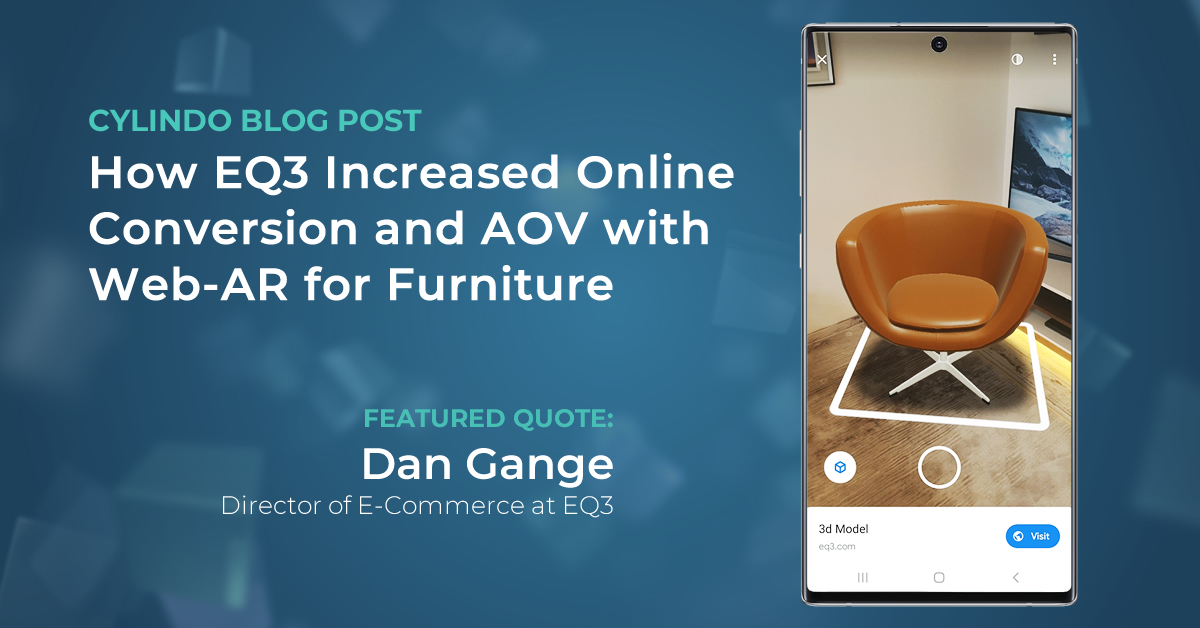
> TL;DR: Getting desktop furniture shoppers to use mobile augmented reality is hard. EQ3 fixed this by adding a simple QR code to their desktop product pages, bridging the gap to mobile web-AR. This small change increased AR adoption by 429%, which doubled their average order value and lifted conversions by 112%.
### Key points:
- Mobile AR drives real revenue: EQ3 checked their analytics and found that web-AR users converted at three times the normal rate. They also spent twice as much per order.
- Desktop traffic needs a mobile bridge: People prefer browsing large catalogs on monitors, but AR requires a phone camera. Adding a QR code on desktop pages gave shoppers an easy transition.
- Hard data beats guesswork: EQ3 scaled their 3D product visualization strategy by tracking the actual commercial outcomes rather than trusting their gut.
## The desktop-to-mobile conversion gap
Buying high-ticket furniture takes time. Customers usually prefer to explore large catalogs and check out fabric options on a desktop monitor. Then they hit a roadblock. To actually validate the purchase, they need to see how the item fits in their living room. That requires a phone.
Most retailers lose the customer right there. The friction of switching from a desktop browser to a mobile app kills the momentum. The buyer closes their laptop. They promise to measure the room later. They never come back. It is a costly leak in the sales funnel.
Canadian furniture retailer EQ3 saw this problem clearly. They already used [3d product visualization software]([INSERT%20VALID%20URL]) heavily. The Cylindo 360 HD Viewer was live across more than 400 of their products. The missing piece was getting that high-intent desktop traffic into their mobile web-AR experience without dropping the sale.
> “Retail is like sailing a ship. Some people navigate by the shore and the stars, and some use GPS. Depending on your goals, you can get away with older, intuitive, experience-based methods. But e-commerce is like a submarine. If you don't have instrumentation and the means to understand it, the only feedback you get is late. So you crash into something and only then do you know you have a problem.”
>
> — Dan Gange, Director of E-Commerce, EQ3
## How EQ3 fixed the device transition
EQ3 builds its digital strategy on data. By checking the Google Analytics integration tied to their visualization platform, the e-commerce team spotted a clear trend. Shoppers who used mobile web-AR were highly valuable. AR users generated a **two times higher Average Order Value (AOV)**. They also converted at **three times the rate** of standard users.
The next step was obvious. EQ3 had to get their desktop audience to use their phone cameras.
To fix this, they updated their desktop product pages. Now, when a shopper clicks the “View in AR” button, a QR code pops up on the monitor. The customer points their smartphone at the screen. The native camera scans the code and immediately launches the true-to-scale AR model in their room. There are no app downloads. Nobody has to create an account. It just works.
#### Proof of Impact: EQ3
429% Increase in AR Adoption
By bridging desktop product pages to mobile web-AR with a simple QR code, EQ3 drove a 429% increase in AR usage. Those AR-enabled shoppers had a 112% higher conversion rate than standard buyers.
Read the full case study [here](https://www.cylindo.com/customer-case-studies/eq3/).
Free Report
### Six Trends That Will Shape Furniture & Visual Commerce in 2026
Discover how leading furniture brands are utilizing AI content, rich PDP visualization, and real-time configuration to drive trust, conversions, and ROI.
[Get the Report](https://www.cylindo.com/cylindo-content-library/reports/6-trends-that-will-shape-furniture-and-visual-commerce-2026/?utm_source=organic&utm_medium=blog&utm_campaign=trends-report-2026&utm_content=inline-report-cta)
Removing that friction paid off immediately. The update caused a **429% jump** in shoppers using AR. By finding a clean way to connect desktop research with mobile validation, EQ3 solved a major dropout point in their digital funnel.
> "Augmented reality finds a valuable use case in the furniture industry. We have seen in customer surveys that AR is referenced as a common reason for purchase completion."
>
> — Dan Gange, Director of E-Commerce, EQ3
## 3D assets are commercial infrastructure
Augmented reality is not just a marketing add-on. It is basic commercial plumbing. When you let customers check the physical scale of a product in their own homes, they stop abandoning carts. They also return fewer items.
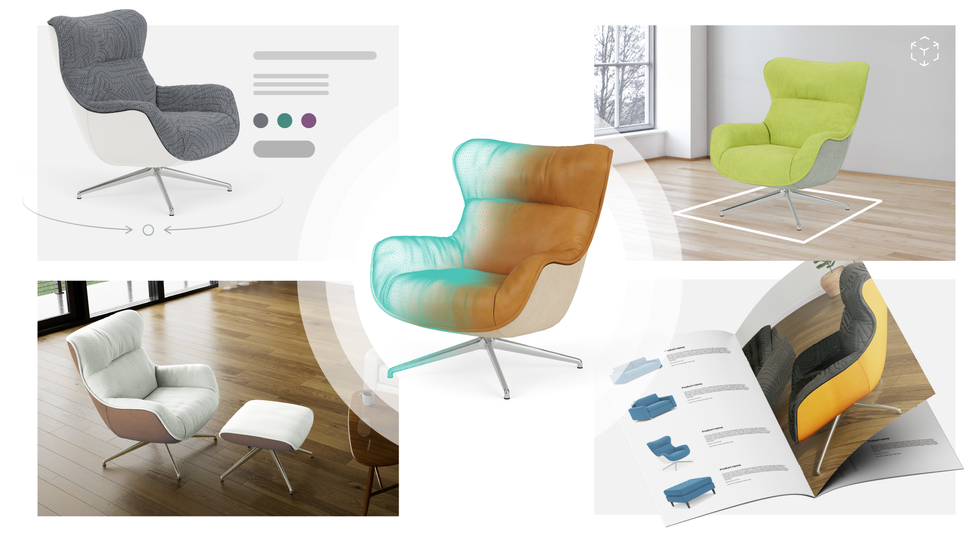
The brands pulling ahead are building their visual strategy on a Master Asset architecture. They create one highly accurate 3D model. That single file powers the 360-degree viewer, the AR environment, and the high-fidelity product imagery. Setting up a single source of verified visual truth means e-commerce teams can push their digital twins to any device. It breaks down the technical silos that block sales.
Platform Demo
### Book your free demo
Leading companies worldwide are using Cylindo to deliver superior omnichannel product experiences. Want to see why and what you can do with it?
[Book a Demo](https://www.cylindo.com/book-meeting/?utm_source=organic&utm_medium=blog&utm_campaign=visual-ai-infrastructure&utm_content=inline-demo-cta)
### Frequently Asked Questions
#### How does web-AR increase average order value for furniture?
Web-AR lets customers project a true-to-scale 3D model of a piece of furniture into their actual room. By fixing scale anxiety and proving the item fits, buyers get the confidence to complete high-ticket orders. It also makes them more likely to add complementary items to their cart.
#### How do QR codes bridge the gap between desktop and mobile shopping?
Consumers prefer browsing large furniture catalogs on a desktop monitor, but augmented reality requires a phone camera. Putting a QR code on the desktop product page fixes this transition. Customers scan the code with their smartphone to launch the web-AR experience instantly, without losing their place in the checkout flow.
#### What is the difference between app-based AR and web-based AR?
App-based AR forces the user to open an app store, download a large file, and make an account before they can see a product. Web-based AR (web-AR) opens instantly in the phone's native browser. Getting rid of the download requirement significantly increases how many people actually use the AR tools.
#### How does a 3D Master Asset power multiple visualization experiences?
A structured 3D Master Asset bakes the exact product geometry, dimensions, and materials into one file. You can then deploy that exact same asset to a 360-degree product viewer, an augmented reality experience, or a high-fidelity lifestyle render. It keeps the visuals perfectly consistent across channels without needing separate production workflows.

## Biljana Vidojevic
Content creator. The person behind the Cylindo blog. Excited about the future of technology and retail.
## [ Free test Get studio-quality product visuals in 24 hours. Try AI Assets](https://www.cylindo.com/ai-master-assets-test/)
## Subscribe to our monthly newsletter.
Share
## [ Previous How to Boost Online Furniture Sales with Virtual Consultation and 3D Product Visualization](https://blog.cylindo.com/boost-online-furniture-sales-virtual-consultations-3d-visualization/)
## [Next How to prevent furniture returns with 3D product visualization](https://blog.cylindo.com/prevent-furniture-returns-with-3d-product-visualization/)
## Related Posts
[](https://www.chaos.com/)
Platform
- [How it works](https://www.cylindo.com/how-it-works/)
- [Core platform](https://www.cylindo.com/platform/core/)
- [Lifestyle bundle](https://www.cylindo.com/platform/lifestyle/)
- [3D design bundle](https://www.cylindo.com/platform/3d-design/)
- [Compare bundles](https://www.cylindo.com/platform/compare-bundles/)
Products
- [Augmented reality](https://www.cylindo.com/platform/products/augmented-reality/)
- [Curator](https://www.cylindo.com/platform/products/curator/)
- [Create](https://www.cylindo.com/platform/products/export/)
- [Analytics](https://www.cylindo.com/platform/products/analytics/)
- [Dimension shots](https://www.cylindo.com/platform/products/dimension-shots/)
- [Quickshot](https://www.cylindo.com/platform/products/quickshot/)
- [Studio](https://www.cylindo.com/platform/products/studio/)
- [Modular Designer](https://www.cylindo.com/platform/products/modular-designer/)
Company
- [About](https://www.cylindo.com/about-us/)
- [Leadership](https://www.cylindo.com/about-us#leadership)
- [Contact us](https://www.cylindo.com/about-us#contact-us)
- [Careers](https://careers.chaos.com/)
- [News](https://www.chaos.com/press)
Resources
- [Customer Success Stories](https://www.cylindo.com/customers/customer-stories/)
- [Customer Showcase](https://www.cylindo.com/customers/customer-showcase/)
- [Learning center](https://learn.cylindo.com/help)
- [Cylindo Blog](https://blog.cylindo.com)
- [Cylindo Library](https://www.cylindo.com/cylindo-content-library/)
- [Furniture Briefings](https://resources.cylindo.com/furniture-briefings-subscribe)
## Follow us
-
-
-
-
© 2026 Cylindo. All Rights Reserved.
- [Cookie policy](https://www.cylindo.com/cookies-policy/)
- [Privacy policy](https://www.cylindo.com/privacy/)
```json
{
"@context" : "https://schema.org",
"@type" : "FAQPage",
"mainEntity" : [ {
"@type" : "Question",
"acceptedAnswer" : {
"@type" : "Answer",
"text" : "Web-AR lets customers project a true-to-scale 3D model of a piece of furniture into their actual room. By fixing scale anxiety and proving the item fits, buyers get the confidence to complete high-ticket orders. It also makes them more likely to add complementary items to their cart."
},
"name" : "How does web-AR increase average order value for furniture?"
}, {
"@type" : "Question",
"acceptedAnswer" : {
"@type" : "Answer",
"text" : "Consumers prefer browsing large furniture catalogs on a desktop monitor, but augmented reality requires a phone camera. Putting a QR code on the desktop product page fixes this transition. Customers scan the code with their smartphone to launch the web-AR experience instantly, without losing their place in the checkout flow."
},
"name" : "How do QR codes bridge the gap between desktop and mobile shopping?"
}, {
"@type" : "Question",
"acceptedAnswer" : {
"@type" : "Answer",
"text" : "App-based AR forces the user to open an app store, download a large file, and make an account before they can see a product. Web-based AR (web-AR) opens instantly in the phone's native browser. Getting rid of the download requirement significantly increases how many people actually use the AR tools."
},
"name" : "What is the difference between app-based AR and web-based AR?"
}, {
"@type" : "Question",
"acceptedAnswer" : {
"@type" : "Answer",
"text" : "A structured 3D Master Asset bakes the exact product geometry, dimensions, and materials into one file. You can then deploy that exact same asset to a 360-degree product viewer, an augmented reality experience, or a high-fidelity lifestyle render. It keeps the visuals perfectly consistent across channels without needing separate production workflows."
},
"name" : "How does a 3D Master Asset power multiple visualization experiences?"
} ]
}
```