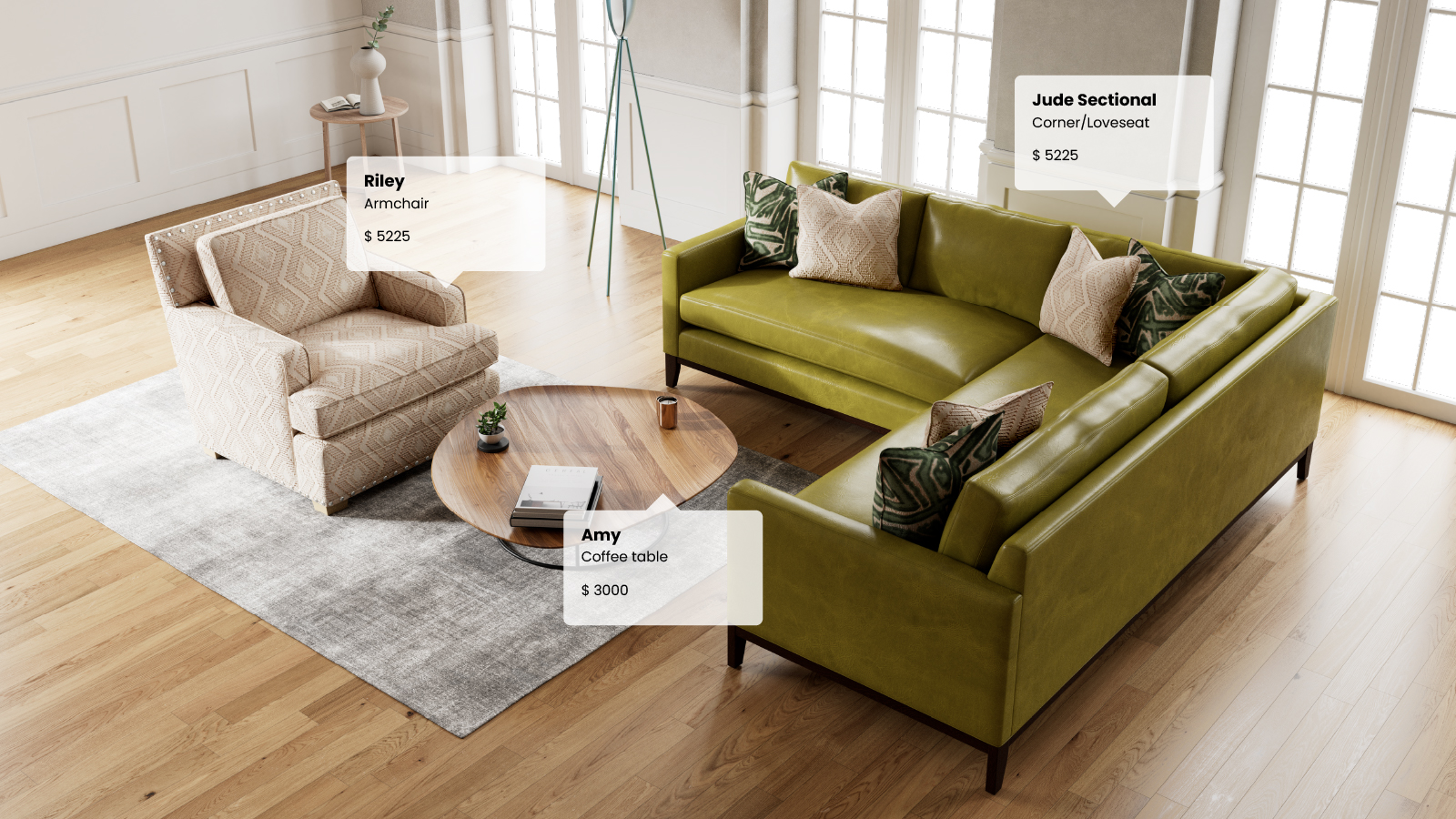

TL;DR: Using generative AI solely to create furniture lifestyle images is risky because AI models guess details, leading to costly returns. To safely scale content production, furniture marketers must lock in deterministic product truth using highly accurate 3D digital twins, using AI purely as a canvas to generate localized background environments.
Key points:
-
The Flaw in Pure AI: Generative AI is great at making pretty rooms, but it doesn't actually know how your furniture is built. If you rely solely on prompts, the AI will invent seams, alter wood grains, and change hardware, which directly leads to customer returns.
-
The Hybrid Fix: The only way to safely use AI in furniture e-commerce is to composite accurate 3D digital twins into AI-generated backgrounds. The AI handles the room; the 3D model guarantees the product is exactly what the customer will receive.
-
Scaling Personalization: By separating the product from the room scene, you can take one master 3D asset and drop it into dozens of different localized environments. This makes regional personalization fast and affordable.
Let’s be real about generative AI for a second. The pitch sounds fantastic: infinite room scenes and lifestyle shots without the six-figure photoshoot budget or the three-month lead time.
If you run e-commerce or content for a furniture brand, you want to believe it. We’ve all spent too much time coordinating set builds, chasing prop stylists, and arguing over lighting.
But there’s a glaring issue when you try to apply these tools to retail. Midjourney, Stable Diffusion, and other image models don’t actually know how your furniture is built.
If you ask an AI model to generate a lifestyle shot of your best-selling armchair, the result will probably look gorgeous. The lighting will feel editorial. The rug will be on-trend. But zoom in on the chair itself. The AI might have quietly added a fifth leg. The double-needle stitching is suddenly a single seam. The textured bouclé you spent months sourcing now looks like standard linen. The brass hardware is suddenly matte black.
In a mood board, a little creative invention is fine. In e-commerce, it’s a disaster. Selling a piece of furniture that doesn't perfectly match the image causes returns, chargebacks, and terrible reviews. If a customer spends $2,000 on a sofa based on a photo, they expect that exact sofa to show up off the delivery truck.
Here is the reality of the situation: To cut your production costs using AI without ruining your return rate, you have to anchor the workflow. You need something exact that the AI cannot alter. That anchor is the 3D digital twin. The AI handles the room setup. The 3D asset protects the actual product.
Moving Past Traditional Photoshoots
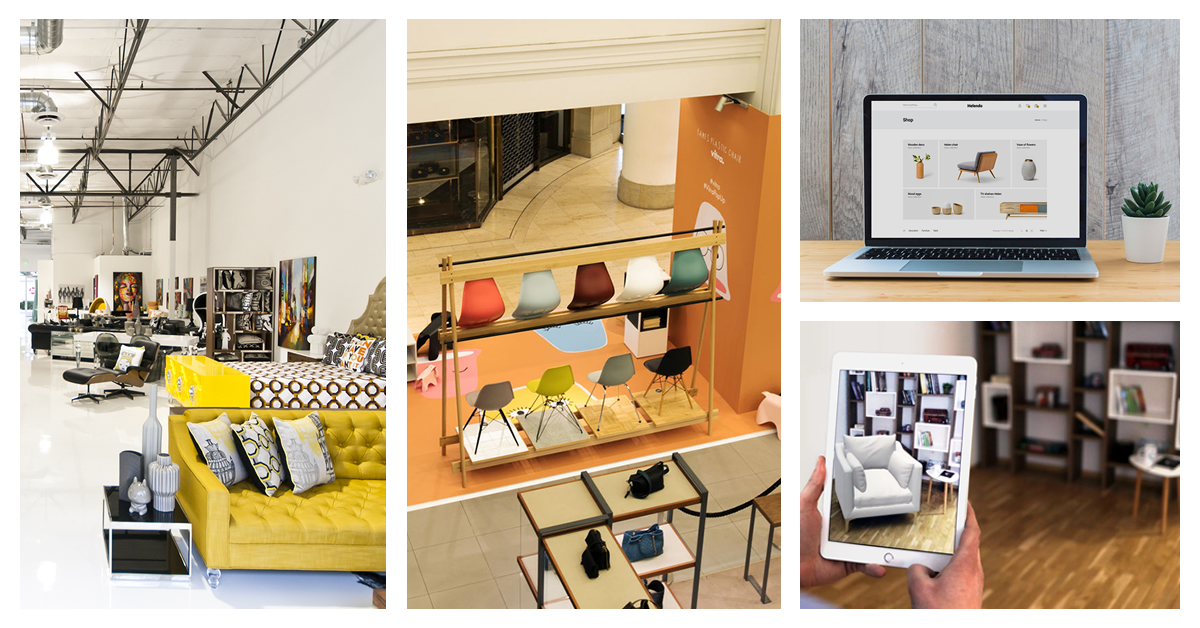
We all know how rigid traditional lifestyle photography is. A single room scene requires physical sets, moving heavy inventory, photographers, and heavy post-production. The cost per final asset is high, and the flexibility is zero. If marketing decides next month that your mid-century sofa needs to appeal to coastal buyers instead of urban loft renters, you have to book another shoot.
Optimizing your content pipeline with AI changes that math. With a hybrid workflow, that same sofa can sit in a Brooklyn apartment on Tuesday and a sun-drenched villa by Thursday. You can test a dozen different aesthetics against the same piece of furniture, pick the winners, and move on. You stop asking "what can we afford to shoot" and start asking "what does the customer actually want to see."
But again, you can't just type a prompt and hope for the best. The practical approach is to use true-to-life 3D models and composite them into AI-generated environments. You get the speed of AI lifestyle imagery paired with strict product accuracy. It’s the only workflow that makes sense for high-ticket retail.
Why You Still Need 3D Models
There’s a myth floating around that AI is getting so good we won't need 3D models anymore. People think the algorithms will just "figure it out."
That misunderstands how these tools work. AI models guess. They look at patterns and produce the most statistically likely image. That’s great when you need a generic plant in the corner of a room, but product marketing cannot be based on a guess. It has to be deterministic. Every detail has to be verified.
This is why high-fidelity 3D isn't going anywhere. Cylindo provides hyper-accurate digital twins built directly from your product specifications. The proportions are exact. The materials are verified. The leg shape, the wood veneer, and the fabric drape perfectly match the item sitting in your warehouse. When you drop a Cylindo asset into an AI background, you let the marketing team go wild with the room styling while keeping the product 100% true to life.
Keep the creativity in the environment. Keep the accuracy in the 3D asset. Don't mix them up.
The Create-Once, Render-Anywhere Model
One of the hardest parts of my job has always been personalization. A shopper in Miami wants a bright, airy, coastal bedroom. A shopper in Aspen wants a warm cabin with a stone fireplace. A shopper in London wants a completely different vibe.
Doing this the traditional way would blow the entire annual marketing budget. So, most of us just don't do it. We pick one generic lifestyle shot, push it to every market, and accept that it won't resonate with everyone.
The 3D-AI pipeline fixes this. You build the master 3D asset once. Then, you use AI to dynamically generate localized room scenes around it. That same bed frame can live in fifty different rooms, each tuned to a specific regional audience. Because the core product is a fixed 3D model, it stays perfectly on-spec every time.
This turns visual personalization from an expensive luxury into a standard process. You can run A/B tests on room styling. You can switch out seasonal campaign imagery in a few days. Your creative team stops acting like project managers chasing photographers and goes back to actually being creative.
The Canvas and the Subject
The easiest way to explain this to a leadership team is to think about it like a painting. The AI is the canvas. The 3D asset is the subject.
Generative AI is the most powerful, cost-effective canvas we've ever had. It can simulate any lighting, any time of day, and any architectural style. But a beautiful canvas alone doesn't sell a $3,000 sofa. It needs a subject that holds up to scrutiny when a buyer zooms in on a 4K monitor. As customers become more adapted to the visual economy, their expectations for realism are only going up.
Pair the two correctly, and you solve the puzzle. You get infinite variety in your environments without taking on any risk regarding product accuracy.
Fixing Your Content Pipeline
The furniture brands that win the next few years are the ones figuring out how to scale their imagery without sacrificing accuracy. Relying solely on AI is too risky, and relying solely on physical photoshoots is too slow and expensive. The hybrid approach is already here, but it requires building a production system, not just using commodity AI tools.
Ready to cut your production costs safely